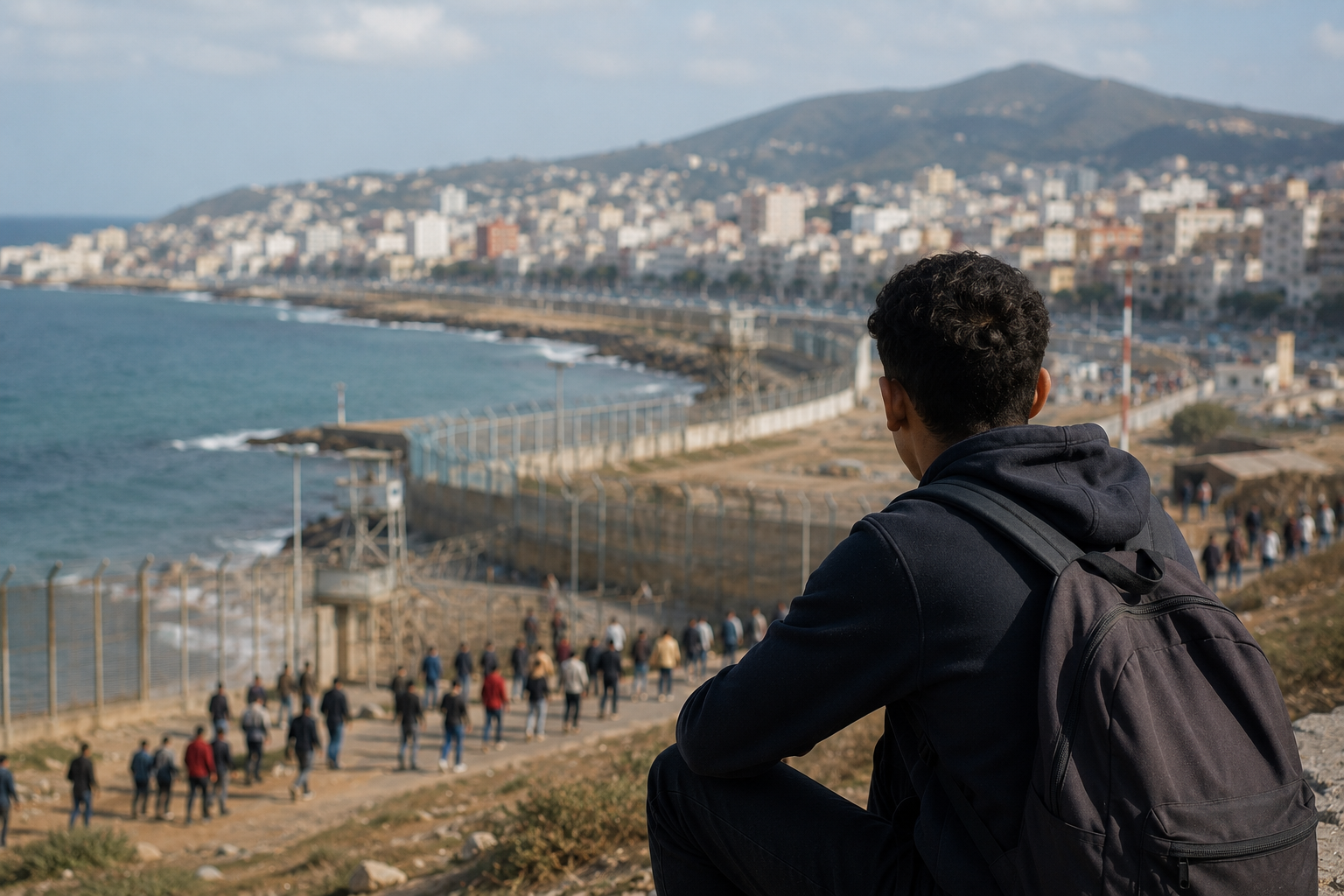
Ceuta is experiencing an exceptional situation. Within a few hours, tens of thousands of people have crossed from Morocco, mainly around the Tarajal breakwater and beach. Many did so by walking along the coast or entering the sea, putting their lives at serious risk.
We are therefore facing a border, humanitarian and administrative emergency. Denying its seriousness would be irresponsible. But using it to portray all migrants as criminals, invaders or threats would be equally irresponsible.
We are therefore facing a border, humanitarian and administrative emergency. Denying its seriousness would be irresponsible. But using it to portray all migrants as criminals, invaders or threats would be equally irresponsible.
To understand what is happening, we must distinguish three issues: confirmed facts, possible causes and the rumours circulating.
What happened in Ceuta?
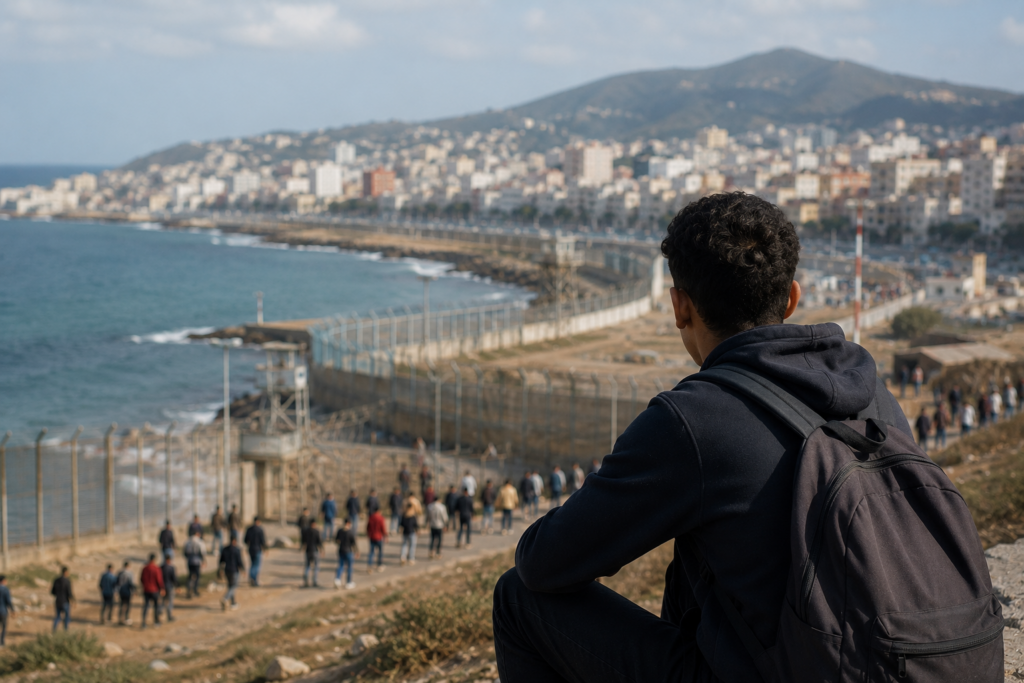
In the days before 30 July, there had already been a significant increase in people entering by sea. The situation worsened when large groups gathered on the Moroccan side and crossed at different points along the border perimeter and the Tarajal breakwater.
Spanish security forces were quickly overwhelmed. The Government mobilised Army units to support the Guardia Civil, while Spain and Morocco strengthened their coordination to regain control of the border. The following day, the Moroccan authorities had deployed more personnel and riot-control equipment, considerably reducing the crossings.
Why did this happen?
Why did this happen?
There is no single explanation. Migration is a complex phenomenon in which economic, social, political, geographical and personal factors come together.
1. A rumour about returns at the border
On 8 July, the Supreme Court confirmed that the exceptional mechanism known as border rejection or pushback cannot be applied to people intercepted at sea while trying to reach Ceuta or Melilla by swimming.
The ruling does not recognise a right to remain in Spain, nor does it prevent a return from being processed. It establishes that these people must go through the ordinary administrative procedure, with identification, legal assistance and the possibility of applying for international protection when appropriate.
According to the Ministry of the Interior, people-smuggling networks may have used this ruling deceptively, spreading the idea that anyone who managed to arrive by swimming could no longer be returned. Amplified on social media and messaging apps, this message may have encouraged numerous young people to head towards the border.
A judgment requiring legal safeguards was turned into a false message: if you reach Spain by swimming, you can stay. That is not what the court ruling says.
2. Morocco’s actions at the border
Various media outlets reported that, during the moments of greatest influx, some points on the Moroccan side were left without effective monitoring and certain officers withdrew as the crowds advanced. Morocco later redeployed personnel, water cannons and other resources to prevent further crossings.
This sudden change in border control has raised suspicions about a possible political use of migration, as also occurred during the diplomatic crisis of May 2021.
What is clear is that Morocco’s cooperation is decisive. When border control works, crossings decrease. When it weakens or disappears, Ceuta is exposed to pressure that is extremely difficult to absorb.
What is clear is that Morocco’s cooperation is decisive. When border control works, crossings decrease. When it weakens or disappears, Ceuta is exposed to pressure that is extremely difficult to absorb.
3. Lack of prospects among Moroccan young people
Social media may explain why so many people mobilised at the same time, but it does not explain why they were willing to risk their lives.
For part of the younger generation, Europe represents the real or idealised possibility of finding work, providing financial support to their family or building a life project. This expectation does not make the journey safe or guarantee that they will obtain residence, but it helps explain why a rumour can trigger such rapid mobilisation.
For part of the younger generation, Europe represents the real or idealised possibility of finding work, providing financial support to their family or building a life project. This expectation does not make the journey safe or guarantee that they will obtain residence, but it helps explain why a rumour can trigger such rapid mobilisation.
4. Ceuta’s geographical situation
Ceuta is a Spanish city in North Africa and one of the few land borders between the European Union and the African continent. This uniqueness makes it a place that is periodically subjected to intense migratory pressure.
The people who arrive do not form a homogeneous group. Some are seeking job opportunities; others may be fleeing violence, persecution or exploitation; some are unaccompanied minors, while others have been recruited by networks offering them false information.
Each situation must be assessed individually.
The main hoaxes and xenophobic messages
The main hoaxes and xenophobic messages
Situations of disorder and uncertainty are especially conducive to the spread of rumours. Some people seek to generate visits and attention on social media. Others try to turn a border-management problem into a confrontation between the Spanish population and migrants.
Hoax 1: This is an invasion organised by migrants
The arrival is extraordinarily large and represents a real problem of security, reception and management. But this is not a military invasion or an organised army.
These are mainly civilians who have moved by taking advantage of a temporary collapse in border controls. Using the word invasion portrays all these people as combatants or enemies and makes it easier to justify violence against them.
Recognising that there is an emergency does not require dehumanising those involved.
Hoax 2: They came because of the 2026 extraordinary regularisation
The extraordinary regularisation approved in April was intended for people who were already in Spain before 1 January 2026. In addition, the deadline for submitting applications ended on 30 June, one month before the events in Ceuta. People who have just crossed the border cannot benefit from this process.
Linking the two issues seeks to discredit a measure aimed at people who had been living and working in Spain for months or years, but it has no legal basis.
Linking the two issues seeks to discredit a measure aimed at people who had been living and working in Spain for months or years, but it has no legal basis.
Hoax 3: The Supreme Court has banned the return of any migrant
This is also false.
The Supreme Court has limited one specific form of immediate return: the rejection at the border of people intercepted at sea while trying to enter by swimming.
This does not prevent return procedures from being initiated in accordance with the Immigration Act. Nor does it prevent authorities from checking a person’s identity, determining whether they are a minor, examining a possible asylum application or carrying out their return when legally appropriate.
The ruling does not grant automatic residence. It requires the Administration to follow the procedure and respect legal safeguards.
Hoax 4: Everyone will receive papers and financial assistance
Entering Ceuta irregularly does not automatically grant a residence authorisation, a work permit or a permanent financial benefit.
Adults must be identified and their administrative situation examined. Some may apply for international protection; others will be subject to return procedures; and people who are particularly vulnerable may receive temporary humanitarian assistance.
The State Humanitarian Assistance Programme provides accommodation, food, basic healthcare, clothing, legal guidance and psychological support to vulnerable people who lack resources. It is not a salary or an allowance granted to every foreign person simply because they arrive in Spain.
Helping someone who arrives wet, injured or hungry is not a privilege. It is basic humanitarian action.
Hoax 5: They are criminals and have come to commit crimes
Criminal responsibility is individual. If someone commits a robbery, an assault or any other offence, they must be investigated and, where appropriate, sanctioned.
But an incident involving one person does not turn tens of thousands of people into criminals. Nationality, skin colour or administrative status cannot determine who will commit a crime.
It would also be irresponsible to deny that a gathering of thousands of people without accommodation, food or information can cause problems of coexistence or security. That is precisely why it is necessary to organise reception quickly, prevent people from being abandoned in the street and maintain an appropriate presence of public services.
Security is protected through organisation, resources and enforcement of the law, not through collective accusations.
Hoax 6: Ceuta and its population have to deal with the problem alone
Ceuta is the point of entry, but the border it is managing is also the external border of Spain and the European Union.
Territorial solidarity is not optional. The new European framework on migration and asylum establishes that states and territories facing extraordinary pressure should not have to deal with these situations alone.
Transferring people to suitable facilities on the mainland, distributing care for minors among different autonomous communities and financing emergency services does not mean ignoring the concerns of the people of Ceuta. It means responding to them.
Regain control of the border without putting lives at risk
Regain control of the border without putting lives at risk
Spain and Morocco must maintain permanent coordination to prevent new mass crossings. Strengthening border control must be accompanied by maritime rescue teams and protocols that prevent further deaths.
A controlled border is not a border where people are allowed to drown.
Register and identify people individually
It is necessary to know who has entered, detect minors, locate families, identify potential victims of trafficking and determine who needs international protection.
Collective returns without identification or the opportunity to explain personal circumstances are not only legally problematic; they can also result in minors, refugees or victims of exploitation being sent back to dangerous situations.
Strengthen reception and relieve pressure on Ceuta
The presence of thousands of people in streets, parks or improvised facilities increases both human suffering and problems of coexistence.
Dignified temporary facilities must be made available, and orderly transfers to other centres should be organised whenever legally possible. Unaccompanied minors need specific protection and cannot receive the same administrative treatment as adults.
Provide information quickly and in several languages
Disinformation has played a significant role in this crisis. Spain, Morocco and the European Union must disseminate clear messages in Arabic, French, Spanish and other languages used in the region.
It is necessary to explain that irregular entry does not guarantee residence, that the Supreme Court ruling does not prevent returns and that trying to swim around the breakwater can be fatal.
Investigate the networks that spread false information
It must be investigated who organised the messaging groups, who distributed the instructions and who may have gained financial benefits from the movement of people.
It must also be clarified transparently whether there was a political decision to relax border control. Suspicions cannot replace an investigation, but neither should they be ignored.
Create legal pathways and mobility agreements
As long as jumping a fence or entering the sea remains the only visible option for many young people, the networks will continue to have the ability to recruit people.
Spain and Morocco can expand programmes for recruitment in countries of origin, vocational training, youth mobility, study and temporary work. These pathways must be controlled and adapted to labour needs, but they offer a safer and more orderly alternative.
Address the structural causes
Cooperation with Morocco cannot be limited to paying for surveillance equipment. It must include youth employment, training, entrepreneurship, local development and the reduction of territorial inequalities.
Border control can stop a specific arrival. Only the existence of real prospects can reduce migratory pressure in the long term.
Neither racism nor denial of the problem
What happened in Ceuta is serious. There is an overwhelmed border, public services under enormous pressure, people who have died and a local population that is legitimately concerned.
Defending human rights does not mean denying these facts. It means responding without turning all migrants into collective culprits.
At SenValos, we believe that a responsible migration policy must be able to maintain border control, combat trafficking networks, apply the law, protect the local population and guarantee dignified treatment for the people who arrive.
Racism offers no solutions. It merely turns an emergency that requires management, cooperation and resources into a conflict between people who are not responsible for its causes.
To understand Ceuta, we must reject two simplifications: that nothing is happening here and that those who arrive are our enemies. Reality is more complex, and precisely for that reason it needs rigorous information, effective institutions and a society that does not allow fear to replace facts.


