The extraordinary regularization process for migrants carried out in Spain between 16 April and 30 June 2026 has been one of the most significant administrative and social processes in recent years. During this period, the NGO SenValos supported 496 people so that they could prepare, review and submit their regularization applications.
As of the publication of this report, SenValos has recorded 247 applications admitted for processing, equivalent to 49.8% of the people assisted.
This result demonstrates the importance of the support provided by social organizations, but it also marks the beginning of a new phase. Admission for processing is not yet the final decision on the case. From now on, it will be necessary to respond to requests, provide documentation, review notifications and support each person until a decision is made and, where applicable, they obtain their Foreigner Identity Card.
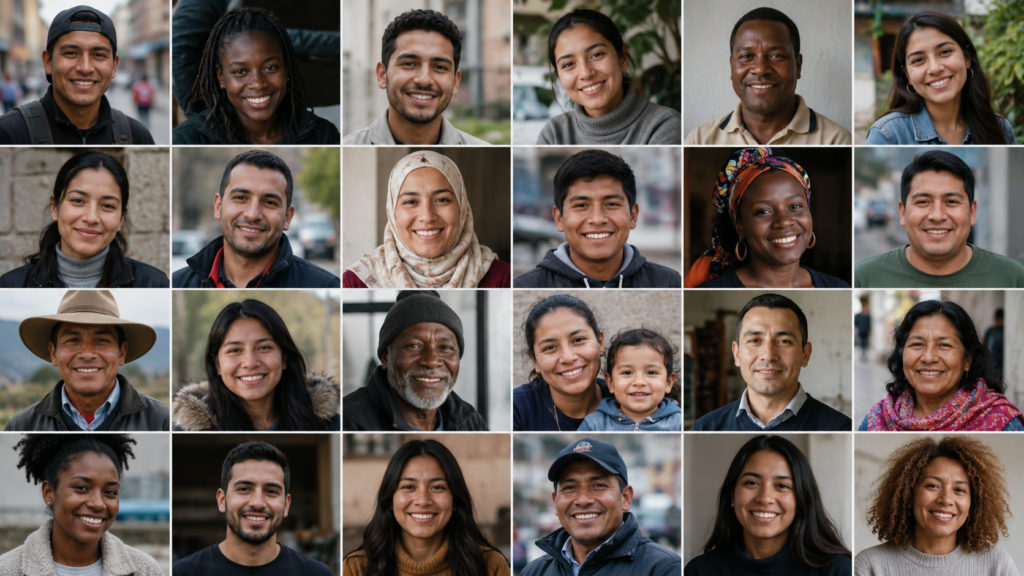
What did the extraordinary regularization of 2026 involve?
Royal Decree 316/2026 created two extraordinary routes aimed mainly at:
- people who were in Spain in an irregular administrative situation;
- people applying for or who had previously applied for international protection;
- families with minor sons and daughters;
- people with employment links;
- people in documented situations of vulnerability.
One of the fundamental requirements was to be in Spain before 1 January 2026 and, as a general rule, to prove a minimum of five months of continuous residence when submitting the application. The application period ended on 30 June 2026.
The notice that processing has started provisionally authorizes applicants to reside and work, as employees or self-employed workers, while the procedure is being resolved. This authorization is one of the main positive effects of the regularization, because it allows people to join the labor market legally without having to wait for the final decision.
SenValos’s report: 496 people supported
SenValos’s work was not limited to submitting forms. Each case required an analysis of personal and family circumstances, checking the appropriate route and gathering documents that, in many cases, came from different countries.
The actions carried out included:
- legal information and guidance;
- checking the access requirements;
- reviewing passports and identity documents;
- gathering evidence of residence in Spain;
- processing criminal-record certificates;
- documenting family units;
- preparing applications for minors;
- completing and reviewing forms;
- electronic or in-person submission;
- monitoring notifications;
- responding to requests for additional information;
- coordination with public administrations, companies and social services.
The 247 applications admitted for processing recorded to date represent a significant result, but they must be interpreted correctly.
Admission for processing means that the Administration has formally begun examining the application. It does not yet amount to a final approval. Likewise, the remaining people assisted should not automatically be considered rejected: some cases may still be awaiting review, notification, correction of deficiencies or entry into the monitoring system.
What is the profile of the people assisted?
Based on the profile observed in the monitoring database and its extrapolation to the total of 496 people, SenValos’s work would have reached approximately:
- 261 women;
- 235 men;
- 88 children and adolescents;
- 383 people aged between 18 and 64;
- 431 people from Latin America and the Caribbean.
Most of the people assisted are of working age. There is also a significant presence of families with minors, for whom regularization means greater administrative, educational and residential stability.
An intervention connected to a nationwide process
SenValos’s work took place within a large-scale extraordinary process.
According to data published by the Ministry of Inclusion, Social Security and Migration on 2 July 2026, 1,174,978 applications were registered in Spain, of which 609,737 had already been processed by the end of the application period. Some 79.6% concerned the extraordinary roots-based route and 20.4% the route linked to international protection.
The Ministry also reported that:
- six out of ten applicants were under 34;
- 83.2% of applications were submitted online;
- almost 200,000 applications were handled in person;
- by 30 June, 159,097 Social Security registrations related to the process had been recorded.
These figures show that the regularization process has not been merely an immigration procedure. It has also served as a policy for social, labor and economic inclusion.
What benefits does regularization bring to society?
1. It reduces the informal economy
When a person can reside and work legally, their ability to sign contracts, register with Social Security and exercise their labor rights increases.
This benefits the worker, but also companies and the economy as a whole. A more transparent labor market reduces unfair competition, encourages compliance with collective agreements and increases Social Security contributions and tax revenue.
Royal Decree 316/2026 itself states that integration into the administrative and economic system strengthens Social Security, improves revenue collection and helps prevent labor exploitation.
2. Protege frente a la explotación laboral
Administrative irregularity increases the risk of accepting jobs without a contract, wages below the legal levels, abusive working hours or unsafe conditions.
Authorization to work makes it safer to claim rights, change jobs and access ordinary labor-protection mechanisms.
Regularization does not simply mean providing a document. It means reducing dependence, fear and the possibility of abuse.
3. It facilitates the recruitment many companies need
Many economic sectors have difficulty finding staff. Regularization allows people who already live in Spain, have experience and are part of our communities to take up these jobs legally.
This measure may particularly benefit sectors such as:
- care and home assistance;
- hospitality;
- construcción;
- cleaning;
- agriculture and fishing;
- logistics;
- retail;
- industry;
- personal services.
Migration is also becoming increasingly important demographically in a country marked by ageing and negative natural population growth. The legislation expressly recognizes that the arrival of people of working age helps meet production needs and sustain the welfare system.
4. It provides stability for families
A residence authorization improves family security and facilitates their day-to-day dealings with public administrations, schools, companies and financial institutions.
For minors, the extraordinary process included specific measures and allowed certain authorizations to be processed simultaneously with those of their parents. The regulations expressly strengthened the protection of children and the best interests of the child.
5. It promotes social cohesion
Administrative irregularity creates exclusion, invisibility and mistrust. Regularization allows people to participate more steadily in community life and to exercise rights and fulfil obligations on a more equal footing.
The people who have been regularized were already living in our municipalities, shopping in local stores, taking their sons and daughters to school, using public transport and belonging to associations and neighborhood networks.
Administratively recognizing this reality helps build more cohesive and safer communities.
The challenges that begin after submitting the application
The end of the application period does not mean that the work is finished. For SenValos, a complex monitoring phase now begins.
Monitoring applications admitted for processing
Las 247 personas con admisión a trámite necesitan conocer con claridad:
- how to prove their authorization to work;
- how to check their case;
- how to receive notifications;
- what to do if they receive a request for additional information;
- what documents they need to keep;
- when to apply for the TIE after a favorable decision.
- Responding to requests for additional information
Many cases may receive requests related to:
complete passports;
- criminal-record certificates;
- apostilles or legalizations;
- proof of residence;
- municipal registration;
- Newly arrived people should keep reliable documentation that can prove their stay in Spain:
- family documentation;
- vulnerability reports;
- contracts or proof of an intention to work;
- documentation for minors.
Responding within the deadline will be decisive in preventing cases from being closed or applications from being rejected.
Access to decent work
Authorization to work does not automatically guarantee that a person will find stable employment.
It will be necessary to strengthen:
- employment guidance;
- mediation with companies;
- vocational training;
- recognition of skills;
- recognition of qualifications;
- prevention of exploitation;
- support during the first employment contracts.
Housing, education and community participation
Integration is not complete with a residence card. It also requires:
- access to adequate housing;
- stable schooling;
- learning Spanish and Galician;
- healthcare;
- access to social services;
- work–family balance;
- participation in the community.
What happens to people who arrived in Spain during 2026?
One of the main outstanding challenges is the situation of people who arrived in Spain after 1 January 2026.
These people could not benefit from the extraordinary regularization because they did not meet the time requirement established by the legislation. They were not excluded because they lacked the will to integrate, but because they arrived after the cut-off date.
For many of them, access to an authorization will depend on the ordinary routes provided for in immigration law.
As a general rule, most roots-based residence routes require proof of at least two years of continuous residence in Spain, except for cases such as family roots.
This may mean that newly arrived people spend a prolonged period facing difficulties in:
- working legally;
- renting a home;
- opening certain banking relationships;
- accessing training;
- proving income;
- exercising their labor rights;
- building a stable integration pathway.
building a stable integration pathway.
How to support people who could not benefit from the process
The challenge for social organizations and public administrations will be to prevent these people from being abandoned over the coming years.
Necessary measures include:
Legal information from the outset
- Each person should know which routes may apply to their situation:
- different forms of roots-based residence;
- residence as a family member of a Spanish citizen;
- study or training authorizations;
- procedures for minors;
- humanitarian grounds;
- international protection where there is a genuine need for protection;
recruitment from the country of origin in the cases permitted by law.
Keeping proof of residence
- Newly arrived people should keep reliable documentation that can prove their stay in Spain:
- municipal registration;
- medical reports;
- enrolment and training certificates;
- school documentation;
- rental contracts;
- bills;
- receipts for shipments and administrative procedures;
certificates issued by organizations.
This documentation may prove essential in future procedures.
Municipal registration and access to basic rights
Municipal registration is essential for proving actual residence and facilitating access to municipal, healthcare, educational and social services.
Local administrations must avoid undue barriers and ensure that people can register in accordance with the law, even when they do not own a home or have a standard rental contract.
Training and integration pathways
The period before a possible regularization should not become a period of inactivity.
- It is necessary to facilitate:
- language learning;
- vocational training;
- recognition of skills;
- employment guidance;
- community participation;
- emotional support;
knowledge of rights and duties.
Regularization is a starting point
SenValos’s initial assessment is positive: 496 people supported and 247 applications admitted for processing.
Behind every figure are people and families who have had to gather documents, overcome digital barriers, request certificates from their countries, prove their residence and explain complex personal circumstances.
The extraordinary regularization has opened an opportunity to transform situations of invisibility into stable life projects. It has also shown that social organizations play an essential role in bringing administrative procedures closer to those who face the greatest difficulties.
But the challenge does not end here.
We must now ensure that admitted applications lead to favorable decisions, that people can access decent jobs and that families find stability. At the same time, it is essential to support those who arrived during 2026 and could not access the extraordinary process.
An effective integration policy cannot be limited to a one-off measure. It needs accessible routes, clear information, coordinated administrations and stable resources to prevent new people from becoming trapped in irregularity for years.
SenValos will continue to provide support
- SenValos will continue working to:
- monitor the applications submitted;
- respond to immigration-office requests;
- provide information about admissions and decisions;
- support people in obtaining their TIE;
- facilitate labor-market integration;
- support families with minors;
- guide people who could not benefit from the regularization;
promote a welcoming society based on rights, coexistence and equal opportunities.
Integration benefits migrants, but it also strengthens our neighborhoods, companies, public services and communities.
Regularization means recognizing a reality that already exists and turning it into an opportunity for society as a whole.
Frequently asked questions about the extraordinary regularization
Does admission for processing mean that residence has been granted?
Can people work once their application has been admitted for processing?
In the extraordinary procedures regulated by the twentieth and twenty-first additional provisions, the notice that processing has started includes provisional authorization to reside and work while the application is being decided.
Could people who arrived in 2026 apply for this regularization?
No, because one of the requirements was to be in Spain before 1 January 2026.
What can people who arrived during 2026 do?
They should study the ordinary residence routes applicable to their case. Most roots-based residence routes require two years of continuous residence, although some procedures have different rules and exceptions.
Will SenValos continue providing support after the deadline?
Yes. Monitoring cases, responding to requests for additional information, supporting social and labor integration and guiding people who could not access the process are now fundamental priorities.


