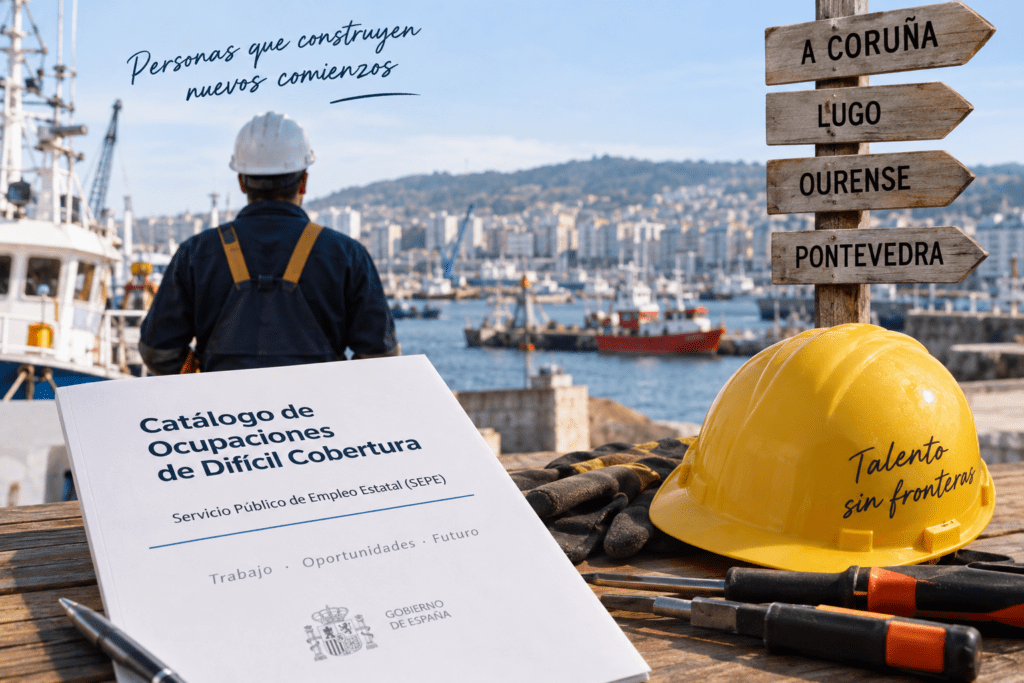
Extraordinary Regularization 2026 in Spain: A Clear Guide for Migrants and Asylum Seekers

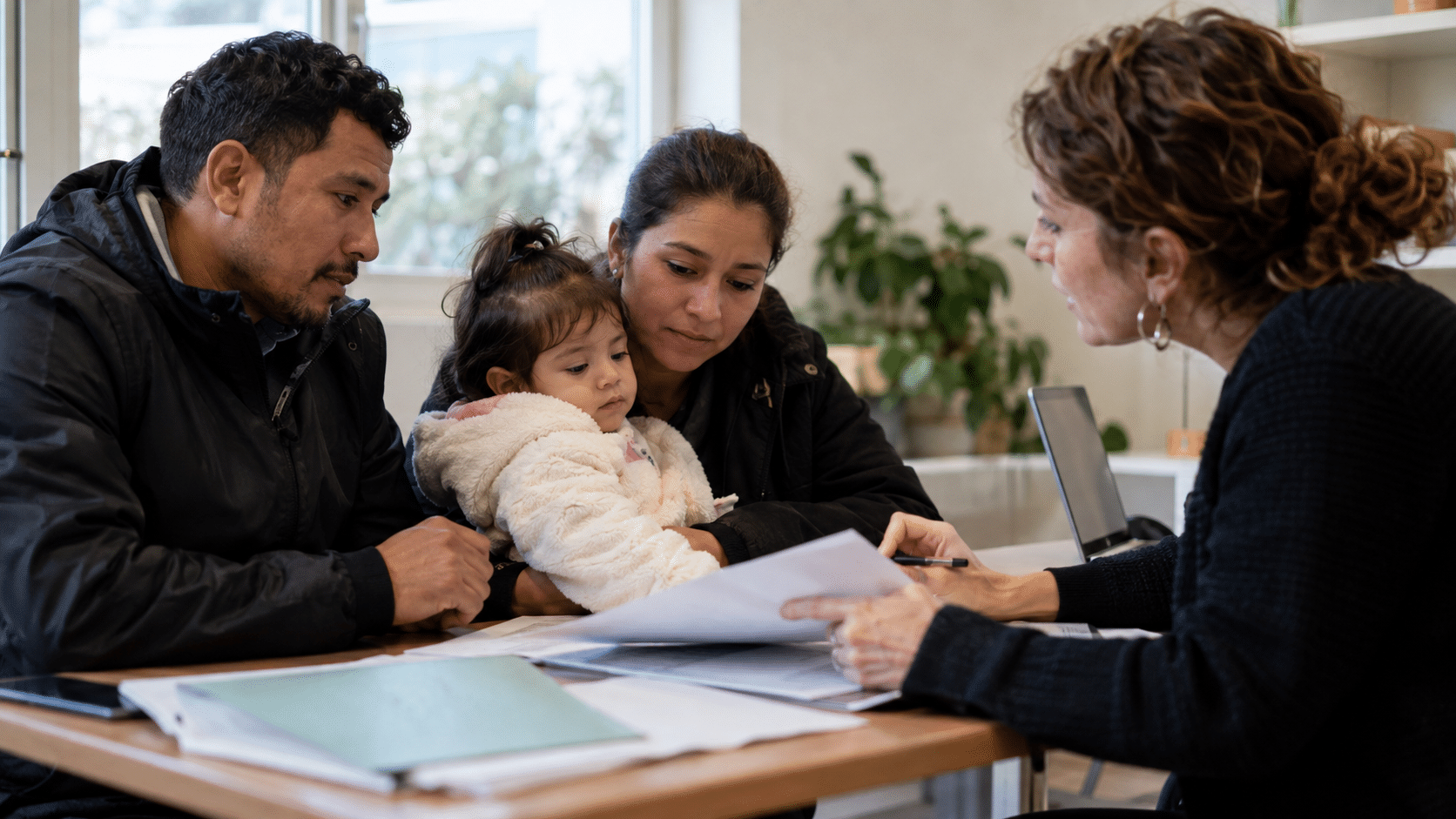
The 2026 Extraordinary Regularization is a measure approved by the Government to allow certain foreign nationals already residing in Spain to apply for a residence permit. It is primarily designed for two groups: applicants for international protection and individuals in an irregular administrative situation. The general application period opened on April 16, 2026, and will close on June 30, 2026.

To put it simply: if you have been in Spain for some time, meet specific conditions, and can prove it with documentation, there may be an extraordinary path to regularize your status. Furthermore, the regulation allows you, in many cases, to submit applications for your underage children at the same time.

The Most Important Points at a Glance

This regularization is aimed at people in one of these two situations:

  1. Having applied for international protection in Spain before January 1, 2026.
  2. Being in an irregular administrative situation and having arrived in Spain before January 1, 2026.

In both cases, you must also prove a continuous stay of at least five months before submitting the application and have no criminal record under the terms required by the law.

1. Who is Eligible for Extraordinary Regularization?

A) Asylum Seekers or Applicants for International Protection

Foreign nationals who submitted their application for international protection in Spain before January 1, 2026, who are in Spain at the time of the request, and who do not hold a stay or residence permit may apply. They must also not be involved in any other procedure for granting, renewing, extending, or modifying stay or residence permits.

Requirements also include: having remained in Spain continuously for at least five months prior to the application; having no criminal record in Spain or in countries of residence during the last five years; not being a threat to public order, safety, or health; not being listed as “objectionable” (rechazable); and not being subject to a non-return commitment, if applicable.

B) Individuals in an Irregular Administrative Situation

People currently in Spain in an irregular administrative situation may also apply, provided they are in the country when submitting the request, do not have a valid stay or residence permit, do not have another pending residency procedure, and have not held temporary protection for displaced persons from Ukraine.

Additionally, they must prove five months of continuous stay before the application, have no criminal record, and not pose a threat to public order or health. Furthermore, they must prove at least one of these three situations: having worked or intending to work, living with their family unit as established by law, or being in a documented state of vulnerability.

2. Requirements for Each Case, Explained Simply

If you are an asylum seeker:

You qualify through this path if you requested international protection before January 1, 2026. In this case, you are not required to prove a work contract, family unit, or vulnerability. The essential factor is proving you requested asylum on time, have been in Spain for at least five consecutive months, and meet the general requirements. The designated form for this path is EX-31.

If you are in an irregular situation:

In this case, the intended path is Extraordinary Social Roots (Arraigo Extraordinario), and the form is EX-32. Here, proving your presence in Spain for five months is not enough. You must also prove one of the following:

1. Work or intention to work: This can be because you have already worked (as an employee or self-employed) during your stay in Spain, because you have a job offer, or because you declare your intention to be self-employed.

2. Family Unit:
You can prove you live in Spain with underage children, adult children with disabilities who require support, or first-degree ascendants (parents) with whom you reside. In this case, documentation such as school enrollment records for minors or dependents is required.

3. Vulnerability:
Y
ou must provide a certificate issued by social services or Third Sector entities registered in the Electronic Register of Foreigner Affairs Collaborators. The vulnerability report model considers situations such as social isolation, homelessness or precarious housing, lack of income, risk of exclusion, difficulties accessing employment, or exposure to exploitation or abuse.

3. What Documents Do You Need to Present?

Basic documents for almost everyone:

Generally, applicants must submit:

  • The corresponding official form: EX-31 for international protection applicants or EX-32 for extraordinary social roots.
  • A complete copy of your passport, registration certificate, or travel document (even if expired, if recognized as valid in Spain).
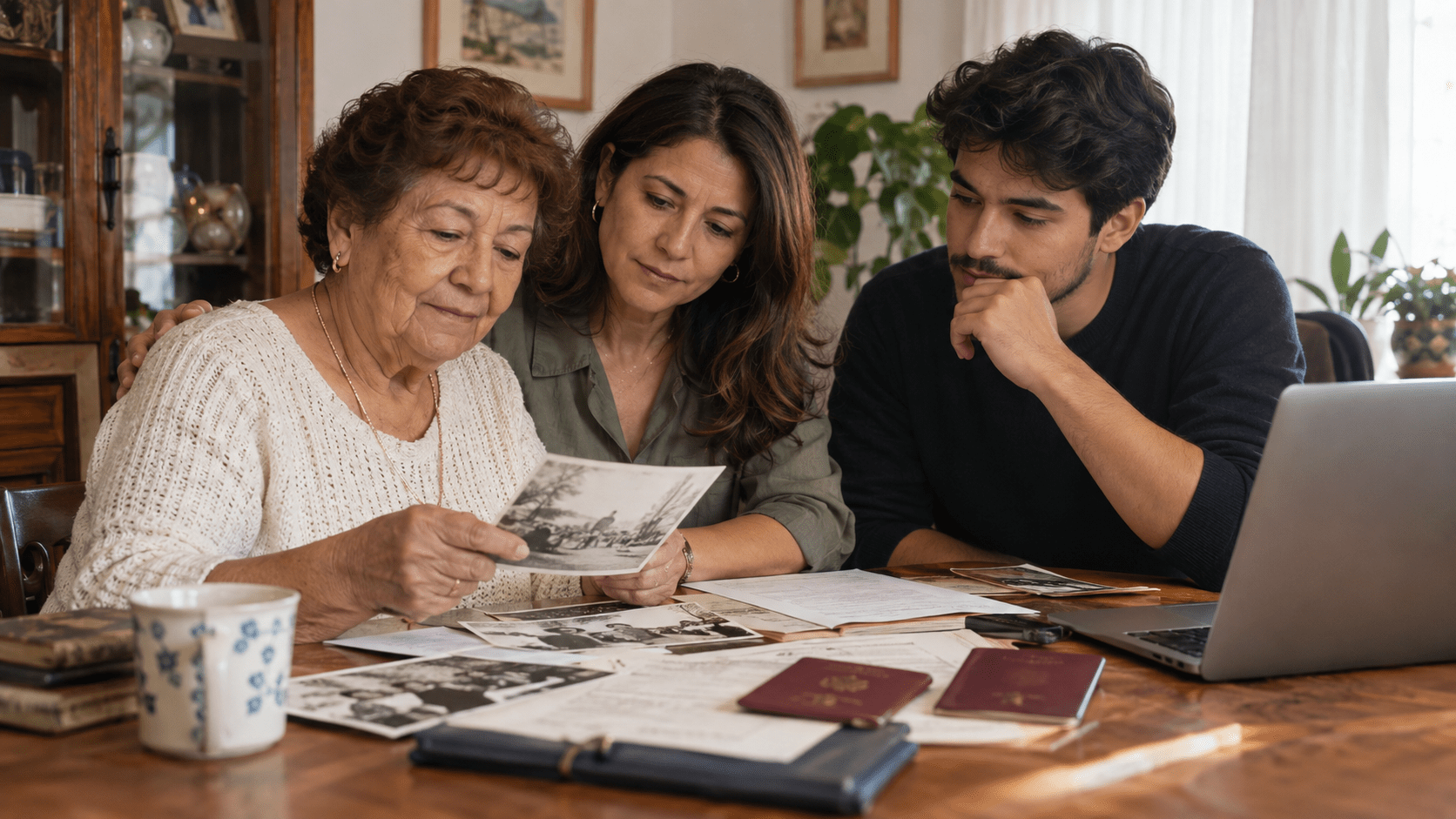
  • Documents proving you were in Spain before January 1, 2026, and that you were here for at least five consecutive months before applying. Any legally valid evidence including identifying personal data is accepted. The FAQ suggests examples like entry stamps, nominative tickets, bank movements in Spain, training certificates, or nominative rental contracts.
  • Criminal record certificate from your country of origin and countries where you lived in the five years prior to entering Spain.
  • Proof of fee payment. The information sheet refers to Form 790, code 052, section 2.3.1.

If you cannot obtain your criminal records in time:

The law provides an exceptional solution: if you prove you requested the criminal record certificate and a month has passed without a response, the Administration may attempt to obtain it through diplomatic channels. You will need to submit specific documentation and the corresponding annexes. Important: This option does not replace the certificate; it is an exceptional way to try to obtain it officially.

If your documents are foreign:

Documents issued outside of Spain must be translated into Spanish (or the co-official language of the territory) by a sworn translator. Additionally, foreign public documents must be legalized or apostilled, unless an international treaty provides an exception.

4. Extra Documents Needed Based on Your Case

If you are an international protection applicant:

In addition to the basic documents, you must provide:

  • Document proving you submitted your request before January 1, 2026.
  • Document proving continuous stay in Spain for at least five months before the application.

If you are in an irregular situation (Extraordinary Social Roots):

You must provide one of these sets of documents:

Work path
Contract, proof of having worked, or a job offer; for self-employment, a formal declaration included in the model.

Family path
Proof of cohabitation and family unity; if there are dependent minors or persons with disabilities, proof of school enrollment may be required.

Vulnerability path
Vulnerability certificate issued by a competent or collaborating entity.

5. How to Regularize Children as Well?

This is one of the most important points of the reform. If the applicant has underage children, or adult children with disabilities who need support, they can simultaneously apply for a residence permit for them.

The regulation also makes requirements more flexible:

  • If the child was born in Spain, the application does not need to be submitted within the first six months after birth.
  • If the child was not born in Spain, the general requirement of two years of prior residence, economic means, or “adequate housing” for family reunification is waived. However, it must be proven that the minor has remained in Spain uninterruptedly for the five months prior to the application.

These permits for minors can be granted for up to five years, always prioritizing the best interests of the child.

Forms EX-31 and EX-32 include specific boxes to mark if the simultaneous application is for a child born in Spain or abroad.

6. Where to Submit the Application?

The application can be submitted online (telematic) or in person by appointment.

Online (Telematic):

It can take four forms:

  1. By the applicant themselves using an electronic certificate.
  2. Through a representative registered in the Electronic Register of Power of Attorney.
  3. By authorized professionals (lawyers, social graduates, or administrative managers).
  4. By entities registered in the Register of Foreigner Affairs Collaborators.

The system used is Mercurio, through the electronic headquarters of the Ministry of Territorial Policy and Democratic Memory.

In Person

In-person submission always requires a prior appointment. According to the official FAQ, applications can be submitted at authorized Foreigner Offices (Extranjería), Social Security offices, and Post Offices (Correos). Appointments can be requested on the regularization portal, via Cl@ve or a web form, or by calling 060.

Furthermore, the Royal Decree itself justifies the use of the Post Office as a channel to support online management and submission, precisely to facilitate access throughout the country, including in rural areas.

7. What Happens After Submitting the Application?

A key point: The simple receipt of submission is not yet the formal notification that the procedure has started. That notification is sent by the Foreigner Files Processing Unit. From that notification of commencement (comunicación de inicio), the person is provisionally authorized to reside and work across Spain and in any sector until their file is resolved. Additionally, a Social Security number will be assigned, and the right to healthcare will be recognized.

The initial authorization granted is valid for one year. Afterward, you will need to transition to the ordinary residence categories or request the corresponding extension.

If the decision is favourable, the TIE must be processed within one month.

8. Who Should Not Apply for This Process?

According to the official FAQ, this procedure is not intended for people who already have a valid permit or are in the process of renewal. It is also not for people displaced by the conflict in Ukraine with temporary protection or valid residency, nor for stateless persons (apátridas), as those cases have their own legal regime. If you have already applied for “arraigo” or another permit and are awaiting a decision, you do not need to submit anything new; your current application will continue its course.

Frequently Asked Questions (FAQ)

Can I apply if I requested asylum before January 1, 2026?

Yes, if you meet the other requirements (staying in Spain, no other valid permit, 5 months stay, and clean criminal record).

Can I apply if I am in an irregular situation?

Yes, but you must also prove work/intent to work, family unity, or documented vulnerability.

What is the key date?

January 1, 2026. You must have been in Spain before that date.

How long must I have been in Spain?

At least five continuous months before applying.

Does any document prove my presence?

Any legally valid proof with identifying data (tickets, bank moves, training, rental contracts).

Do I need to submit a criminal record?

Yes. If you don’t get it within a month of requesting it, there is an exceptional diplomatic route, but it doesn’t automatically replace the certificate.

Can I include my children?

Yes, you can apply for their residency simultaneously.

Do I need to prove economic means for my children?

For children not born in Spain, this requirement is waived in this specific process.

Where do I apply?

Online or in person (appointment required) at Foreigner Offices, Social Security, or Post Offices.

Can I apply through an NGO?

Yes, if the entity is registered as a Collaborator. They can also provide advice and act as representatives.

When can I start working?

From the moment you receive the notification of commencement (comunicación de inicio) of the procedure.

Does this permit allow working in other EU countries?

No, it is valid for residing and working in Spain only.

At SenValos, we recommend acting with order rather than haste. This regularization is a real opportunity, but a poorly prepared application can lead to problems. First, identify your group, gather clear evidence of your stay, check your criminal records, and prepare your children’s applications carefully. This should be done with attention and, if possible, with specialized guidance.

Extraordinary Regularization 2026: What the Council of State says about asylum seekers, undocumented persons, minors, and families

When a Council of State opinion is released, it does not mean that the regularization has already been approved. It means something else: that the Council has reviewed the draft Royal Decree and stated which parts it approves of, which parts must be corrected, and which changes it considers essential before the Government approves it. In this case, the opinion is dated April 9, 2026, and concludes by saying that if its essential observations are incorporated, the project can be submitted to the Council of Ministers.

Put very simply: we are not yet facing the final regulation, but we already know quite well how the extraordinary regularization process is intended to be organized and what legal and practical problems the Council of State has detected. This is important because it helps us understand who could apply, what documents might be requested, and what points may change in the final text.

Who could access regularization according to the document

The draft reviewed by the Council of State outlines two main access routes. The first is designed for individuals who had applied for international protection in Spain before January 1, 2026. The second is designed for persons in an irregular administrative situation who fit into a new category called extraordinary rooting (arraigo extraordinario).

The general idea of the project is to provide a temporary residence permit due to exceptional circumstances. Furthermore, the draft is based on a very large forecast: it estimates around 750,000 applications and approximately 500,000 beneficiaries, which explains why the Council of State insists so much that the procedure must be very clear and well-organized.

1. The route for asylum seekers

According to the reviewed text, foreign nationals who, before January 1, 2026, had submitted, registered, or formalized their application for international protection in Spain could access this route. However, the Council of State requests an important correction: it considers that this route should not be mixed with statelessness, thus proposing to remove applicants for stateless status from this specific text.

A major objection arises here: the draft stated that if a person applied for this regularization, their asylum procedure would be paralyzed until the regularization request was firmly resolved. The Council of State clearly says this must be removed, as it may create uncertainty and disrupt asylum processing. In simple terms: applying for regularization should not freeze the asylum file.

This is a key takeaway for many migrants: the Council of State disagrees with forcing people to choose between continuing with asylum or entering the extraordinary regularization. Their recommendation is for this “brake” to disappear from the final text.

2. The route for persons in an irregular administrative situation

The second door is that of the so-called extraordinary rooting. Here, the draft places several different groups under the same label. It is not a single situation. They are, in fact, several doors within the same door.

The first sub-route is for people who have already worked in Spain before or who want to work in the future. In the case of those who want to work as employees, the text speaks of an offer or contract, although the Council of State asks to remove the reference to “labor contract” and leave it better defined as a real job offer. In the case of those who want to be self-employed, the draft provides for a “responsible declaration,” but the Council says it must be much better explained what it should contain: activity, sector, scope, experience, and other basic data. It also warns that the text does not clarify well how work already performed in the past will be proven.

The second sub-route is for people living in Spain with their family unit, when in that unit there are minor daughters or sons, adult daughters or sons with disabilities who need support or cannot cover their own needs, or first-degree ancestors with whom they live. In other words: the draft attempts to open a special route for families already living together in Spain who have a situation of dependency or care.

The third sub-route is for people in a situation of vulnerability. Here, the Council of State also puts on the brakes. It accepts that this vulnerability can be accredited by competent social assistance entities and, additionally, by Third Sector entities registered in the Electronic Registry of Immigration Collaborators. But it requires one very important thing: that the regulation explains exactly what is understood by vulnerability. Furthermore, it rejects the presumption that every person in an irregular situation is vulnerable by definition.

3. What happens with minors and families

This is one of the points that most interests many families, and the opinion devotes considerable attention to it. In the case of asylum seekers entering this regularization, the draft provides that their minor children—or adults with disabilities or dependency—can apply for their own authorization at the same time. This application would be resolved simultaneously with that of the main adult. The same is contemplated for first-degree ancestors, spouses, or registered partners when they are part of the cohabitation unit.

To put it very clearly: the document tries to avoid a situation where an adult regularizes their situation, but their daughters, sons, or close relatives are left behind.

The logic of the draft is that, when there is a family living together in Spain, the administrative response should not break that unit nor leave minors in a worse situation. The Council of State values this approach positively.

What documentation might be required

Here it is advisable to be very cautious: this comes from the reviewed draft, not the definitive text. Even so, the opinion does show which papers would play a central role.

Generally, the project mentions: a complete copy of the passport, registration certificate, or valid travel document in Spain; proof of continuous stay in Spain during the five months prior to the application; proof of fee payment; and accreditation of habitual residence.

For asylum seekers, in addition to those general documents, it would be necessary to prove that the request for international protection was submitted before January 1, 2026.

If the application is also submitted for daughters, sons, or other relatives in the same unit, it is logical that documentation proving the family link and, where appropriate, cohabitation or the situation of dependency must be provided.

The most sensitive role: Criminal records

If there is a point where the Council of State gets particularly serious, it is this one. The draft required having no criminal records and proposed some exceptions and flexible solutions. The Council says that this is not enough. It calls for a much more rigorous verification.

In practice, the opinion asks for the removal of exceptions that exempted providing foreign criminal records and also rejects that the lack of that certificate can be so easily replaced with a “responsible declaration.”

Its message is clear: without serious control of criminal records in the country of origin or in countries of previous residence, the procedure remains poorly constructed.

Where and how applications would be submitted

The draft provides that the application be addressed to the Government Delegation or Sub-delegation of the province where the person resides. The maximum resolution period provided in the project is three months from the entry of the application into the registry.

Additionally, the project contemplated enabling other public offices, such as the Post Office or Social Security offices. The Council of State reminds that public companies like Tragsa or Post Office personnel cannot replace the Administration in decisions involving the exercise of public power.

In parallel, the Ministry already opened the Electronic Registry of Immigration Collaborators in March so that migration organizations can provide free support.

What effects submitting the application would have

The draft provides something very relevant: once the application is admitted for processing, the person could work throughout the national territory, in any sector, and both as an employee and as self-employed.

The Council of State asks for clarification on the difference between a simple communication of commencement and a true admission for processing.

Main conclusions and recommendations of the Council of State

First: The Council does not strike down the extraordinary regularization; it says it can be approved if essential parts are corrected.

Second: It calls for a better separation between regularization and asylum, eliminating the automatic paralysis of the international protection procedure.

Third: It demands a much clearer procedure regarding: criminal records, vulnerability, documentation, and administrative organization.

Fourth: It warns of the enormous management challenge due to the volume of hundreds of thousands of applications.

When it could be approved and when it would enter into force

The text analyzed sets a deadline for submitting applications as June 30, 2026.

Right now, as of April 12, 2026, the regularization is not yet in force. Following the release of the opinion, the Government stated it is already working to approve the text “as soon as possible.”

Some journalistic reports place that approval on Tuesday, April 14, 2026, but as of today, that remains a forecast.

Key Idea

The most sensible recommendation today is not to be carried away by rumors.

Until the definitive Royal Decree is published in the BOE, there is no officially open period to submit applications.

What we do have, however, is a fairly clear picture of the direction the process is taking and of the points that will need to be scrutinised closely once the final text is published.

Powered By EmbedPress

2026 extraordinary regularisation: what has been announced and how to prepare if you are a migrant or if your company needs to hire staff

On 26 January 2026, a political agreement was announced to promote an extraordinary regularisation of foreign nationals already living in Spain. According to the information released, on Tuesday 27 January 2026, the Council of Ministers plans to approve the start of the processing of a Royal Decree that would articulate this process.

This is important: we are not yet looking at the final applicable text. The key practical factor will be the final Royal Decree and, above all, its publication in the Official State Gazette, together with the operating instructions (where to submit it, how to prove each requirement, internal deadlines, etc.). In the meantime, the smartest thing to do is to calmly gather information, avoid rumours and prepare documentation judiciously.

Below is a practical guide aimed at migrants, companies and employers who may benefit from this measure.

1) What is this extraordinary regularisation?

What was approved on 27 January is the formal start of the urgent processing of an extraordinary regularisation by Royal Decree, with the stated aim of providing legal certainty and bringing order to a situation that already exists in the country.

The Administration has announced a provisional timetable: applications are expected to be accepted from early April 2026 (once the procedures for the final approval of the Royal Decree have been completed) and the process will remain open until 30 June 2026.

This point is crucial: between ‘announcement/start of processing’ and ‘fully operational procedure’, there are usually details that change on a daily basis (forms, submission channels, accepted documentation, evaluation criteria). Therefore, today the priority is not to ‘rush’, but to prepare yourself to do things right when the BOE sets the exact rules.

2) Who could benefit: key criteria announced

According to what has been published, the central elements would be:

  • Cut-off date: be in Spain before 31 December 2025.
  • Minimum stay: proof of at least five months‘ stay/residence.
  • Criminal record: no relevant/serious criminal record (the exact wording will depend on the final text).
  • Groups: it is mentioned that it would cover people in an irregular situation and also asylum seekers (under the terms to be defined).

The official information already published expressly includes applicants for international protection, provided that they can prove that they submitted their application before 31 December 2025. In this case, the general requirement of a minimum stay of five months does not apply, because the criterion is based on the date of submission of the application for international protection.

For individuals who are in the appeal phase, following the denial of a red card or asylum, and who continue to be authorised to work due to the granting of precautionary measures (or other current coverage), it will be necessary to verify two aspects at the same time:

  • Plan 1 (extraordinary regularisation): the person either meets or does not meet the criteria that are ultimately confirmed for applicants for international protection (date of application, supporting documentation and absence of impediments).
  • Plan 2 (current work situation): the employment relationship continues to be based on a valid work permit (red card/renewals and, if applicable, proof of appeal and precautionary measures).

Regularisation, if ultimately applied to these applicants for international protection, may open the way to a residence permit that is intended to be more stable and with a subsequent ‘leap’ to ordinary status. However, until the Royal Decree is finally approved and published, it is prudent not to take anything for granted.

Minors and families: are they eligible for extraordinary regularisation?

Yes, in principle, minors can be included in this process, but it is important to explain this clearly to avoid misunderstandings. According to the official guidelines issued after the start of the process, regularisation is not only intended for ‘individual adults’, but also to protect family stability. In practice, this means that when an adult submits their application for regularisation, their minor children who are already in Spain are expected to be able to regularise their status at the same time. In addition, it has been pointed out that authorisation for minors could be valid for a longer period (five years has been mentioned), precisely to provide continuity and prevent children and adolescents from being caught up in constant renewals.

In the case of minors who are applicants for international protection, the criterion announced for applicants (the date of application before 31/12/2025) could also be relevant, but the exact fit will depend on the final Royal Decree and what is published in the Official State Gazette.

3) Expected benefits if you take advantage of the measure: announced practical effects

In the absence of the final text in the Official State Gazette, there are several elements that have already been officially communicated which, if confirmed as they stand, will have a direct impact on your planning:

The regularisation process sets a cut-off date (being in Spain or having submitted an application for international protection before 31 December 2025) and requires, as a general condition, that applicants have no criminal record and do not pose a threat to public order.

As for the effects, the authorisation granted would be valid for an initial period of one year, after which the person would have to comply with the ordinary provisions of the Immigration Regulations in order to consolidate their status. And, especially important for working life: it has been indicated that, once the application has been submitted, admission to the process would be decided within a maximum period of 15 days and that, from that admission, the possibility of working would be enabled. The Administration also sets itself a maximum period of three months to reach a decision.

4) If you are a migrant: how to prepare yourself now (without making mistakes)

Until it is published in the Official State Gazette, it is wise to prepare evidence and organise your information. Some useful actions:

Gather evidence of permanence (with clear dates)

The following have been cited as examples of valid documentation:

  • Register (registration).
  • Reports or proof of medical appointments.
  • Certificates of attendance at social resources.
  • Rental agreement.
  • Proof of money transfers.
  • Transport tickets.

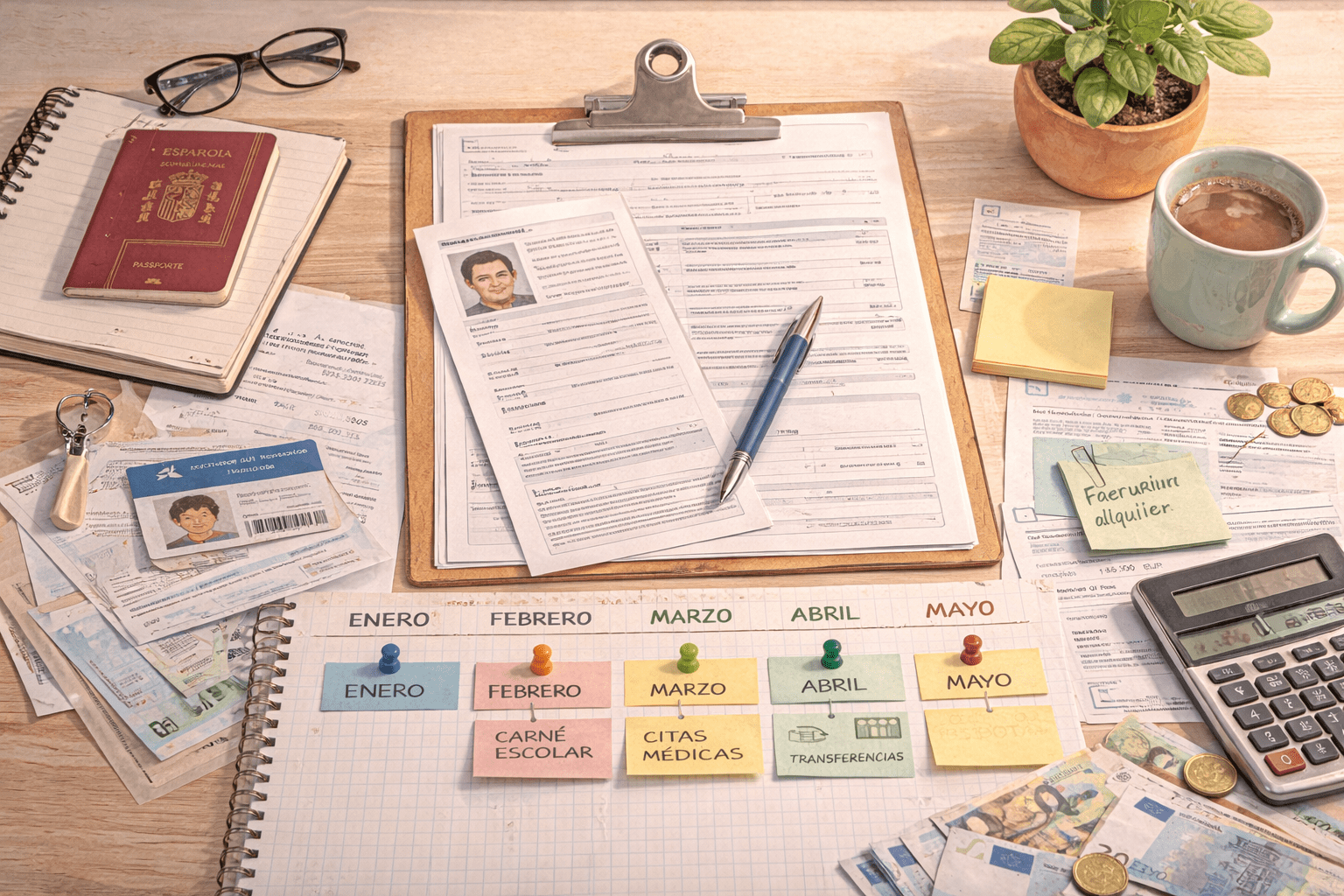
Practical recommendation: create a folder (physical and digital) and organise it by month. What usually goes wrong in these processes is not “not having anything”, but rather not being able to demonstrate continuity or not being able to date the presence correctly.

Check your identity documents.

Although the final documentation requirements have not yet been published, in administrative practice it is usually essential to have:

  • Valid passport (if possible) or available identification documentation.
  • Legible and consistent copies (first names, surnames, dates).

If there are any inconsistencies, it is advisable to correct them with advice before submitting anything.

Avoid risks: fraud, ‘shortcuts’ and false promises

In regularisation scenarios, scams arise (charges for appointments, simulated contracts, unlicensed ‘agents’). A simple rule: no one can guarantee you a result before there is a procedure in the Official State Gazette and before studying your case.

5) If you are a company or employer: what changes and how to make the most of them

For a company, this measure can mean something very specific: expanding access to talent that is already working or could work, but without a stable administrative pathway.

What opportunities does it open up?

  • More legally secure hiring when the person obtains authorisation and legal registration.
  • Reduction in staff turnover and the underground economy, as employment relationships can be formalised.

What to do now

Although the final procedure will depend on the text published in the Official State Gazette, you can move forward with internal work that will allow you to react quickly and with legal certainty when the deadline opens. Start by assessing your actual staffing needs — profiles, shifts, work centres and peak times — to identify which positions could be filled as soon as people obtain authorisation to work. Next, it is advisable to define a clear circuit between Human resources, employment advice, risk prevention and team leaders , so that the incorporation is orderly and does not create bottlenecks in hiring, recognition, training, or documentation.

At the same time, establish an internal policy of compliance and document traceability: the company should only hire and register employees when there is valid authorisation or accreditation, and keep evidence (contract, registration, communications and any other required documents) in order to be able to demonstrate good practices in the event of any verification. This approach reduces risks and also instils confidence in your staff and customers.

How to support your staff

If your team includes asylum seekers with red cards who have been denied international protection but have appealed that denial and are working under precautionary measures (or other resolutions that maintain their eligibility), the most valuable thing your company can offer is order, legal certainty, and practical support.

In practice, this means periodically verifying—always with the utmost confidentiality—that the current documentation maintains the authorisation to work: valid red card, proof of renewal where applicable and, if applicable, resolution or proof of the appeal and the request/granting of precautionary measures. This is not a matter of ‘asking for too much’, but rather of ensuring that the employment relationship is based on a valid qualification and that the company can prove this in the event of any checks.

From there, useful support is operational: facilitating flexible hours for court appearances, notifications, appointments, or renewals; setting up a point of contact in HR to channel documentation without exposing the person; and establishing internal reminders about expiry dates and renewals, because an administrative oversight can lead to avoidable interruptions.

Finally, if the Royal Decree on regularisation confirms a specific route for asylum seekers in certain circumstances, the company can support its staff with a clear policy of verified information, avoiding rumours and always referring to specialist advice when there are doubts. This approach protects the individual, reduces risks for the company and reinforces a stable and dignified working environment.

6) Probable timeline and what to watch for starting 27 January

The decisive factors in the coming weeks will be: the final approval of the Royal Decree, its publication in the Official State Gazette (BOE) and the publication of implementation instructions (submission channels, documentary accreditation, internal deadlines, possible fees and admission criteria).

Until then, if your case fits the profile of a person who can benefit from this regularisation process, your best strategy is to prepare yourself to act within the planned window without improvising: organised documentation, clear dates and rigorous advice when the final text is available.

7) How SenValos can help you

At SenValos, we work with a simple idea: to guide you with accurate and realistic information, without feeding false expectations and focusing on safe decisions for you or your organisation.

Once the measure has been approved and published in the Official State Gazette, we will be able to:

  • Analyse your case (migrant) or your situation as a company/employer.
  • Assist you in interpreting requirements, preparing documentation, and avoiding errors.
  • Supporting you so that regularisation, if applicable, translates into stability, decent employment and real inclusion.

COIDAMUXÍA: intergenerational volunteering to combat loneliness among older people in rural Muxía

Today, 31 October 2025, we officially close COIDAMUXÍA, an intergenerational volunteering initiative promoted by the Muxía Council to reduce unwanted loneliness among older people and strengthen community cohesion. The programme, co-financed by the Regional Government of Galicia, is part of the Recovery, Transformation and Resilience Plan financed by the European Union (NextGenerationEU) and ran from 1 August to 31 October 2025, providing a local, evidence-based response to a growing social challenge in rural Galicia.

The challenge: unwanted loneliness in rural areas

Unwanted loneliness affects a significant proportion of the elderly population in Spain, particularly in rural areas where distance, the loss of family networks and limited resources make it difficult to access regular support. The design of COIDAMUXÍA is based precisely on this local and national diagnosis, which highlights the persistence of situations of prolonged loneliness and the need for specific home and community support in areas such as Muxía.

What we did at COIDAMUXÍA

The project combined home support and intergenerational meetings with a participatory methodology. Among the actions implemented, the following stand out:

  • Recruitment and selection of volunteers, in coordination with local social organisations.
  • Specialised training for volunteers (designing solidarity initiatives, emotional support). This training was designed with a practical approach and based on real-life cases.
  • Intergenerational pairing (senior–young volunteer pairs and an elderly beneficiary) for weekly, flexible and personalised companionship: conversation, therapeutic walks and connection with other elderly people.
  • Intergenerational encounters and design thinking dynamics so that volunteers themselves could devise pilot initiatives tailored to the real needs identified in homes.

This architecture made it possible to offer regular, measurable human support, with continuous monitoring and final evaluation based on indicators of impact on older people, volunteers and the community.

Who participated

COIDAMUXÍA was designed to accompany independent elderly people who need occasional support and to train senior and young volunteers in care and community revitalisation. The design framework envisaged 20 older people and 8 volunteers.

In practice, a key piece of information about participation that we would like to highlight is that five of the eight volunteers came from abroad. This diversity enriched the bonds that were formed and reinforced our conviction that the participation of migrants as volunteers is a strategic asset for community well-being, inclusion and employability in the care ecosystem.

Achievements and value added

Although COIDAMUXÍA has been a pilot project, its impact has resulted in concrete progress and solid foundations for continuity and replication:

  1. Stable intergenerational support network: weekly contact and active listening improved the emotional wellbeing and social participation of the elderly people receiving support.
  2. Trained and empowered volunteers: volunteers strengthened their skills in care, communication, first aid and small-scale social entrepreneurship, increasing their motivation to remain active in the region.
  3. Social innovation from the bottom up: the use of design thinking allowed pilot initiatives to be tested and adjustments to be made to what worked, promoting practical and replicable learning.
  4. Community fabric and collaboration: we work with social services, which is essential for reaching more dispersed parishes and sustaining our intervention over time.
  5. Replicable and scalable model: COIDAMUXÍA documented good practices and laid the foundations for a methodological guide to facilitate replication in other rural municipalities facing similar challenges.

Furthermore, the project was implemented within the framework of call BS508E (intergenerational volunteering in rural areas) funded by the European Union – NextGenerationEU (PRTR), aligning local intervention with European priorities for social cohesion and innovation in care.

Why volunteering programmes matter in the face of loneliness

Volunteer programmes do not replace professional services, but they do multiply their reach: they go where it is difficult to go, build trust door to door and activate latent resources in the community. In rural contexts, this proximity + continuity approach makes all the difference: it reinforces autonomy, prevents situations of vulnerability and weaves networks between generations and diverse backgrounds.

In particular, the participation of migrants brings perspectives, languages and experiences that enrich the support provided and accelerate their inclusion in the municipality (relationships, employment references, cross-cutting skills). When, as in COIDAMUXÍA, the majority of the volunteer team comes from abroad, the message is clear: care is a common language and a real path to two-way integration (those who help also feel part of the community, learn and plan for the future). This commitment to employability linked to care is part of the project’s DNA and is in line with strategies to promote volunteering in Galicia.

Measurement and continuous improvement

From the outset, we incorporated a monitoring and evaluation system with surveys, interviews and visit logs to measure the perceived reduction in loneliness, the satisfaction of older people and volunteers, and the degree of community participation. This evaluation not only guarantees transparency and quality, but also allows us to identify which initiatives work best, consolidate them and transfer them to new contexts.

Looking ahead

COIDAMUXÍA ends today, but its lessons continue. We have demonstrated that, with training, regular support, social innovation, and partnerships, intergenerational volunteering reduces unwanted loneliness and strengthens rural communities. Our next step is to consolidate and scale up: sharing the methodology, keeping the volunteer network alive, and adding collaborations so that more older people feel accompanied in their daily lives.

2025 at SenValos NGO: a year of inclusion, partnerships and measurable results

31st December 2025. We close the year with a mixture of quiet pride and responsibility. Pride, because 2025 has been a year of sustained hard work, of presence in the territory and of projects that have responded to real needs. Responsibility, because every piece of data we share and every story we accompany reminds us that social inclusion is not an abstract idea: it is a daily, demanding and collective task.

In a social context where progress coexists with uncertainty —and where, on occasion, we hear discourse that simplifies diversity or questions sustainability and interculturalism— at ONGD SenValos we have opted for a clear approach: to act with rigour, closeness and evidence, forging alliances to make opportunities more accessible to all and to make our communities more cohesive, safer and more prosperous.

This article is a summary of what we have achieved in 2025, the results we have attained, and our outlook as we enter 2026.

A key idea that has guided 2025: inclusion that is built locally

If anything defines this year, it is the combination of three elements:

  1. Territory: grounded projects with a real presence in municipalities and regions.
  2. Support: inclusion processes that are not resolved in a single session, but rather through sustained pathways.
  3. Partnerships: local government, community organisations, businesses and committed citizens.

Social inclusion, employability, education, community health and rural well-being do not depend on a single intervention. They depend on networks and continuity. That is why at SenValos we have prioritised networking, coordination with local agents and the ability to adapt each project to the specific reality of each location.

Main projects for 2025

1) Social inclusion of migrants in A Coruña, Negreira, Vilagarcía de Arousa and Chantada

During 2025, we developed various social inclusion projects aimed at migrants in A Coruña, Negreira, Vilagarcía de Arousa, and Chantada. The common goal was to reduce barriers and expand opportunities through support, guidance, community activation, and coordinated referral to resources.

These projects are based on a simple premise: inclusion does not happen ‘by inertia’. It requires accessible information, support at key moments, assistance in navigating procedures and resources, and also spaces where community ties can be strengthened.

2) European project: training in host languages using AI, in collaboration with Poland

Language is a key. It opens doors to social participation, education, employment and access to services. In 2025, we are promoting a European project for training in host languages using AI, in collaboration with Poland.

The focus has been on exploring more personalised and accessible approaches: different learning rhythms, adaptable itineraries and resources that reduce dependence on a single teaching format. Innovation, in our approach, does not replace the human element: it reinforces it. Technology is useful when it broadens access, reduces gaps and respects the diversity of contexts.

3) COIDAMUXÍA: promoting volunteering to alleviate unwanted loneliness in rural areas

Rural areas don’t just need services: they need community. In 2025, we launched a project to promote volunteering through COIDAMUXÍA, aimed at alleviating unwanted loneliness in rural areas.

Unwanted loneliness is a silent phenomenon that affects health and well-being. Responding to it requires sensitivity, continuity and a form of care that does not infantilise or invade, but rather accompanies with respect. Volunteering, when well designed and well managed, can be a powerful tool for strengthening bonds, activating neighbourhood networks and sustaining everyday life.

4) VALÍA: comprehensive itinerary for migrant women in vulnerable situations

In 2025, we developed the VALÍA project, a comprehensive programme for vulnerable migrant women. This work was based on a reality that must be stated bluntly: many migrant women face multiple barriers (administrative, employment, linguistic, caregiving, social isolation, and access to rights).

A comprehensive approach means providing support with a gender and rights perspective, coordinating resources and sustaining processes, not just ‘responding to specific demands’. At VALÍA, the priority has been to strengthen capacities, protect rights and expand support networks so that each person can build their life project with greater security and autonomy.

5) San Isidro Eco-farm: social and labour inclusion through regenerative agriculture

The ecological transition is not just an environmental issue: it is also a social one. In 2025, we are moving forward with the social and labour inclusion project through regenerative agriculture at Ecogranja San Isidro.

Regenerative agriculture connects employment, practical learning, sustainability and territorial roots. Working from this approach means thinking long term: healthier soils, lower-impact production, and at the same time, inclusion pathways that can open doors to employment and entrepreneurship in the agri-food sector.

6) Educational support for young migrants in A Coruña, with assistance in the form of school supplies.

Education is a right and also a predictor of future opportunities. In 2025, we continued the educational support project for young migrants in A Coruña, including assistance with the provision of school supplies.

Here, the objective is very specific: that the starting point does not determine the ceiling. Accompanying students in their studies, reinforcing habits, supporting educational continuity and reducing material barriers is a direct investment in the future, in self-esteem and in belonging.

7) Revitalisation of the agroecological production sector in the region of A Coruña

In 2025, we will participate as a driving force in the agroecological production sector in the region of A Coruña. Agroecology is a path to regional development with economic, environmental and social potential. Boosting the sector means facilitating connections, activating networks, raising awareness of initiatives and contributing to a more resilient production ecosystem.

This work has a strategic component: if we want vibrant territories and just transitions, we need local value chains, decent employment and sustainable production models that leave no one behind.

8) Promotion of migrant associations: support for initiatives in A Coruña, Betanzos and Costa da Morte

Inclusion is strengthened when there is community participation and organisation. In 2025, we will reinforce the promotion of migrant associations, supporting initiatives in A Coruña, Betanzos and Costa da Morte.

This support seeks something essential: that migrants are not only recipients of services, but also protagonists of proposals, spaces for coexistence and collective actions. Associationism is a vehicle for active citizenship and a key element in building more cohesive communities.

2025 results: data that speaks to effort and impact

Accountability matters. Not only for transparency, but because it allows us to learn, improve, and sustain social support for what works.

In 2025, at SenValos NGO:

  • We assisted 643 migrants throughout the year.
  • Sixty-three per cent were women, reinforcing the importance of maintaining specific approaches and measures that address structural inequalities.
  • We trained 95 people, promoting key skills for autonomy and employability.
  • We achieved stable employment for 34 people, a particularly significant indicator due to its direct impact on economic security and life plans.
  • We have had a positive indirect impact on more than 13,600 people through community actions, awareness-raising, networking, revitalisation and improvement of environments.

These figures are not an end goal: they are a starting point for further improvement. Behind each figure lies time, coordination, monitoring, and also the determination of those who trust in our programmes and participate in them.

What 2025 has taught us (and what we will not lose sight of)

This year leaves us with clear lessons:

  • Itineraries work better than isolated interventions. Inclusion requires continuity and follow-up.
  • The community approach multiplies the impact. When you activate local networks, the changes are sustained beyond a single project.
  • Useful innovation is innovation that bridges gaps. AI and technology make sense when they improve access, personalisation, and efficiency without dehumanising processes.
  • Rural areas require specific solutions. Unwanted loneliness cannot be addressed with urban solutions: it requires closeness, presence and respect for the rhythms of the territory.
  • Sustainability and inclusion are two sides of the same transition. There is no viable environmental future without social justice, nor lasting social justice without sustainable environments.

Vision for 2026: consolidate, scale up and take care of the essentials

We are entering 2026 with a practical and forward-looking vision: to consolidate what works, scale up what can be replicated, and strengthen the quality of our support. This involves:

  • strengthen employability and training pathways;
  • expand community-based and participatory approaches;
  • seguir innovando en aprendizaje de lenguas y metodologías accesibles;
  • strengthen actions that connect agroecology, employment and territory;
  • and take care of the team and volunteers, because there can be no sustained impact without well-cared-for organisations.

Thank you, and how to keep adding

None of this is done alone. Thanks to the participants, volunteers, professional team, collaborating entities, administrations, and the productive fabric that has walked alongside SenValos throughout 2025.

If you would like to contribute to the continuation of this work and help it reach further in 2026, there are several ways you can get involved: participate, spread the word, collaborate as an organisation, or support SenValos’ initiatives in your field. The important thing remains the same: to continue building community and real opportunities, with rigour and humanity.

Every menu counts: SenValos in the Collective Catering PDE

SenValos’ participation in the Collective Restoration Entrepreneurial Discovery Process (PDE) promoted by the Paideia Galiza Foundation and the Juana de Vega Foundation has been an opportunity to send a clear message: the transition towards responsible collective catering in Galicia will only make sense if, at the same time, we strengthen the agroecological fabric and open up space for the labour inclusion and entrepreneurship of migrants.

At the round table of experts on organic production, SenValos brought this dual perspective to the table: territory and decent employment; ecological transition and social justice; healthy menus and life projects that take root in Galicia.

A PDE to rethink collective catering in terms of territory

PDEs are participatory workshops in which government, businesses, social organisations, research centres and other key players come together to identify challenges and business opportunities linked to the Smart Specialisation Strategy (RIS3). In this case, the PDE focused on how to promote collective catering – both public and private – that incorporates criteria of circularity, ecology and sustainability, and opens up new business opportunities in Galicia.

This PDE is part of Paideia’s Circular Challenge project, which works to support innovation and the circular economy in small Galician businesses, covering different productive sectors.

What we took away from the presentation by the Juana de Vega Foundation

The initial presentation by the Juana de Vega Foundation, entitled ‘Responsible collective catering: how to achieve it and overcome obstacles’ (5 November 2025), clearly outlined both the urgency and the potential for transformation that collective catering has in Galicia.

Some key ideas that invite action

  • The food system is at the heart of major challenges: around 30% of global greenhouse gas emissions come from food; a third of food ends up in the bin; and millions of deaths each year are linked to unhealthy diets.
  • Galicia is a region with enormous agricultural potential, but it has been neglected: some 300,000 hectares of usable agricultural land have been lost since 1985 and some 500,000 hectares with good productive capacity are underused, with the consequent increase in the risk of large fires and the disappearance of agroforestry mosaics.
  • There is a high degree of external dependence on agri-food imports, especially for fruit, vegetables, potatoes and cereals. However, by recovering around 146,000 hectares of farmland, this dependence could be reduced by approximately 30% and progress made towards greater food sovereignty.
  • Organic production in Galicia is growing, but it is still far from reaching its potential: some 43,000 hectares (6–7% of the UAA), mainly pastureland, with very little organic land dedicated to fruit, vegetables, potatoes and cereals that actually feed collective canteens.
  • The regulatory framework is pushing in the right direction: the European Green Deal and the Farm to Fork Strategy promote sustainable public food procurement. In Spain, annual spending on public food procurement is estimated at around €2.5 billion, which should become a lever for change towards healthier and more circular food systems.
  • The new Royal Decree 315/2025 on school menus sets minimum criteria for nutritional quality and sustainability: daily fruit and vegetables, a minimum amount of seasonal produce, increased consumption of legumes and fish, and the mandatory introduction of organic produce, with plans to extend these criteria to hospitals and care homes.
  • Galicia also has a new Food Quality Law (1/2024), which protects the quality, traceability and sustainability of Galician food products, and a law that incorporates the product life cycle as an evaluation criterion in public procurement.
  • School canteens are a decisive lever: there are 616 canteens and almost 77,000 diners, with more than 100,000 meals served every day in Galicia, but most of the concessions are in the hands of large companies based outside the region, which makes it difficult for small local producers to enter the market.
  • There are already inspiring examples that show it is possible: the municipal network of canteens in Ames, the EoAlimenta bioregion and Inditex’s sustainable corporate catering, as well as the ‘Ecocomedores da Biosfera’ in Mariñas Coruñesas and Terras do Mandeo, with an association of organic producers (ECOAGRA), training for kitchens and digital tools for marketing.
  • The main barriers are systemic: tenders designed for large batches, award criteria dominated by price, lack of logistics platforms, disconnect between supply and demand, and weakness of small farms in processing and marketing.
  • The solution lies in coordinating the entire value chain: local production, logistics, responsible purchasing, collective cooking and education for conscious consumption, working in a coordinated manner between administrations, companies, producers, cooks and social entities.

This analysis is fully in line with SenValos’ own mission: if land and value chains are not managed with social and ecological criteria, abandonment, precariousness and inequality will become entrenched.

SenValos’ contribution: agroecology and inclusion of migrants

At the PDE’s organic production table, SenValos has given a voice to those who are often left out of these conversations: migrants who are already supporting part of the food system, both in the countryside and in the restaurant industry, yet continue to face more barriers than opportunities.

Our commitment focuses on several areas:

  1. Supporting Galicia’s agroecological production network
    • Supporting small farms in their professionalisation and connection with collective catering channels.
    • Promoting partnerships between producers, school canteens, catering companies and local authorities, so that public and collective purchasing prioritises organic and locally sourced products.
  2. Facilitating the incorporation of migrants into this productive fabric
    • Designing job placement programmes that combine training in agroecology, sustainable cooking and cross-cutting skills with real labour needs in rural areas and the catering industry.
    • Promoting practices, contracts and social support that encourage workers to put down roots in the region, preventing migrant labour from being condemned to temporary and precarious employment.
  3. Promoting entrepreneurship with social and environmental impact
    • Supporting projects led by migrants in areas such as organic production, food processing and catering, helping these businesses to connect with local supply chains and responsible collective catering initiatives.

The message is simple: if we are going to redesign the menus that feed thousands of children, elderly people and workers every day, let’s take advantage of this effort to create decent jobs, diversify the business fabric and turn cultural diversity into an asset for the region.

From menus to life projects: next stop, Territorio Emprende

This vision will continue to take shape this weekend at the Territorio Emprende – Retiro Semente I: “O fogón e a foliada das alianzas” (Entrepreneurial Territory – Semente I Retreat: “The bonfire and the celebration of alliances”) event, organised by the Paideia Foundation. The retreat will take place at the Casa Rural A Casa Antiga do Monte rural guest house in Lestrobe (A Coruña), a space designed to combine reflection, coexistence and the design of impactful projects.

As part of the programme, on Saturday 29 November, the round table discussion ‘Inspiring Experience: Entrepreneurship with Impact’ will put a face and voice to this commitment to diverse entrepreneurship rooted in the region. Two migrant entrepreneurs supported by SenValos will share their experiences:

  • Marina, a Venezuelan agricultural innovator involved in agroecological production, is demonstrating that it is possible to combine technical knowledge, sustainable practices and an intercultural approach to food.
  • Mamadou, a Senegalese entrepreneur who runs the Faramaren restaurant, which incorporates local produce and gastronomic offerings that bring other cultures closer to the Galician palate, generating employment and revitalising the area.

This round table, moderated by sociologist and consultant Luisa Gallego, is part of a conference that also includes a co-creation ideas laboratory, film forum spaces on territory and sustainable future, and a collective closing ceremony of commitments.

Towards collective restoration that transforms territory and biographies

SenValos’ participation in the Collective Restoration PDE and Territorio Emprende is not an isolated event, but rather another step in a long-term strategy:

  • Linking the fight against rural depopulation and the risk of fires with the creation of decent jobs in the countryside and restoration.
  • Leverage the enormous volume of menus in collective dining halls as a tool to promote local organic production.
  • Ensure that migrants are included on equal terms in this ecological transition, whether through employment or entrepreneurship.

If you work in local government, a school canteen, a catering company or an agroecological farm, now is the time to ask yourself what role you can play. Every tender, every menu, every small supply agreement can be another piece in a fairer, more sustainable and inclusive Galician food system.

At SenValos, we will continue to focus on this: ensuring that every menu counts, and that every person who wants to build their life in Galicia can do so by contributing to a vibrant, diverse region with a bright future.

Giving Tuesday: when donating means investing in a more prosperous society

Every year, on the Tuesday after Black Friday and Cyber Monday, the focus shifts from consumption to generosity. It is Giving Tuesday, a global movement that began in 2012, inviting individuals, businesses and organisations to dedicate a day to “doing good”: donating money, time, knowledge or influence to support social causes.

In just a decade, Giving Tuesday has become one of the world’s major events for solidarity, mobilising billions of euros in a single day and supporting social organisations of all sizes. It is not just another campaign: it is a powerful reminder that, in the face of fear and polarisation, generosity remains a very real force for change.

In times of fear and rhetoric of rejection, donating is taking a stand.

We are living in a time when messages against sustainability, migrants and interculturalism are multiplying. Ideas such as the following are repeated:

  • “The ecological transition is impoverishing us.”
  • “Immigration is a burden on the system.”
  • “We cannot sustain so much social assistance.”

These arguments oversimplify a complex reality and, above all, omit a key fact: advancing sustainability, inclusion and diversity does not impoverish us as a society; on the contrary, it helps lay the foundations for more solid, resilient and shared prosperity.

Donating on Giving Tuesday to social causes related to these areas is, in that sense, a very clear way of saying: ‘I want a country that is moving towards a sustainable, inclusive and prosperous future, and I am willing to invest in it.’

Myth 1: “Sustainability makes us poorer”

Reality: when well managed, the green transition creates jobs, innovation and resilience.

European data shows that employment in the so-called ‘environmental economy’ (renewable energy, waste management, energy efficiency, circular economy, etc.) has grown faster than employment in the economy as a whole in recent decades.

It is true that the ecological transition involves costs, sectoral changes and tensions, and also generates political resistance. But the evidence is clear: delaying the transition is more costly in terms of employment and well-being than accelerating it with social justice criteria.

When you donate to organisations working for social and environmental sustainability, you are not ‘throwing money away’ on a green fad. You are contributing to:

  • Prepare people in vulnerable situations to access green jobs of the present and future.
  • Promote production and consumption models that reduce risks (climate, energy, food) and, therefore, future costs for society as a whole.
  • Protecting the health, territory and livelihoods of communities that, if no action is taken, will be hardest hit by environmental crises.

It is an investment in resilience and competitiveness, not an ideological luxury.

Myth 2: ‘Immigration and interculturalism take resources away from us.’

Reality: migration is already one of the drivers of economic and demographic prosperity.

While some discourses insist on portraying migrants as a burden, the data tells a different story.

  • In many countries, migrants represent a very significant percentage of entrepreneurs.
  • In many advanced economies, migrants have been responsible for much of the growth in employment and for alleviating labour shortages in key sectors.

In the case of Spain, various recent analyses indicate that:

  • The Spanish economy has grown above the European average, with a significant proportion of new jobs filled by people born outside Spain.
  • Immigration is sustaining the growth of the working population in a country with a rapidly ageing demographic, and making a significant contribution to the social security system.

In other words, without the contribution of migrants, our capacity to maintain public services, pension systems and productive fabric would be lower, not higher.

Donating to organisations that support migrants in their integration into the labour market, entrepreneurship and social participation is therefore a very direct commitment to:

  • More jobs and more entrepreneurship.
  • More quotations and more local consumption.
  • Greater social cohesion and less exclusion, which is always much more expensive to manage in the medium and long term.

Myth 3: ‘Cultural diversity creates conflict’

Reality: interculturality, if nurtured, multiplies creativity, innovation and cohesion.

Diverse societies are not automatically fairer; they need specific policies and practices to ensure that difference becomes shared wealth rather than inequality. This is where social causes that work on interculturality are essential:

  • They measured conflicts and prevented polarisation by creating meeting spaces.
  • They offer training, support and tools to combat racism and discrimination.
  • They connect people from diverse backgrounds with real opportunities for employment, housing, participation, and entrepreneurship.

When you decide to donate to intercultural projects, you are supporting the kind of society where diversity is not grudgingly tolerated, but rather leveraged as a catalyst for innovation, economic creativity, and stronger democracy.

And what does all this have to do with Giving Tuesday and ONGD SenValos?

Giving Tuesday is a very specific occasion to turn your values into action. It’s not just a hashtag: it’s an opportunity to choose what kind of future you want to fund.

At ONGD SenValos, we work precisely at those crossroads where the model of society we will have tomorrow is at stake:

  • Sustainability and territory, supporting agroecological and responsible production initiatives that boost the local productive fabric and generate decent employment.
  • Migrants and entrepreneurship, supporting pathways to employment and entrepreneurial projects that bring economic and social value to the community as a whole.
  • Interculturality and inclusion, creating spaces and programmes where people from diverse backgrounds can meet, learn and participate on equal terms.

Each donation helps sustain and expand these processes: more training, more personalised support, more technical support for entrepreneurship, more partnerships with companies committed to social and environmental sustainability. In clear terms: more real opportunities for individuals and communities to get ahead and contribute to collective well-being.

This Giving Tuesday, your donation is a statement about the future.

You can look at the current context and focus on the messages of fear: ‘there isn’t enough for everyone’, ‘sustainability is a luxury’, ‘migration takes away from us’. Or you can look at the data and the reality on the ground and make another decision: to commit to prosperity that is not based on exclusion, but on inclusion; not on exploitation, but on care; not on competition between those who have less, but on building together.

On Giving Tuesday, we invite you to do so in a very specific way:

  • With a one-off donation, to promote projects that are already generating employment, inclusion and sustainability.
  • With a regular donation, which allows for long-term planning and supports profound changes in the lives of many people.
  • Sharing with those around you why you support organisations such as ONGD SenValos and how you see generosity as an investment in our shared future.

Donating today is not ‘doing charity’. It is actively participating in the design of a more just, inclusive and prosperous society. On this Giving Tuesday, you decide which side of history you want to be on.

Donating a House to an NGO: An Act of Love and Solidarity

Have you ever thought about the transformative power of a home? It is not only a roof over our heads, but a space where dreams are nurtured and futures are built. Today, we invite you to explore how donating a house to an NGO can be an act of love that changes lives and strengthens communities.

Why Donate a House?


Donating a house to an NGO is not just a gesture of generosity, but an investment in collective well-being. NGOs use these spaces to create support centres, temporary shelters or even schools, thus expanding their capacity to serve those most in need.

The Donation Process


The process of donating a house is simple, but it requires consideration of legal and fiscal aspects. At ONGD SenValos, we accompany you every step of the way, ensuring that your donation meets all the requirements and giving you peace of mind that your contribution makes a difference.

Benefits for the Donor


In addition to the social impact, donating property brings tax benefits. Depending on local legislation, you may qualify for tax deductions or exemptions, making your donation a smart financial decision as well.

The tax benefits of donating a house to an NGO are significant and may vary according to local legislation. In Spain, for example, individuals can benefit from personal income tax deductions: 80% deduction for the first €150 donated and 35% for higher amounts. If you have donated to the same entity for at least 3 years for the same or higher amounts, the deduction can be increased to 40%. These deductions have a limit of 10% of the net tax base.

It is important to consult with a tax advisor to fully understand the specific benefits in your situation and to ensure that the NGO qualifies to offer these tax advantages.

What are the requirements for an NGO to receive a donation?

In order for an NGO in Spain to receive donations and for donors to benefit from the corresponding tax deductions, the organisation must fulfil several requirements:

  1. The entity must be included in those regulated by Law 49/2002.
  2. It must be able to issue a certificate attesting to the donation, showing the date, the amount and, if not in cash, a document attesting to the delivery of the donated property.
  3. The NGO must specify the intended use of the donated object, ensuring that it will be used for its specific purpose.

These requirements ensure transparency and allow both the NGO and the donor to benefit from the tax advantages established by law.

Building Futures


Each donated house becomes a beacon of hope. Imagine a space where children learn, families grow and communities are strengthened. Your donation has the power to create that space.

Join the Cause


If you are considering donating a house to an NGO, visit our SenValos NGDO website. There you will find all the information you need to make an informed decision and discover how your generosity can become a lasting legacy.

Your home can be much more than a set of walls; it can be the place where someone finds a new beginning. Are you ready to make a difference? Visit ONGD SenValos for more information and take the first step towards an act of love that will resonate for generations.

Extension of the deadline until October 2025 to apply for Spanish nationality under the Law of Democratic Memory.

The Council of Ministers has agreed to extend by one year the period for exercising the right to opt for Spanish nationality set out in the eighth additional provision of Law 20/2022, of 19 October, on Democratic Memory, making it possible to extend to a third year the two-year period provided for in that section for exercising the right to opt for Spanish nationality, in the cases recognised in that additional provision.

The application of this additional provision involves the Civil Registry Offices, with a very significant impact on the Consular Civil Registries. In some Consular Posts, despite the efforts made to provide them with additional resources, the two-year period is not sufficient to absorb the demand for appointments for the exercise of the right.

Consequently, it is necessary to exercise the power granted to the Council of Ministers to extend by one year the period of two years foreseen in the law to opt for Spanish nationality, in such a way that all the applications for appointment already submitted and pending the assignment of a date can be dealt with, as well as all the applications submitted that cannot be dealt with in the first two years of application initially foreseen in the law.

The two-year period of two years provided for in that section for the exercise of the right to opt for Spanish nationality recognised by that additional provision for those born outside Spain of a father or mother, grandfather or grandmother, who were originally Spanish, and who, as a result of having suffered exile for political, ideological or religious reasons or for reasons of sexual orientation and identity, have lost or renounced Spanish nationality, as well as persons who are in the following situations, is therefore extended for a third year:

a) Children born abroad to Spanish women who lost their nationality because they married foreigners before the entry into force of the 1978 Constitution.

b) Sons and daughters of legal age of those Spaniards whose nationality of origin was recognised by virtue of the right of option in accordance with the provisions of this law or the seventh additional provision of Law 52/2007, which recognises and extends rights and establishes measures in favour of those who suffered persecution or violence during the civil war and the dictatorship.

The eighth additional provision of the Law of Democratic Memory itself establishes that the aforementioned two-year period begins with the entry into force of the law, so that its validity would end on 22 October 2024.

Since the entry into force of the aforementioned Law, until 31 March 2024, the Consular Civil Registry Offices have received 301,121 applications for the option of Spanish nationality of origin.

More than 95 percent of the applications were received at the Spanish Consular Offices in Latin America and the Consulate General of Spain in Miami. Specifically, the five consulates general of Spain in Argentina account for 40 percent of the applications, and together with the Consulate General of Spain in Havana, they account for more than 53 percent of the applications. In all of them there are a number of applicants who are unlikely to be summoned and attended to before the end of the two-year period provided for in the aforementioned eighth additional provision of the Law.

For this reason, the Government is extending the two-year deadline for applying for Spanish nationality by one year, so that all applications for appointments already submitted and pending the assignment of a date can be dealt with, as well as all applications submitted that cannot be dealt with in the first two years of application initially foreseen in the law.

Ukraine is HOME – Information website for refugees from Ukraine developed by UNHCR

The crisis in Ukraine has displaced millions, creating one of the largest waves of refugees in recent history. With families separated and lives disrupted, the need for clear and accessible information about relief resources has never been more critical.

UNHCR Platform – Ukraine is Home

The “Ukraine is Home” platform, supported by UNHCR, provides a digital safe haven for those seeking information and guidance. From legal documents to accommodation and medical care, this platform has become an indispensable resource for Ukrainian refugees.

Services and Support Available

European solidarity is manifested through a variety of services aimed at facilitating the integration and well-being of refugees. These services include:

  • Legal Advice and Documentation
  • Temporary and Permanent Accommodation Options
  • Access to Medical and Psychological Care
  • Integration and Education Programmes
  • Employment and Vocational Training Opportunities

How to Access Help

Accessing these resources can seem overwhelming, but Ukraine is Home simplifies the process. With step-by-step guides and personalised assistance, the platform ensures that no one is left behind.

Navigating the Platform

The platform’s intuitive interface and inclusive language allow users of all ages and abilities to find the help they need with ease.

Information is power, and Ukraine is Home empowers refugees in Ukraine with the knowledge they need to rebuild their lives. We invite you to visit the platform, learn more and, if you can, offer your support.