Extraordinary 2026 regularisation: a clear guide for town halls assisting migrants and asylum seekers

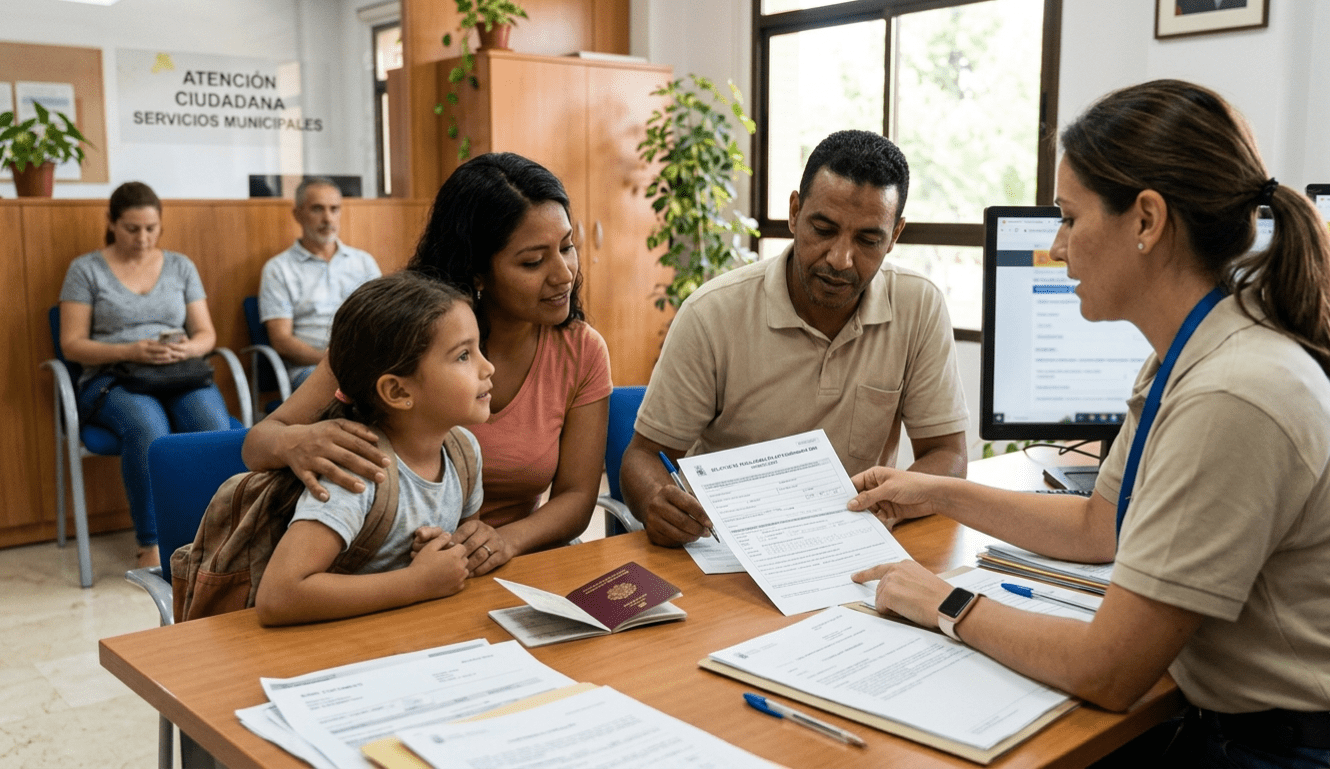
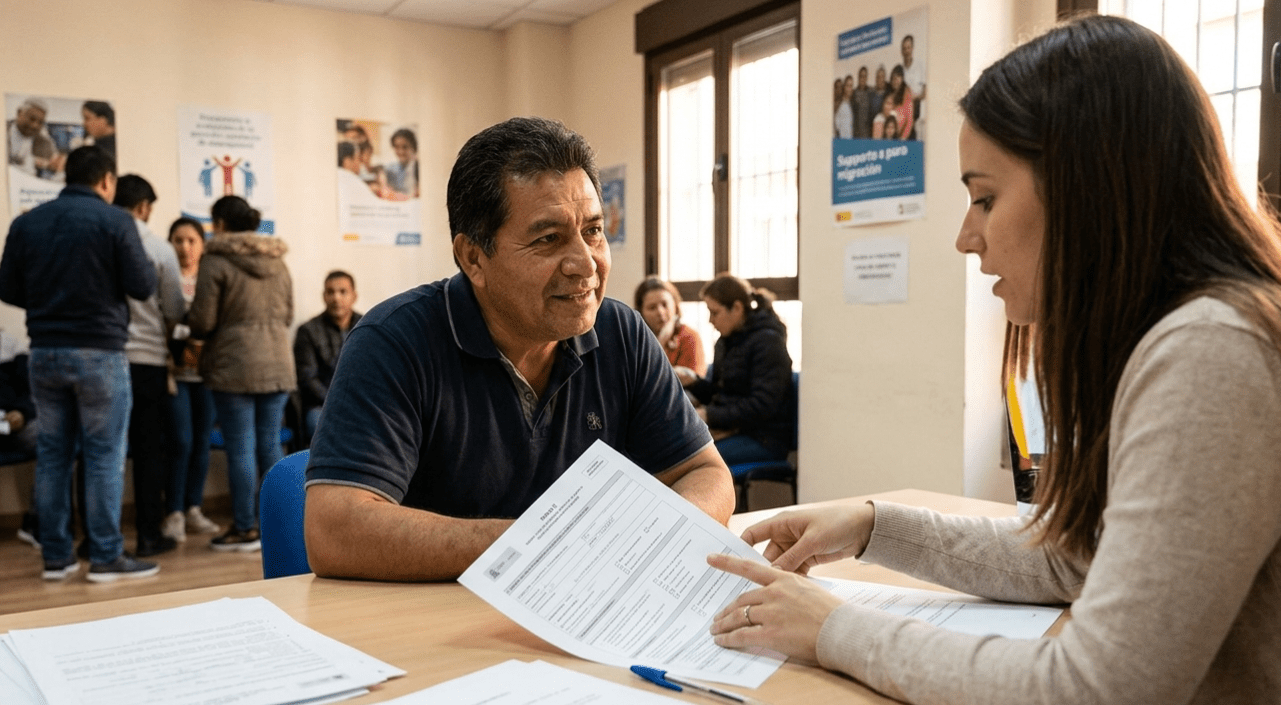
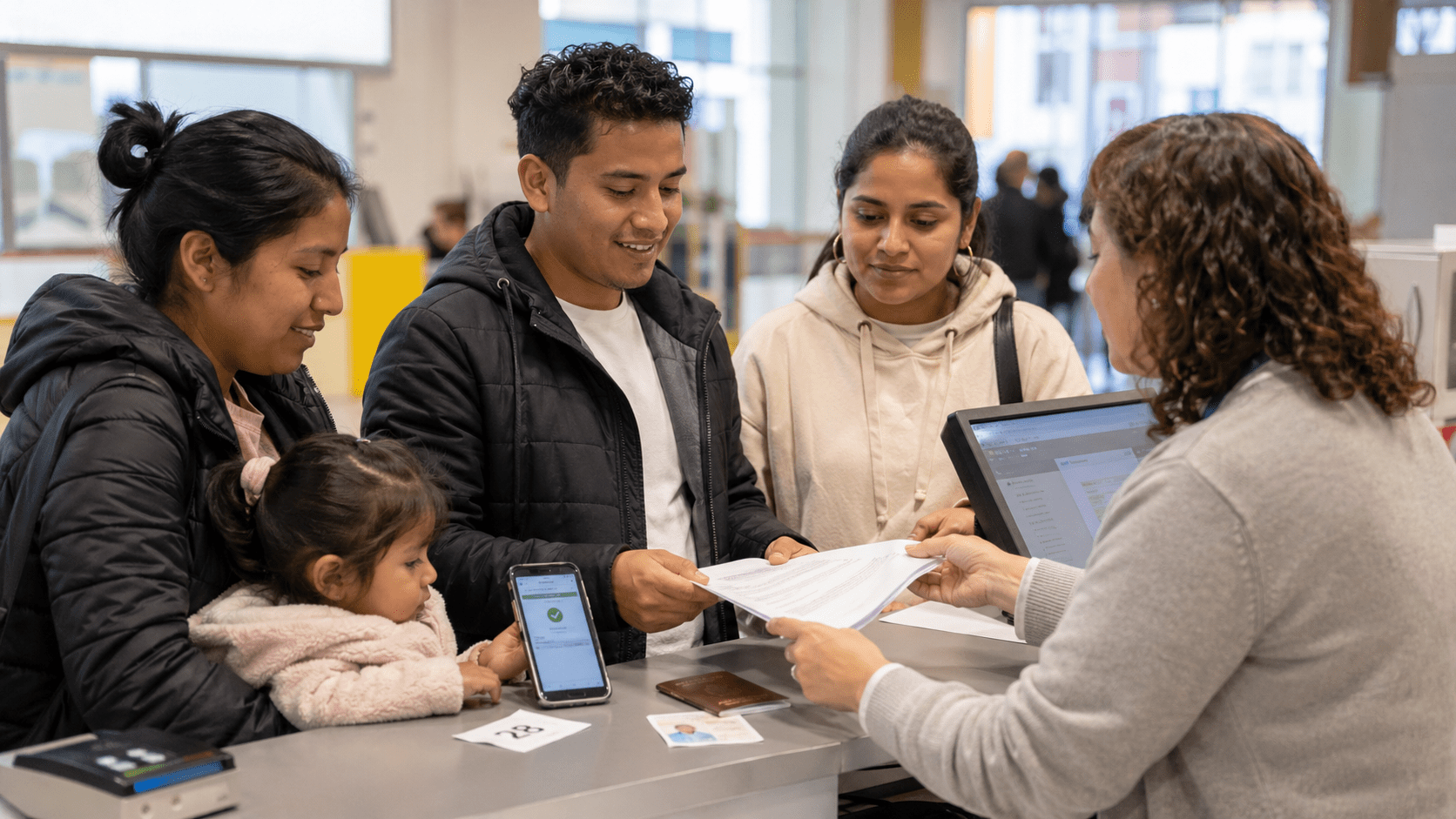
The 2026 extraordinary regularisation process is already under way, and town halls will have an important role to play. Not because they decide on applications—that falls under the responsibility of the State Administration—but because many people will first go to their town hall for information, to register as residents, to prove cohabitation, to provide evidence of their daughters’ and sons’ schooling, or to seek social support.

For municipal staff, this means something very specific: they will need to provide clear information, identify correctly who may qualify for the process, give guidance on the basic documentation, and prevent mistakes that could delay or complicate the application. The Royal Decree was published on 15 April 2026. The online route opened on 16 April. The in-person route begins on 20 April, although appointments also open from 16 April. The general application deadline is 30 June.

What town hall staff need to know first

This regularisation is intended for two very specific groups:

1. People seeking international protection who submitted their application before 1 January 2026.
2. People in an irregular administrative situation who arrived in Spain before 1 January 2026.

In addition, there are two general requirements for both routes:

  • To be in Spain before 1 January 2026 and to prove continuous residence of at least five months at the time of application.
  • To have no criminal record and not pose a threat to public order, public security or public health.

Municipal services should convey a clear message here: this is not a process open to every foreign national, but rather to people who fall within these specific cases. In fact, the official information states that it is not intended for people who already hold a valid authorisation or are renewing one, for people covered by temporary protection because of Ukraine, or for stateless people, who have their own procedures.

What role do town halls play in this process?

The town hall does not grant the authorisation, but it can be decisive in ensuring that people arrive at the procedure well prepared. In practice, its role can be focused on six functions:

1. Provide correct initial guidance

Many people will not know whether they should use the asylum route or the irregular-status route. This is where the first municipal screening is essential.

2. Help identify evidence of residence

The person will need to show that they were in Spain before 1 January 2026 and have remained here for at least five consecutive months before submitting the application. The official information accepts any legally valid evidence that makes it possible to identify the person.

At this point, town halls are often key because useful municipal documents may exist, such as registration certificates, reports or administrative records, depending on the case.

3. Provide documentation on cohabitation or schooling

For the extraordinary regularisation route based on family unity, the family relationship and cohabitation will need to be proved. Where there are minors, evidence of their schooling may also be required.

4. Activate social services when there is vulnerability

In cases involving vulnerability, the information sheet requires a certificate from the competent authority or a collaborating organisation proving that situation. The EX-32 form itself states that this certificate may come from the competent bodies responsible for social assistance or from Third Sector organisations registered in the Electronic Register of Immigration Collaborators.

This means that municipal social services may have an important role, provided that they are the competent body in that territory.

5. Explain the submission channels clearly

Many people will go to the town hall simply to ask “where do I submit it?”. It is worth having a very clear answer to that question.

6. Refer cases when they are complex

If there are identity problems, criminal-record issues in the country of origin, a complex family situation or doubts about other, more suitable regularisation routes, referring the person to specialist advice or collaborating organisations will be the most prudent option.

Requirements for people seeking asylum

People seeking international protection may qualify if their application was submitted before 1 January 2026. For this group, the basic documentation includes:

  • Official EX-31 form.
  • A complete copy of the passport, even if expired, or a registration certificate or travel document recognised in Spain.
  • A criminal-record certificate from the country or countries where the person lived during the five years before entering Spain.
  • A document proving that the application for international protection was submitted before 1 January 2026.
  • A document proving residence in Spain for at least five consecutive months before the application.
  • Proof of payment of the fee.

For municipal staff, the most important point is this: if the person had already applied for asylum before that date, they do not also have to prove employment, family ties or vulnerability. That additional requirement applies to the irregular-status route, not to the specific route for applicants for international protection. This makes initial guidance much easier.

Requirements for people in an irregular administrative situation

People in an irregular situation follow the route under Additional Provision 21, using form EX-32. In addition to the general requirements, they must prove at least one of the following three situations:

  • To have worked as an employee or self-employed person during their residence in Spain, or to prove an intention to work through a job offer or a declaration of responsibility for self-employed activity.
  • To remain in Spain with their family unit, consisting of minor daughters and sons, adult daughters and sons with disabilities, or first-degree ascendants who live with them.
  • To be in a vulnerable situation, certified by the competent authority responsible for social assistance.

This point is very important for municipal services: being in an irregular situation is not enough on its own. The person must also fall within one of those three situations.

Documentation for each situation

A) Si acredita actividad laboral

They must provide:

  • EX-32 form.
  • Passport, registration certificate or travel document.
  • Criminal-record certificate.
  • Documentation of the work carried out or of the job offer.
    The form itself adds that a declaration of responsibility may also be provided if the intention is to work as a self-employed person.

B) If a family unit is proved

They must provide:

  • Passport, registration certificate or travel document.
  • Criminal-record certificate.
  • Documentation proving the family relationship.
  • Documentation proving cohabitation with the family unit.
  • Proof of payment of the fee.

The form adds that the schooling of minors or of adults with disabilities with whom the person lives must be documented.

C) If vulnerability is proved

They must provide:

  • Passport, registration certificate or travel document.
  • Criminal-record certificate.
  • Documentation proving residence in Spain.
  • A vulnerability certificate from the competent authority or collaborating organisation.
  • Proof of payment of the fee.

How daughters and sons can also be regularised

This is one of the most relevant points for town halls, because many enquiries will focus on minors.

The official documentation provides that, when the applicant has minor daughters or sons, or adult daughters or sons with disabilities who require support, they may simultaneously apply for a residence authorisation for them under Articles 159 and 160 of the Immigration Regulations. Both applications will be decided together.

If the minor was born in Spain

Article 159 applies. The general rule states that authorisation may be requested for minors born in Spain who are children of foreign parents with residence, and that it lasts for five years. Normally, it must be requested within six months of the birth or from the time the parent obtains residence. Under this extraordinary regularisation, that requirement is relaxed: the six-month limit does not apply.

If the minor was not born in Spain

Article 160 applies. During this extraordinary process, important requirements are relaxed: the prior two-year residence requirement is not imposed, nor is proof of the financial means and adequate housing normally required for family reunification.

What municipal staff need to know

In simple terms:
if the mother, father or guardian applies for extraordinary regularisation, they can also process the residence of their minor daughters and sons at the same time. The requirements have been eased in this process precisely to provide better protection for children. The Royal Decree itself stresses that these authorisations for minors may be granted for five years, guided by the best interests of the child.

Channels for submitting the application

The application can be submitted through two routes: online and in person.

Online (telematic):

It has been open since 16 April and operates 24 hours a day through the MERCURIO platform. It can be done:

  1. With the person’s own electronic certificate.
  2. Through a registered power of attorney.
  3. Through authorised professionals.
  4. Through organisations registered in the Register of Immigration Collaborators.

In-person route
In person

It begins on 20 April, always with a prior appointment, which can be requested from 16 April. In-person submission can be made at authorised offices of:

  • Immigration offices.
  • Social Security offices.
  • Post offices.

The official information adds that Correos has been authorised to provide support and management through assisted online submission, precisely to facilitate territorial access to the procedure.

How to request an appointment

According to the questions-and-answers guide, the appointment can be requested:

What town halls should say to prevent mistakes

There are several messages that municipal staff should repeat clearly:

First: proof of submission is not the same as the communication that proceedings have begun. The authorisation to work takes effect with that communication from UTEX, not with the simple submission receipt.

Second: the initial authorisation lasts one year and allows residence and work only in Spain, not in the rest of the European Union.

Third: after a favourable decision, the TIE must be requested from the Policía Nacional within one month.

Fourth: if the person cannot obtain the criminal-record certificate from their country of origin in time, there is an exceptional route to request that it be obtained through diplomatic channels, but this does not automatically replace the certificate. They must prove that they requested it and submit a declaration of responsibility and specific authorisation.

FAQ for town hall staff

1. Can the town hall process or decide on the regularisation?

No. The decision belongs to the General State Administration. The town hall can provide guidance, facilitate municipal documentation and, where appropriate, involve social services if it is the competent body to certify vulnerability.

2. Who can qualify for the process?

People seeking asylum whose application was submitted before 1 January 2026 and people in an irregular situation who arrived before that date, always with at least five months of residence and no relevant criminal record.

3. Should a person with a valid residence card apply for this regularisation?

No. The official information states that this process is not intended for people with a valid authorisation or one undergoing renewal or extension.

4. Do people seeking asylum have to prove employment, family ties or vulnerability?

Not through this specific route. They must prove that they were applicants for international protection before 1 January 2026, their residence in Spain and the general documentation.

5. Can people in an irregular situation apply even if they do not have a job?

Yes, but only if they fall within one of the other situations: family unit or vulnerability. If they cannot prove any of the three situations, they would not meet the requirements.

6. Can the whole family submit their applications at the same time?

Yes. The official guide states that, in a single in-person appointment, applications from people in the same household can be handled together. In addition, minor children can be processed at the same time.

7. How is a minor daughter or son regularised?

Together with the application of the mother, father or guardian, applying Articles 159 or 160 of the Regulations, depending on whether the child was born in Spain. This process includes important relaxations to protect children.

8. Which municipal documents may be useful?

Especially those that help prove residence, cohabitation, schooling or social circumstances. Residence can be proved through any legally valid evidence.

9. Where can a person without a digital certificate submit the application?

In person with a prior appointment, or online through a representative, authorised professional or collaborating organisation.

10. Can the application also be submitted through Correos?

Yes. The in-person route includes authorised post offices, and the Royal Decree also provides for Correos’ participation in supporting and managing the procedure.

11. When can the person start working?

Not from the simple submission receipt. They may do so once they receive the communication that the administrative procedure has begun.

12. Where can updated official information be found?

On the Ministry’s dedicated regularisation website, where the online route, prior appointments and information about collaborating organisations are brought together.

Conclusion

For town halls, the key is not to become an immigration office, but to be a reliable gateway. Good municipal support can prevent common mistakes: confusing the asylum route with the irregular-status route, forgetting proof of residence, failing to process daughters and sons at the same time, not activating social services in cases of vulnerability, or assuming that the submission receipt already authorises someone to work.

Put simply: the town hall does not decide, but it can make the difference between a well-prepared application and one that gets off to a bad start.

How to obtain the social vulnerability report for the 2026 extraordinary regularisation

The 2026 extraordinary regularisation allows migrants who were already in Spain before 1 January 2026 to apply for a residence and work permit. The application period opened online on 16 April, in-person assistance began on 20 April, and the general deadline is 30 June. The application can be submitted online, including through entities registered in the Register of Foreigners’ Collaborators.

The most important point: not everyone needs this report

The vulnerability report or certificate is not a general document for the entire regularisation process. It is only needed in one very specific case: when the person is in an irregular administrative situation and wants to apply for extraordinary roots on the basis of vulnerability using form EX-32. The official materials state that, for this route, the applicant must prove at least one of three situations: having worked or having a job offer or commitment, living with their family unit, or being in a situation of vulnerability. The certificate is required in this third situation.
https://www.inclusion.gob.es/documents/20121/7817425/Modelo%20de%20certificado%20de%20vulnerabilidad.pdf/a50a2832-48e2-1b30-4040-f072c9c2c582?version=1.0&download=true
https://www.inclusion.gob.es/documents/d/migraciones/ex32-formulario-autorizacion-de-residencia-por-circunstancias-excepcionales-por-razon-de-arraigo-extraordinario-da21-.pdf

In addition, the Ministry has expressly clarified that people who have applied for international protection, those who can qualify through the work route, and those who can prove that they live with their family unit do not have to submit this certificate. In other words, if your application follows one of those other routes, you will not be asked for this report.

For which applications is it actually required?

You should only consider this document if the following situation applies:

Person in an irregular situation + application using EX-32 + the option “Being in a situation of vulnerability” selected.
Form EX-32 includes this option expressly, and its instructions state that, in this situation, the applicant must provide the corresponding certificate.
https://www.inclusion.gob.es/documents/d/migraciones/ex32-formulario-autorizacion-de-residencia-por-circunstancias-excepcionales-por-razon-de-arraigo-extraordinario-da21-.pdf

Which entities can issue it?

According to the model published by the Ministry, the certificate may be issued by:

  • the public administration competent in social assistance, or
  • a Third Sector entity registered in the Register of Foreigners’ Collaborators; the Ministry’s broader information package also refers to registered trade-union organisations.
    https://www.inclusion.gob.es/documents/d/guest/entidades-colaboradoras?download=false

For practical purposes, this means two very clear things:

  1. You can go to public social services if they are authorised to do so in your area.
  2. You can also go to a social entity registered in the official register of collaborators. The Ministry created this register so that social organisations and trade unions can provide free support with the regularisation process.

What the report must include

Annex II of the official form requires the entity to complete, at a minimum, the following sections:

1. Details of the certifying entity
Name, tax identification number, type of entity, registration number if applicable, address, telephone number and email address.

2. Details of the person concerned
Name and surname, NIE or passport if available, date of birth, nationality, address, mobile phone number, town or city, postcode and province.

3. Circumstances of vulnerability
The official form allows one or more of the following situations to be selected:

  • social isolation or lack of a support network
  • homelessness or insecure housing
  • discrimination or social exclusion
  • insufficient income
  • poverty or risk of economic exclusion
  • difficulty accessing employment
  • dependants
  • vulnerable family unit
  • single parenthood in a context of hardship
  • psychosocial risks
  • exposure to exploitation or abuse
  • other circumstances, if the entity specifies them.

How the entity should complete it

It is important to be very clear here: this report is not a free-form letter. It has an official format and must be completed using that model.

The entity must:

  • state whether it is acting as a public administration or as an entity registered in the register;
  • provide its full details;
  • properly identify the applicant;
  • select the applicable circumstances of vulnerability;
  • record that the person is in an irregular administrative situation and that those circumstances negatively affect their living conditions or effective access to rights;
  • sign and stamp the document.

The central wording of the model is very important because the entity is not merely describing a social situation: it certifies that the person is in a situation of vulnerability “solely for the purposes provided for” in that provision. That is why any informal statement is not sufficient.

What documents does a person usually need to request it?

Although each entity may organise the social interview differently, in practice it is advisable to bring:

  • available passport or identity document;
  • proof of residence in Spain;
  • registration certificate, if available;
  • documents concerning insecure housing or lack of accommodation;
  • documents proving lack of income;
  • documents relating to dependants;
  • social, health, educational or specialist-care reports, if available;
  • any evidence of discrimination, exploitation, lack of protection or exclusion.

This does not replace the official form, but it helps the entity better substantiate the real situation and complete the certificate on the basis of documentary evidence. The official information sheet also requires, for this EX-32 route, a passport or equivalent document, a criminal-record certificate, proof of continuous residence for five months before 1 January 2026, the vulnerability certificate and payment of the fee.
https://www.inclusion.gob.es/documents/20121/7817425/28%20Ter.%20Autorizaci%C3%B3n%20residencia%20temporal%20por%20circunstancias%20excepcionales.%20Arraigo%20extraordinario%20%28DA21%C2%BA%29%20%281%29.pdf/31869954-4f70-ffdb-efab-b9675df61aac?version=1.0&download=true
https://www.inclusion.gob.es/documents/d/migraciones/ex32-formulario-autorizacion-de-residencia-por-circunstancias-excepcionales-por-razon-de-arraigo-extraordinario-da21-.pdf
https://sede.administracionespublicas.gob.es/pagina/index/directorio/tasa052

Where to find free help

The Ministry has said that entities in the Register of Foreigners’ Collaborators offer free support and may also act as representatives when submitting the application online.
https://www.inclusion.gob.es/documents/d/guest/entidades-colaboradoras?download=false

Some of the contacts for collaborating entities are as follows:

A Coruña
https://lamercedmigraciones.org/A Coruña Santiago Asociación Arraianas, Rúa de Rodríguez Carracido, 13, 15701 Santiago de Compostela, A Coruña 981 936 034 / 623 00 48 43 arraianas@arraianas.org www.arraianas.org ÁlavaVitoria-GasteizAsociación Mujeres en la DiversidadC/Panamá S/N, Oficina A1.2, 01012 – Vitoria-Gasteiz 603 706 562arabamujeresenladiversidad@gmail.comhttp://www.mujeresenladiversidad.org/
http://www.mujeresenladiversidad.org/Almería — La Cañada de San Urbano — COAG Almería — Ctra. de Níjar, 298, 04120 La Cañada de San Urbano — 950 29 21 09 / 673 62 02 35 — ground floor — andarax@coagalmeria.com — https://coagalmeria.com/Ávila Asociación Universida
ProvinceLocalityEntityAddressTelephoneEmailWebsite
A CoruñaSOS Racismo GaliciaStreet Alcalde Lens, 34, 1th C, 15010 A Coruña698 163 742 https://sosracismo.eu/sos-racismo-galicia/
A CoruñaFerrolFundación La Merced MigracionesStreet del Sol, 200, 15401 Ferrol913 555 550lamercedgalicia@lamercedmigraciones.orghttps://lamercedmigraciones.org/
A CoruñaA CoruñaAsociación Benéfica RenacerRúa Alberto Datas Panero, 33, 15007 A Coruña, España981249221 656671937renacer456@hotmail.comwww.renacercoruna.org
A CoruñaSantiagoAsociación de Movilidad HumanaRua da Senra, nª11, bajo, 15702, Santiago de Compostela651 944 516dsantiago@mhumana.orghttps://mhumana.org/
A CoruñaFerrolAsociación de Movilidad HumanaC/ Velázquez, 44 – 1º ,15404, Ferrol881 932 069    698 130 998info@mhumana.orghttps://mhumana.org/
A CoruñaSantiagoAsociación para la Promoción Social y la Inserción Laboral Plataforma por el Empleo1º, Rúa dos Concheiros, 33, 15703 , Santiago de Compostela, A Coruña981 58 05 06 https://www.plataformapoloemprego.org/
A CoruñaCulleredoONG MESTURAA Corveira, Av. Vilaboa, 158, Baixo Esquerda, 15174 Culleredo, A Coruña981661840 604002519coordinacion@ongmestura.es.https://www.ongmestura.es/
A CoruñaFerrolPatronato Concepción ArenalRúa Igrexa, 19, 15402 Ferrol, A Coruña981 35 02 17 https://www.concepcionarenal.org/
A CoruñaA CoruñaViraventosRúa Monasterio de Caaveiro, 4, 15010 A Coruña881 88 94 60info@viraventos.orghttps://viraventos.org/
ÁlavaVitoria-GasteizHaurralde FundazioaCasa de Asociaciones Simone de Beauvoir, San Ignacio de Loyola, 8, 4º oficina 5, 01001 Vitoria-Gasteiz650 404 089ong@haurraldefundazioa.orghttps://haurraldefundazioa.org/
ÁlavaVitoria-GasteizZEHAR ErrefuxiatuekinCalle Ferrocarril, 8, 01006 Vitoria-Gasteiz945 880 533 https://zehar.eus/
ÁlavaVitoria-Gasteiz“AFRO” Asociación de Residentes AfroamericanosAlboka Kalea, 2, 01006 Vitoria-Gasteiz, Araba945 40 41 62 616 448 679afro@asociacionafroamericana.eshttps://asociacionafroamericana.es/
ÁlavaVitoria-GasteizAsociación de Profesionales Extranjer@s de Euskadi-PrestaturikPeru Kalea, 8, Bajo, 01012 Vitoria-Gasteiz, Araba945 06 99 70prestaturik@gmail.comhttps://prestaturik.org/
ÁlavaVitoria-GasteizAsociación de Reinserción Social Sartu-ÁlavaPortal del Rey Kalea, 20, Errege Atea, 20, 01001 Vitoria-Gasteiz, Araba945 12 80 61 https://alava.sartu.net/
ÁlavaVitoria-GasteizAsociación Kuéntame Atención Centrada en la PersonaC/ Las Escuelas 9 – bajo (sala 2)649 468 699 663 060 584asociacionkuentame@gmail.comhttps://kuentame.weebly.com/
ÁlavaVitoria-GasteizIrsearaba S.CoopC/ Canciller Ayala nº 8, Bajo 01004 Vitoria-Gasteiz , Álava945 25 69 32info@irsearaba.eushttps://www.irsearaba.eus/
ÁlavaVitoria-GasteizFundación Fondo FormaciónC/ Olaguibel Nº 50 Bajo, 01003, Vitoria-Gasteiz, Álava945 27 64 22info@fondoempleo.nethttps://fundacionfondo.eus/
AlbaceteAlbaceteAsociación Colectivo de Apoyo al InmigranteC/ Miguel de Unamuno, 1- 4º, Albacete 02001648248031 617955677colectivo.apoyo.inmigrantes@gmail.comhttps://acaim.es/
AlbaceteAlbaceteAsociación por el Desarrollo Sostenible de AlbaceteC/ Blasco Ibañéz, 40 Albacete967664581adesalbacete@gmail.comhttps://adesalbacete.wordpress.com/
AlicanteAlicanteACULCO Asociación Sociocultural y de CooperaciónPlaza Foguerer Tomás Valcárcel Deza, 14, 03005 Alicante965 200 656  657 24 38 69  666 332 455alicante@aculco.orghttps://aculco.org/
AlicanteElcheAsociación JovesólidesC/ Vicent Aleixandre, 3, bajo izquierda, 03205 Elche965 555 120 / 650 481 033info@jovesolides.orghttps://jovesolides.org/
AlicanteElcheFundación La Merced MigracionesCalle Francisco Rabal, 12, 03202 Elche965 452 936lamercedelche@lamercedmigraciones.orghttps://lamercedmigraciones.org/
AlicanteAlicanteAsociación Món JoveC/ Jazmín, 40 Bajo Izquierdo637576876asociacionmonjove@hotmail.comhttps://monjove.wordpress.com/
AlmeríaAlmeríaAsociación Almería AcogeAvenida del Largo Caballero, 52, 04008 Almería950 271 575info@almeriaacoge.orghttps://www.almeriaacoge.org/
AlmeríaAlmeríaAsociación Almería AcogeCalle Granada, 25, 04003 Almería950 265 830info@almeriaacoge.orghttps://www.almeriaacoge.org/
AlmeríaSan Isidro de NíjarAsociación Almería AcogeParaje de Balsa Seca, 04117 San Isidro (Níjar)671 48 21 86nijar@almeriaacoge.orghttps://www.almeriaacoge.org/
AlmeríaVícarAsociación AT-TAWBAC. Río Sil, 3, 04738 La Gangosa, Almería950 88 23 63 654 89 33 70at-tawba@at-tawba.eshttps://at-tawba.org/
Almería Asociación Latinoalmeriense    
AlmeríaVícarCOAG AlmeríaC/ Zurgena, 4. 04738 Vícar, Almería950 55 44 33almeria@coagalmeria.comhttps://coagalmeria.com/
AlmeríaAdraCOAG AlmeríaC/ El Salvador, 6 bajo 04770 Adra950 40 23 24 687 37 24 57adra@coagalmeria.comhttps://coagalmeria.com/
AlmeríaHuercal OveraCOAG AlmeríaC/ Mercado, 13. 04600- Huércal Overa, Almería950 47 00 66 687 37 24 60bajoalmanzora@coagalmeria.comhttps://coagalmeria.com/
AlmeríaEl EjidoCOAG AlmeríaC/ Zorrilla 94, 04700 El Ejido, Almería950 48 31 01
950 57 03 03 687 37 24 65
ejido@coagalmeria.comhttps://coagalmeria.com/
AlmeríaLa MojoneraCOAG AlmeríaAvda. Europa, 109 Bajo
04745 La Mojonera, Almería
950 33 02 57 687 37 24 49mojonera@coagalmeria.comhttps://coagalmeria.com/
AlmeríaVélezCOAG AlmeríaProfesor Miguel Guirao Gea, 90 04820 Vélez Rubio, Almería950 41 01 21 673 62 03 98losvelez@coagalmeria.comhttps://coagalmeria.com/
AlmeríaNíjarCOAG AlmeríaAvda. Constitución, 60 bajo
04117 San Isidro (Níjar), Almería
950 36 61 87 673 62 04 42nijar@coagalmeria.comhttps://coagalmeria.com/
AlmeríaRoquetas de MarCOAG AlmeríaCtra. de la Mojonera, 387 04740 Roquetas de Mar, Almería950 32 96 45 687 37 24 71roquetas@coagalmeria.comhttps://coagalmeria.com/
AlmeríaVícarCOAG AlmeríaC/ Zurgena, 4, 04738 Puebla de Vícar, Almería950 55 41 90 687 37 24 43vicar@coagalmeria.comhttps://coagalmeria.com/
AlmeríaAlmeríaComunidad Adoratrices Almería  almeria@adoratrices.comhttps://adoratrices.com/
Almería Hermanas Oblatas del Stsmo Redentor 645 349 684 950 262 514info@hermanasoblatas.org Para asuntos de regularización: info.regularizacion@oblatas.comhttps://hermanasoblatas.org/
AlmeríaRoquetas de MarHumanitarios sin FronterasC/ Valle Inclán, 9, 04740 Roquetas de Mar, Almería950 50 10 20         722 141 578roquetasdemarhumanitarios@gmail.comhttps://humanitariossinfronteras.com/
AsturiasAvilésAsociación de Mujeres LatrébedeC/ Cabruñana 22, bajo, Avilés, Asturias684 65 3842 https://latrebede.wordpress.com/
AsturiasOviedoAsociación Muyeres PachamamaC/Postigo Alto, 16, Oviedo, Asturias603 466 401  mmigradasasturies@gmail.comhttps://calala.org/proyecto-fondo-radix/asociacion-muyeres-pachamama/
AsturiasOviedoAsturias AcogeC/ Tenderina Baja, 200, 1º, 33010 Oviedo, Asturias691 58 42 28 https://asturiasacoge.org/
AsturiasGijónLateAvda Llano, 59 – 33209, Gijón, Asturias661 229 869latecoordina@lateasturias.orghttps://lateasturias.org/
AsturiasOviedoLateEdificio Colonia Ceano  C/ Reyes Católicos 20 – 33011661 229 869latecoordina@lateasturias.orghttps://lateasturias.org/
AsturiasGijónXEGA (Colectivo LGTBIAQ+ de Asturias)Av. Manuel Llaneza, 68, Centro, 33208 Gijón, Asturias621 05 24 83info@xega.orghttps://www.xega.org/
BadajozMéridaMovimiento de Mujeres Migrantes de ExtremaduraC/ Antonio Pacheco, 4, Mérida924 710 618oficinammmigrantes@gmail.com / movimientodemujeresmigrantes@gmail.comhttps://lasmigrantas.org/
BadajozBadajozEUEXIA RuralC/ María Pilar Lasarte, 15, 06380 Jerez de los Caballeros, Badajoz636 55 16 54 https://euexiarural.com/
BadajozAlmendralejoFundación Ruy LópezC/ Luis Chamizo, 06200 Almendralejo, Badajoz644 96 98 20patronato@fundacionruylopez.comhttps://fruylopez.blogspot.com/
BadajozMéridaMovimiento de Mujeres Migrantes de ExtremaduraC/ Antonio Pacheco, 4, 06800 Mérida, Badajoz924 71 06 18 https://lasmigrantas.org/
BarcelonaBadalonaAssociació Noves ViesCarrer Mossèn Anton Romeu, 75-77, 1er-dta, 08912 Badalona info@novesvies.orghttps://www.novesvies.com/
BarcelonaBarcelonaAmérica, España, Solidaridad y Cooperación (AESCO)Gran Via de les Corts Catalanes, 922, 08018 Barcelona93 603 59 59 605 809 711secretaria.catalunya@ong-aesco.orghttps://ong-aesco.com/
BarcelonaBarcelonaAsociación Mujeres Pa’lanteC/ Cuba, 2-6, 1er piso, oficina 2B, 08030 Barcelona93 312 21 68 https://www.mujerespalante.org/
BarcelonaBarcelonaAsociación Mujeres Pa’lanteC/ Villarroel, 10, bajos, 08011 Barcelona93 106 72 22  653 367 983 https://www.mujerespalante.org/
BarcelonaBarcelonaAssociació CatnovaCarrer de Provença, 385-387, 08025 Barcelona936 817 710 616 773 329catnova@catnova.cathttps://www.catnova.cat/
BarcelonaBarcelonaFundació Ciutadania Multicultural MescladísDiputació, 113, dreta entresol 4, 08015 Barcelona931 802 486info@mescladis.orghttps://mescladis.org/
BarcelonaBarcelonaFundació Privada FICATC/ Comerç, 42, 08003 Barcelona info@fundacioficat.orghttps://www.ficat.org/
BarcelonaBarcelonaFundació Privada FICATC/ Viladomat, 217, Ent. D, 08029 Barcelona info@fundacioficat.orghttps://www.ficat.org/
BarcelonaBarcelonaFundación Ibn BattutaCarrer de Sant Pau, 82, 08001 Barcelona933 293 054info@fundacioibnbattuta.orghttps://www.fundacioibnbattuta.org/
BarcelonaBarcelonaFundación Indian Culture CentreC/ Villarroel, 8, Barcelona673 636 061fundacionindali@gmail.com / indianculturebcn@gmail.comhttps://culturaindia.cat/
BarcelonaBarcelonaMujeres Unidas Entre TierrasPasseig de la Zona Franca, 142, Esc. D, planta 4, puerta 4, 08038 Barcelona696 25 72 71 / 654 284 644mujeresunidasentretierras@gmail.comhttps://mujeresunidasentretierras.org/
BarcelonaBarcelonaAsociación ÁGAPE de Barcelona (Espai Filipí-Català)Riereta 4 bajos 08001 Raval, Barcelona, Cataluña, España  696 00 49 75info@agapeintercultural.orghttps://agapeintercultural.org/
BarcelonaBarcelonaAsociación Sembrar: Incidencia para la transformación socialCarrer del Concili de Trento, 33687 271 791sembrar@asociacionsembrar.orghttps://www.asociacionsembrar.org/
BarcelonaBarcelonaAssociació Casal dels Infants per l’acción social als barrisCarrer de la Junta de Comerç, 16933 170 013info@casaldelsinfants.orghttps://www.casaldelsinfants.org/
BarcelonaL’Hospitalet de LlobregatAssociació de veins La FloridaC. Pins 0010, PB 08905 avivlaflorida@gmail.com 
BarcelonaSanta Coloma de GramenetAssociació per la inserció social i laboralAvinguda dels Banús, 32 08923, Santa Coloma de Gramenet93 018 91 92info@isil.cathttps://www.isil.cat/
BarcelonaBarcelonaCáritas Diocesana de BarcelonaVia Laietana 5, Entl., 08003, Barcelona93 344 69 00 https://caritas.barcelona/es/
BarcelonaPalafollsFundació Molí d’en PuigvertC/ Gorg El Moli d’en Puigvert, 1 08389, Palafolls (Barcelona)931 155 060info@fundaciomoli.orghttps://www.fundaciomoli.org/
BarcelonaBarcelonaFundació Privada GunéVía Augusta, 120, Sarrià-Sant Gervasi, 08006 Barcelona933 68 34 00 https://fundaciogune.org/
BarcelonaBarcelonaFundació Privada Migra-StudiumC/ Palau 3, 08002 Barcelona934 120 934acollida@migrastudium.orghttps://www.migrastudium.org/
BarcelonaBarcelonaFundació Àmbit PrevencióCarrer dels Jocs Florals, 171, local, Sants-Montjuïc, 08014 Barcelona932 37 13 76 https://fambitprevencio.org/
BarcelonaL’Hospitalet de LlobregatLAFUNDICIO,  SCCLPrat, 11 Bajos, 08907,  L’Hospitalet Barcelona93 372 36 02 654 465 108hola@lafundicio.net marilo@lafundicio.net francisco@lafundicio.net laia@lafundicio.nethttps://lafundicio.net/
BarcelonaBarcelonaSindihogar  info@sindihogar.orghttps://sindihogar.org/
BarcelonaL’Hospitalet de LlobregatAsociación Mujeres Pa’lanteC/ Creu Roja, 8, local, L’Hospitalet de Llobregat93 263 37 65 https://www.mujerespalante.org/
BizkaiaBilbaoAsociación BaizaraAvda. Txomin Garat, 2 bajo 14, 48004, Bilbao info@baizara.orghttps://baizara.org/
BizkaiaBilbaoAsociación de Mujeres Hegoak Eta Sustraiak/Alas y RaícesBailén Kalea, 11, Ibaiondo, 48003 Bilbao, Bizkaia, España694 248 750asociacion@alasyraicesbilbao.orghttps://alasyraicesbilbao.org/
BizkaiaBilbaoAsociación de Colombianos y Colombianas en el País VascoEnekuri Etorb., 4, Entreplanta Izq, 48014 Bilbao, Bizkaia944335215 691340938info@asocolvas.eshttps://asocolvas.es/
BizkaiaBilbaoAsociación Jorge Adolfo Freytter RomeroK/ La Casilla, 6 local 2, 48012 Bilbao, Bizkaia web@freytter.eushttps://www.freytter.eus/
BizkaiaBasauriAsociación Mujeres en la DiversidadC/Axular 28, planta -1, 48970,  Basauri653 711 623  946 756 766mujeresenladiversidad@gmail.comhttp://www.mujeresenladiversidad.org/
BizkaiaGetxoAsociación San Nicolás ZabalikAv. Basagoiti, 68, 48991 Algorta, Vizcaya688 85 24 29 https://sannikolaszabalik.wordpress.com/
BizkaiaBilbaoCáritas Diocesana de BilbaoErribera Kalea 8, 48005 Bilbao944 020 099caritasbi@caritasbi.orghttps://www.caritasbi.org/
BizkaiaBilbaoCentro de Acogida Lagun ArteanC/Julio Urquijo 5, 48014, Bilbao944 47 24 87 688  867 000lagun-artean@lagun-artean.orghttps://www.lagun-artean.org/es/
BizkaiaTrapagaranFundación Fondo FormaciónCarretera San Vicente Km 10, 48510, Trapagaran – Bizkaia94 472 47 29info@fondoempleo.nethttps://fundacionfondo.eus/
BizkaiaEtxebarriFundación HarribideAcceso a la iglesia 2, 48450, Etxebarri, Bizkaia944 26 18 61info@harribide.orghttps://harribide.org/
BizkaiaSestaoFundación IntegrandoC/Alameda de las Llanas, 3, Bajo, 48910 – Sestao, Bizkaia94 400 22 80info@fundacionintegrando.comhttps://fundacionintegrando.org/
BizkaiaGetxoFundación IntegrandoC/Mayor 10, 5º, Dpto.2  – Getxo, Bizkaia94 491 43 75info@fundacionintegrando.comhttps://fundacionintegrando.org/
BizkaiaBilbaoFundación IntegrandoC/Félix Landín, 8, lonja , 48012 – Bilbao, Bizkaia688 845 804info@fundacionintegrando.comhttps://fundacionintegrando.org/
BizkaiaZallaFundación IntegrandoC/Juan Francisco Estefanía y Prieto, 8, Bajo, 48860 – Zalla, Bizkaia94 608 67 04info@fundacionintegrando.comhttps://fundacionintegrando.org/
BizkaiaBilbaoIzangai ElkarteaGarcía Salazar Kalea, 16, Abando, 48003 Bilbao, Bizkaia944 701 223elkartea@izangai.orghttps://www.izangai.org/
BizkaiaBilbaoKoopera Servicios Sociales y Formación, S. COOP.Enekuri Artxanda Errepidea, 5, Deusto, 48014 Bilbao, Bizkaia944 16 03 68 https://www.koopera.org/
BizkaiaGetxoKosmopolis Asociación por la Integración y Cualificación de la Ciudadanía ExtranjeraAlangoeta, 8, local, Algorta. 48991-Getxo.946 852 103kosmopolis@live.comhttps://www.kosmopolis.es/
BizkaiaBilbaoPeñascal, S.COOP.Carretera Bilbao-Galdakao, 10 – 48004 Bilbao944 029 300info@grupopenascal.comhttps://www.grupopenascal.com/
BizkaiaDurangoZabaltzen-Sartu Koop. ElkGrupo de, Murueta Torre Auzunea Etxetaldea, 8, 48200 Durango, Bizkaia94 620 0449zabaltzen@zabaltzen.sartu.orghttps://zabaltzensartu.org/es/
BizkaiaTrapagaranZapalan Koop. Elk. Txikia Luis de Castresana 1, Trapagaran722 778 487info@zapalan.comhttps://zapalan.com/
BizkaiaBilbaoAsociación Claretiana para el Desarrollo Humano SortaraziConde Mirasol 5, bajo izq., 48003 Bilbao944 157 424itzalaberri@sortarazi.orghttps://sortarazi.org/
BizkaiaBilbaoAsociación Claretiana para el Desarrollo Humano SortaraziSan Francisco 12 A, 48003 Bilbao946 545 983sortarazi@sortarazi.orghttps://sortarazi.org/
BizkaiaBilbaoComisión para la Investigación de Malos Tratos a MujeresC/ Hurtado de Amézaga, 27, 11º dpto. 10, 48008 Bilbao676 753 553euskadi@malostratos.orghttps://malostratos.org/
BizkaiaBilbaoFundación Claret EneaPlaza Corazón de María, 1, 48003 Bilbao946 51 01 71claretenea@claretenea.orghttps://claretenea.org/
BizkaiaBilbaoFundación Social Ignacio EllacuríaC/ Padre Lojendio, 2, 1º derecha, 48008 Bilbao944 465 992info@fundacionellacuria.orghttps://fundacionellacuria.org/
BizkaiaBilbaoGaztaroa-Sartu Koop. Elk. de Iniciativa SocialPlaza Aita Patxi, 1, bajo, 48015 Bilbao652 736 816info@gaztaroa-sartu.orghttps://gaztaroa-sartu.eus/
BizkaiaBilbaoZEHAR ErrefuxiatuekinC/ Baiona, 1-3, entrada por Plaza Urizar, 48012 Bilbao944 059 566 https://zehar.eus/
BizkaiaGetxoAsociación Claretiana para el Desarrollo Humano SortaraziCaridad 10, 48991 Algorta, Getxo946 620 192 ext. 203/204/205-206antxeta@sortarazi.org / uribenea@sortarazi.orghttps://sortarazi.org/
BizkaiaGetxoAsociación Claretiana para el Desarrollo Humano SortaraziElizondo s/n, 48991 Getxo946 545 983 ext. 1formacion@sortarazi.orghttps://sortarazi.org/
BizkaiaGetxoAsociación Mujeres con VozIparbide, 2, 3º derecha, 48991 Getxo946 522 133 655 603 809asociacionmujeresconvoz@gmail.comhttps://mujeresyvoces.blogspot.com/
BizkaiaLeioaAsociación Claretiana para el Desarrollo Humano SortaraziPolígono Ibarrabarri D2, 48940 Leioa944 805 490 ext. 1/2zaregunea@sortarazi.org hazia@sortarazi.org  intermediacion@sortarazi.org formacion@sortarazi.org ibilimaakom@sortarazi.orghttps://sortarazi.org/
BizkaiaRenteriaFundación Fondo FormaciónAvenida Agustinas s/n, 20100, Renteria, Guipuzkoa943 34 63 15info@fondoempleo.nethttps://fundacionfondo.eus/
BurgosBurgosAsociación Cultural y Social Atalaya InterculturalC/ San Ignacio de Loyola, 2, 09002 Burgos947 20 92 10 https://www.atalayaintercultural.es/
CáceresCarcabosoAsociación Educatierra10670, Carcaboso, Extremadura comunicacion.educatierra@gmail.comhttps://educatierra.es/
CádizAlgecirasFundación ProlibertasPlaza Stma. Trinidad, s/n, 11205 Algeciras956 65 32 38delegacion.algeciras@prolibertas.orghttps://www.prolibertas.org/
CádizJerez de la FronteraCEAIN Centro de Acogida de InmigrantesC/ Cartuja, 2, 1ºB, Jerez de la Frontera956 330 926info@ceain.orghttps://ceain.acoge.org/
CádizJerez de la FronteraCEAIN Centro de Acogida de InmigrantesC/ Segismundo Moret, s/n (Estancia Barrera), Jerez de la Frontera650 695 728info@ceain.orghttps://ceain.acoge.org/
CádizJerez de la FronteraCEAIN Centro de Acogida de InmigrantesC/ Vicario, 16, Jerez de la Frontera956 349 585info@ceain.orghttps://ceain.acoge.org/
CádizSan FernandoFundación ProlibertasC/ Amargura, 3, 11100 San Fernando sanfernando@prolibertas.orghttps://www.prolibertas.org/
CádizAlgecirasAlgeciras AcogeC/ Sevilla, nº 35, bajo, 11201 – Algeciras, Cádiz956 63 33 98 697 44 14 25 956 63 40 03algeciras@acoge.org   https://algeciras-acoge.org/
CádizChiclana de la FronteraAsoc Oleum Chiclana IBNC/ Cruz de la Calzada, 36, 11130 Chiclana de la Frontera, Cádiz657 38 23 94 https://www.oleumcomunidadcristiana.com/
CádizCádizAsociación CardijnTrille, 40. Edificio Tartessos. 11012, Cádiz.956 29 32 80migrantes.pi@asociacioncardijn.orghttps://www.asociacioncardijn.org/web/
CádizChiclana de  la FronteraAsociación de Familias Solidarias para el DesarrolloAv de la diputación, Esquina Calle de la Vid. 11130. Chiclana de la Frontera, Cádiz661 30 88 66coordinacion@familiasolidarias.orghttps://familiasolidarias.org/
CádizEl Puerto de Sta MaríaRed de Acogida del Puerto de Santa AriaC. Gatona, 7, 11500, El Puerto de Sta María, Cádiz675 09 84 69redacogida.puertosantamaria@gmail.com 
CastellónCastellón de la PlanaAsociación SomcustòdiaSanta Cruz de Teijeiro nº3 L10, Castellón de la Plana616 193 462somcustodia@gmail.comhttps://somcustodia.org/
CastellónCastellónCentre de Desenvolupament Rural Alt MaestratCarrer 8 de Març, 5, 12140 Albocàsser, Castelló964 42 83 91 699 71 37 41info@cdraltmaestrat.orghttps://www.cdraltmaestrat.org/
Ciudad RealHerenciaFundación La Merced MigracionesCalle Tercia, 3, 13640 Herencia926 967 716lamercedherencia@lamercedmigraciones.orghttps://lamercedmigraciones.org/
CórdobaCórdobaAsociación Pro Inmigrantes de CórdobaC/Martínez Rücker, 10 – Córdoba957 474 841 https://apic-acoge.org/
CórdobaCórdobaRefugiados Bienvenidos EspañaC/Pedro Jimenez 314003, Córdoba, Córdoba.607 457 449info@refugees-welcome.eshttps://refugees-welcome.es/
CórdobaCórdobaFundación ProlibertasC/ María Cristina, 8, 14002 Córdoba957 48 53 25libertiendas@prolibertas.orghttps://www.prolibertas.org/
CórdobaCórdobaFundación ProlibertasC/ Sagunto, s/n, 14007 Córdoba957 39 26 50Centrodedia.cordoba@prolibertas.orghttps://www.prolibertas.org/
CórdobaCórdobaFundación ProlibertasPlaza Cristo de Gracia, 5, 14002 Córdoba957 49 19 82delegacion.cordoba@prolibertas.org / comedorsocial@prolibertas.orghttps://www.prolibertas.org/
GipuzkoaDonostia-San SebastiánAsociación ArratsKontsulatu Kalea, 8, 20011 Donostia / San Sebastián, Gipuzkoa943 11 65 16arrats@arrats.orghttps://www.arrats.org/
GipuzkoaArrasate-MondragónAsociación de Integración de Mujeres Musulmanas en la Sociedad VascaErrebuelta Kalea 4, 20500, Arrasate Mondragon654 88 46 16immegipuzkoa@gmail.comhttps://immeelkartea.wixsite.com/immeelkartea
GipuzkoaDonostia-San SebastiánAsociación Intercultural Kolore GuztiakZorroaga Pasealekua, 20011 Donostia / San Sebastián, Gipuzkoa943 213 502info@koloreguztiak.orghttp://koloreguztiak.org/
GipuzkoaDonostia-San SebastiánAsociación para la reinserción SPaseo Bizkaia 15-16 bajo. 20010 Donostia943 472 426erroak@erroak.sartu.orghttps://erroaksartu.org/index/contacto/
GipuzkoaDonostia-San SebastiánCáritas diocesana de San SebastiánSalamanca Pasealekua, 2, Entresuelo, 20003 Donostia / San Sebastián, Gipuzkoa943 440 744lurralde@caritasgi.orghttp://www.caritasgipuzkoa.org/
GipuzkoaIrunTxingudiko Elkarte FeministaFueros, 2 – 1º derecha – Irun – 20302688 74 41 87teffeministak@gmail.com 
GipuzkoaHernaniZabaldu Koop. Elk.Poligono Industrial Ibaiondo, Nº 27, 3º planta, Oficina 1, 20120, Gipuzkoa943 084 646zabalduz@zabalduz.eushttps://zabalduz.eus/es/inicio/
GipuzkoaDonostia-San SebastiánHaurralde FundazioaAvenida Ametzagaña, 31-33, bajo, 20012 Donostia-San Sebastián943 42 63 55sentsibilizazioa@haurraldefundazioa.orghttps://haurraldefundazioa.org/
GipuzkoaDonostia-San SebastiánHaurralde FundazioaPaseo Colón, 50, bajo, 20002 Donostia-San Sebastián943 32 71 62 / 650 40 40 89ong@haurraldefundazioa.orghttps://haurraldefundazioa.org/
GipuzkoaDonostia-San SebastiánHaurralde FundazioaPaseo de Larratxo, 98, acceso por la galería, 20017 Donostia-San Sebastián682 88 06 52 https://haurraldefundazioa.org/
GipuzkoaDonostia-San SebastiánZEHAR ErrefuxiatuekinC/ Amezketarrak, 3, 20015 Donostia-San Sebastián747 493 508 https://zehar.eus/
GipuzkoaZumaiaMalen Etxea, Asociación de Mujeres InmigrantesBasadi Auzategia Auzoa, 14, 20750 Zumaia943 576 095 / 653 729 117 / 688 729 117contacto@malenetxea.orghttps://malenetxea.org/
GipuzkoaDonostia-San SebastiánAsociación para la Integración Social AlietxeaC/ Andia 3 Donostia – San Sebastián, 200104943 285 676loiolaetxea@loiolaetxea.orghttps://www.loiolaetxea.org/
GironaArbúciesAssociació Socioeducativa NousolSorall, 61, baixos, 17401 Arbúcies693 720 868info@nousol.orghttps://nousol.org/
GironaGironaAssociació Socioeducativa NousolCarrer de la Rutlla, 20-22, despacho 11, 17002 Girona972 071 506 / 722 844 528info@nousol.orghttps://nousol.org/
GironaSaltAssociació Socioeducativa NousolCarrer Sant Dionís, 42, despacho B-4, 17190 Salt972 071 506 / 722 844 528info@nousol.orghttps://nousol.org/
GironaGironaAssociació Coordinadora Obrim FronterasCalle Mestre Francesc Civil 3N. 17005, Girona682 800 205coordinadora.obrim.fronteres@gmail.comhttps://coordinadoraobrimfronteres.org/es/inicio-2/
GironaSant GregoriAssociació ECCITCalle La Coma 117150, Sant Gregori. Girona657 31 73 40info@associacioeccit.orghttps://www.eccit.org/
GironaGironaAssociació Social Project 4.0Calle Camp De Mart, 3. 17001, Girona624 161 499info@socialproject.cathttp://socialproject.cat/
GironaGironaCáritas diocesana de GironaPujada de la Mercè, 8, 17004, Girona972 20 49 80caritas@caritasgirona.cathttps://www.caritasgirona.cat/
GironaGironaFundació MifasRbla. Xavier Cugat, 43 17007 Girona972 41 40 41 650 09 36 34mifas@mifas.cathttps://www.mifas.cat/es/
GironaSaltIdària, SCCLC/ Pintor Fortuny, 17 – 17190 – Salt972 23 09 27 608 35 05 05 https://www.idaria.org/ 
GranadaGranadaGranada AcogeCalle Almona de San Juan de Dios, 12, 18001 Granada958 200 836granada@gracoge.orghttps://www.granadaacoge.com/
GranadaPulianasAsociación Amigos de MarruecosAv. Federico García Lorca 1, 2B, Pulianas, Granada613 90 40 66contacto@amigosdemarruecos.orghttps://amigosdemarruecos.org/
GranadaLojaAsociación Radioclub CeresC/ SAN CECILIO, 2 P03 K, Loja, Granada   
GranadaZaidínCentro Sociocultural ZaidinC. Zurbarán, 8, Zaidín, 18007 Granada655 120 590 https://csczaidin.wordpress.com/
HuelvaCartayaFundación Cepaim Acción Integral con MigrantesCalle Alcalde Guillermo Pérez, 8A, bajo dcha., 21450 Cartaya959 391 494cartaya@cepaim.orghttps://www.cepaim.org/
HuelvaHuelvaHuelva AcogeAvda. Alemania 9, Bajo, 21002 Huelva959 285 072 959 263 710 605 802 613huelva@acoge.orghttps://huelvaacoge.org/
HuelvaLepeAsociación Nueva Ciudadanía por la InterculturalidadCalle Carniceros 3. Lepe 21440648 52 85 24info@asnuci.orghttps://asnuci.org/inicio
HuelvaHuelvaFundación Europea para la Cooperación Norte SurC/ Pérez Galdós, 106. 21002 Huelva959 285 378info@fecons.orghttps://fecons.org/
HuescaHuescaFundación San Ezequiel MorenoC/ San Orencio, 13, 1ºF, 22001 Huesca974 225 740huesca@fundacionsanezequiel.orghttps://fundacionsanezequiel.org/
JaénJaénAsociación Proyecto Jaén SolidarioC/ Muñoz Garnica, 12, 23001, Jaén615 927 481jaensolidario@gmail.comhttps://jaensolidario.es/
JaénLinaresAsociación Solidarios SportC. Menéndez Pelayo, 54, 23700 Linares, Jaén953 33 29 09 https://www.asociacionmundosolidariosport.org/
JaénJaénUnión de Pequeños Agricultores y Ganaderos de JaénPaseo de la Estación, 30 Bajo, 23003 Jaén953 270 728upajaen@upa.eshttps://upa.es/jaen/
La RiojaAlfaroFundación San Ezequiel MorenoC/ Araciel, 12, 26540 Alfaro larioja@fundacionsanezequiel.orghttps://fundacionsanezequiel.org/
Las PalmasArrecifeFederación de Migrantes en Lanzarote FEDEMILANZC/ Pérez Galdós, 23, Arrecife, Lanzarote928 075 903 / 685 705 761info.fedemilanz@gmail.comhttps://fedemilanz.com/
Las PalmasSan Bartolome De TirajanaAsociación Benéfica Canoa SolidariaCalle El Estanque De La Cruz 21 57. 35100, San Bartolome De Tirajana, Las Palmas  https://canoasolidaria.org/es/Pagina-de-inicio/
Las PalmasLas PalmasAsociación Canaria de Mediadores InterculturalesCalle Aguadulce, 44 – 35004, Las Palmas de Gran Canaria928 114 315 619 518 146asociacion@acamei.orghttps://www.acamei.org/
Las PalmasLas PalmasAsociación social, sanitaria, cultural, educativo, científico y deportivo acciones unidasCalle Doctor Juan Negrín, 49, bajo Arrecife – Las palmas – España640 588 771 699 194 874 690 944 645info@asociacionaccionesunidas.comhttps://www.asociacionaccionesunidas.com/
Las PalmasPuerto del RosarioAsociación sociocultural entre maresAvda. de la Constitución, 5, Puerto del Rosario, Las Palmas631 29 21 72saaim@entre-mares.orghttps://entre-mares.org/
Las PalmasLas PalmasFundación ECCA SocialAv. Escaleritas, 58, 35011 Las Palmas de Gran Canaria, Las Palmas928 28 91 68info@eccasocial.org.https://eccasocial.org/
Las PalmasLas PalmasSocial Innovation Cluster for ChangeCalle Huertas, 9, 35480 Las Palmas828 05 68 80escuchamos@sic4change.orghttps://vc4a.com/social-innovation-cluster-for-change-sic4change/?lang=es
LleidaLleidaFundación Agricultores SolidariosCalle Riu Besós, 22, 25001 Lleida973 288 202pagesossolidaris@pagesossolidaris.orghttps://www.pagesossolidaris.org/
LleidaLleidaSsociació Fruita Amb Justicia Socialc. del Nord,4,Estació-Segre-Pl. Europa,25007,Lleida644 694 801info@fruitaambjusticia.cathttps://fruitaambjusticia.cat/
LleidaLleidaAssociació NdiatguiaCarrer de la Palma, 6-10 (Centre de Recursos Juvenils), Centre Històric, 25002 Lleida.600 746 477ndiatiguia@gmail.comhttps://ndiatiguia.cat/
LleidaLleidaFundación Social Sant Ignasi de Loiola, Arrels Sant IgnasiAv. de Madrid, 7, 2n – dreta, 25002 Lleida, Espanya973 289 000info@arrelssantignasi.cathttps://arrelssantignasi.cat/
LugoBurelaBumei GaliciaRúa Pardo Bazán, 9, bajos de la Casa del Mar, 27880 Burela609 837 645bumeiburela@gmail.comhttps://www.bumeigalicia.com/
LugoFozBumei GaliciaCalle Alexander Bóveda, 1, bajo, locales 2-3-5, 27780 Foz609 837 645 / 683 230 220bumeiburela@gmail.comhttps://www.bumeigalicia.com/
MadridAlcorcónAsociación RumiñahuiCalle Inspector Juan Antonio Bueno, 13, 28924 Alcorcón911 256 038ruminahui@ruminahui.orghttps://www.ruminahui.org/
MadridFuenlabradaAsociación RumiñahuiCentro Cívico El Arroyo, Ilustración s/n, Fuenlabrada915 301 535ruminahui@ruminahui.orghttps://www.ruminahui.org/
MadridMadridACULCO Asociación Sociocultural y de CooperaciónC/ Albendiego, 24, locales 4-5, 28029 Madrid915 982 314 / 608 262 418aculco@aculco.orghttps://aculco.org/
MadridMadridAmérica, España, Solidaridad y Cooperación (AESCO)Calle Enrique Velasco, 11, Puente de Vallecas, Madrid91 477 58 31 / 699 900 110acogida@ong-aesco.orghttps://ong-aesco.com/
MadridMadridAsociación Acción TriánguloMercado de San Fernando, Local SS1. Madrid, 28012641 035 204infoacciontriangulo@gmail.comhttps://acciontriangulo.org/
MadridMadridAsociación AlbaAvenida del Pinar 37. Entrada por Tablas de Daimiel 12 28925 Alcorcón (Madrid)916 426 047proyectoinmigrantes@asociacionalba.orghttps://www.asociacionalba.org/contacta/
MadridGetafeAsociación Amar DragosteTravesía de Castro, 6 – Las Margaritas, Getafe – 28903 Madrid912 883 637 615 430 452contacto@amardragoste.orghttps://amardragoste.org/
MadridMadridAsociación ApoyoCalle Corregidor Diego de Valderrábano 45. Madrid 28030914 379 815apoyo@asociacionapoyo.orghttps://asociacionapoyo.blogspot.com/
MadridMadridAsociación Colectivo AGAR Espacio de Investigación y Encuentro desde la DiversidadDuque de Alba, 13, 28012, Madrid redinterlavapies@gmail.com 
MadridMadridAsociación Creando HuellasC/ Peña Ubiña 3, Loc. 28053 Madrid     911 941 004hola@creandohuellas.orghttps://creandohuellas.org/
MadridCosladaAsociación Cultural ObataláCentro Cívico El Cerro.  Av. Manuel Azaña, 13.  28822 Coslada683 10 77 31obatala@obatala.orghttps://www.obatala.org/
MadridGetafeAsociación de Descendientes de Españoles en el Mundo (ADEM)Avenida Leonardo Da Vinci 8, Oficina 1 Edificio Alaja, 28906 Getafe, Madrid info@soydescendiente.eshttps://www.soydescendiente.es/
MadridMadridAsociación de Mujeres Empresarias Iberoamericanas Ameib PachamamaC. General Margallo 23, oficina entreplanta , Madrid, Spain622 31 08 49info@asociacionpachamama.orghttps://www.asociacionpachamama.org/
MadridMadridAsociación El OlivarCalle del Mar Amarillo, 21, 28033, Madrid622 34 12 83asoc.elolivar@gmail.comhttps://www.asociacionelolivar.org/
MadridMadridAsociación Residencia Rosita Ayuda al AncianoCalle Isla de Saipán, 43, 28035, Madrid630 81 21 98  
MadridMadridAsociación Servicio Doméstico Activo – SEDOACc/Dr. Tolosa Latour 23, Madrid, Spain913 60 30 34 689 79 42 76informacion@sedoac.orghttps://sedoac.es/
MadridMadridArcópoliCalle Batalla del Salado, 37, 1º D, 28045 Madrid918 78 09 05buzon@arcopoli.orghttps://arcopoli.org/
MadridMadridArcópoliCalle Montera, 24, 2º O, 28013 Madrid918 78 09 05buzon@arcopoli.orghttps://arcopoli.org/
MadridMadridAsociación CESALCalle de Ntra. Sra. del Carmen, 17, 28039 Madrid91 398 18 33cepitetuan@cesal.orghttps://www.cesal.org/
MadridMadridAsociación CESALCalle Siena, 15, bajo, 28027 Madrid900 24 29 02secretaria@cesal.orghttps://www.cesal.org/
MadridMadridAsociación RumiñahuiCarolina Coronado, 28, 28017 Madrid91 530 15 35ruminahui@ruminahui.orghttps://www.ruminahui.org/
MadridMadridComisión Española de Ayuda al Refugiado CEARAvenida de Asturias, 33, bajo, 28029 Madrid91 555 06 98info.madrid@cear.eshttps://www.cear.es/
MadridMadridComisión Española de Ayuda al Refugiado CEARGlorieta de Cuatro Caminos, 6-7, planta 7ª, oficina 711, 28020 Madrid91 598 05 35 / 91 598 05 92cear@cear.eshttps://www.cear.es/
MadridMadridComisión para la Investigación de Malos Tratos a MujeresPlaza de Juan Zorrilla, 2, 1ª planta, 28003 Madrid91 308 27 04 / 900 100 009comision@malostratos.orghttps://malostratos.org/
MadridMadridConfederación de Comisiones ObrerasCalle de Fernández de la Hoz, 12, 28010 Madrid917 028 000ccoo@ccoo.es.https://madrid.ccoo.es/
MadridMadridFundación Altius EspañaRonda de Segovia, 34, 28005 Madrid91 222 40 50info@fundacionaltius.orghttps://www.fundacionaltius.org/
MadridMadridFundación Altius EspañaTravesía de Gil Imón, 1, 28005 Madrid91 222 40 50info@fundacionaltius.orghttps://www.fundacionaltius.org/
MadridMadridFundación CEPAIM Acción Integral con MigrantesCalle Pedro Díez, 21, 2ª Planta Local 4 28019 Madrid  915 98 51 56madrid@cepaim.orghttps://www.cepaim.org/
MadridMadridFundación Entreculturas – Fe y AlegríaC/ Maldonado, 1. Planta 3. 28006 – Madrid91 590 26 72noticias@entreculturas.orghttps://www.entreculturas.org/
MadridMadridFundación IBN BattutaC. del Puerto del Milagro, 6, Portal 8, Local L, Número 8, Puente de Vallecas, 28018 Madrid914 68 28 59madrid@fundacionibnbattuta.orghttps://www.fundacioibnbattuta.org/?lang=es
MadridAranjuezFundación Juanjo TorrejónCarrera de Andalucía, 59, 28300 Aranjuez, Madrid918 919 034 691 41 50 98comunicacion@fundacionjuanjotorrejon.orghttps://fundacionjuanjotorrejon.org/
MadridMadridFundación La Merced MigracionesCalle Castelar, 17, 28028 Madrid913 555 550lamerced@lamercedmigraciones.orghttps://lamercedmigraciones.org/
MadridMadridFundación La Merced MigracionesCalle Castelar, 21, 28028 Madrid913 555 550lamerced@lamercedmigraciones.orghttps://lamercedmigraciones.org/
MadridMadridFundación La Merced MigracionesCalle Maldonado, 46, 28006 Madrid913 555 550lamerced@lamercedmigraciones.orghttps://lamercedmigraciones.org/
MadridMadridFundación ProlibertasC/ General Ricardos, 144, 28019 Madrid91 472 84 85delegacion.madrid@prolibertas.orghttps://www.prolibertas.org/
MadridMadridFundación ProlibertasPº Comandante Fortea, 30, 28008 Madrid910 33 73 86libertiendas.madrid@prolibertas.orghttps://www.prolibertas.org/
MadridMadridFundación San Ezequiel MorenoC/ Melquiades Biencinto, 7, despacho 3.3, 28053 Madrid622 903 969 / 659 137 739infomadrid@fundacionsanezequiel.orghttps://fundacionsanezequiel.org/
MadridMadridFundación San Juan del CastilloC/ Claudio Coello 129, Madrid91 732 06 91 917 811 381 695 726 414info@pueblosunidos.orghttps://pueblosunidos.org/
MadridMadridLa Rueca AsociaciónCalle Virgen de Lluc, 38, 28027 Madrid914 040 733larueca@larueca.orghttps://larueca.org/
MadridMadridMovimiento por la Paz MPDLC/ Martos, 15, 28053 Madrid91 429 76 44mpdl@mpdl.orghttps://www.mpdl.org/
MadridMadridMundo en MovimientoCalle Emilio Carrere, 8, 1º, 28015 Madrid info@mundoenmovimiento.orghttps://www.mundoenmovimiento.org/
MadridMadridMundo JustoC. de Puenteareas, 18, Chamartín, 28002 Madrid627 696 075mundojusto1999@yahoo.eshttps://www.mundojusto.org/
MadridMadridONG Rescate InternacionalAv. de Córdoba 15 Planta 3. Oficina A Madrid 28026914 472 872rescate@ongrescate.orghttps://ongrescate.org/
MadridMadridProviviendaCalle Sancho Dávila, 20, 28028 Madrid915 570 130 / 914 008 250provivienda@provivienda.orghttps://provivienda.org/
MadridMadridRed AcogeCalle Cea Bermúdez, 43, 3º B, 28003 Madrid91 563 37 79acoge@redacoge.orghttps://redacoge.org/
MadridMadridRed SOS Refugiados EuropaCalle Ferrer del Río 3, Esc. B, 3º-3, 28028 Madrid red@sosrefugiados.orghttps://sosrefugiados.org/
MadridFuenlabradaSan Ricardo PampuriCalle Andalucía 8, Fuenlabrada910 529 405info@casadesanantonio.eshttps://www.casadesanantonio.es/
MadridMadridServicio Capuchino para el Desarrollo y la SolidaridadCalle Lope de Vega, 45. 28014 Madrid913 690 000contacto@sercade.orghttps://www.sercade.org/
MadridMadridServicio Jesuita a Migrantes-EspañaC/ Geranios 30, 28029, Madrid673 06 54 15info@sjme.org regularizacion@sjme.orghttps://sjme.org/
MadridMadridUnión General de Trabajadoras y Trabajadores (UGT)Avda. de América, 25. 28002 Madrid.915 897 100ugt@madrid.ugt.orghttps://www.ugt.es/
MadridMadridYMCACalle Castillo 24, Local Madrid, 2801091 319 21 26  ymca@ymca.eshttps://www.ymca.es/
MadridPozuelo de AlarcónADRA EspañaCalle Fernando Rey, 3, 28223 Pozuelo de Alarcón, Madrid911 964 949adra@adra-es.orghttps://adra-es.org/
MálagaMálagaAsociación Mujeres Progresistas La Mitad del CieloPl. de los Cristos, local 1, Distrito Centro, 29008 Málaga952 60 27 27 613 061 055asociacion@mitaddelcielo.orghttps://mitaddelcielo.org/
MálagaAntequeraFundación ProlibertasC/ Cruz Blanca, 25, 29200 Antequera952 84 21 69 ext. 1delegacion.antequera@prolibertas.orghttps://www.prolibertas.org/
MálagaAntequeraFundación ProlibertasC/ Cruz Blanca, 25, 29200 Antequera952 84 21 69 ext. 2info@prolibertas.orghttps://www.prolibertas.org/
MálagaFuengirolaMálaga AcogePlaza Salvador González Anaya, Edif. Apolo 2, Bajo B, Fuengirola952 46 23 37fuengirola@malagaacoge.orghttps://malaga.acoge.org/
MálagaMálagaAsociación Marroquí para la Integración de los InmigrantesC/ Jinetes, 5, 29012 Málaga952 21 89 87aem_malaga@yahoo.eshttps://www.asociacionmarroqui.com/
MálagaMálagaFundación La Merced MigracionesPlaza de las Flores, 5, 29005 Málaga951 567 007lamercedmalaga@lamercedmigraciones.orghttps://lamercedmigraciones.org/
MálagaMálagaMálaga AcogeC/ Bustamante, s/n, 29007 Málaga951 08 11 54malaga@malagaacoge.orghttps://malaga.acoge.org/
MálagaMálagaMálaga AcogeC/ Pedro Gómez Chaix, 3, 29007 Málaga952 39 32 00malaga@malagaacoge.orghttps://malaga.acoge.org/
MálagaTorre del MarMálaga AcogeC/ Los Prados, 2, Edif. Ronda I, Local 1-19, 29740 Torre del Mar952 54 03 03torredelmar@malagaacoge.orghttps://malaga.acoge.org/
MálagaMálagaProdiversa, Progreso y DiversidadCalle Huerto de los Claveles, 8 29013 Málaga952 608 624comunicacion@prodiversa.euhttps://www.prodiversa.eu/
MelillaMelillaAsociación Melilla AcogeC. Cataluña, 57, 52006 Melilla952 67 08 93melilla@acoge.orghttps://acoge.org/melilla-acoge/
MurciaBeniajánAsociación ColumbaresC/ Adrián Viudes, 9, 30570 Beniaján, Murcia968 82 42 41asociacion@columbares.orghttps://columbares.org/
MurciaMurciaAsociación Comité de Apoyo a las Trabajadoras del Sexo (CATS)C/Alfande, 1, bajo (esquina Pintor sobejano 12) 30004 Murcia968 28 06 27info@asociacioncats.org.https://www.asociacioncats.es/
MurciaBeniajánFundación Cepaim Acción Integral con MigrantesC/ Fabián Escribano, 77, 30570 Beniaján protecciondedatos@cepaim.orghttps://www.cepaim.org/
MurciaMurciaAsociación RumiñahuiUrano, 6, Colonia San Esteban, 30010 Murcia968 22 36 96 / 606 28 22 33ruminahui@ruminahui.orghttps://www.ruminahui.org/
NavarraPamplonaAsociación Itxaropen GuneC. Ferrocarril, 12, 31012 Pamplona, Navarra948 22 66 75itxaropengune@yahoo.eshttp://www.itxaropengune.org/
NavarraPampllonaAsociación Posthac, Entidad Social por el EmpleoC. Manuel de Falla, 12, Bajo, 31005 Pamplona, Navarra, España684 224 064info@posthac.orghttps://posthac.org/
NavarraPamplonaAsociación SARECiudad de Sueca 5 – Bajo Rotxapea Pamplona-Iruñea Navarra (31014)948 384 149  685 670 130sare@pangea.orghttps://sare-vih.org/
NavarraPamplonaElkarri Laguntza-Apoyo MutuoPlazara, C/Mayor, 31 en Iruña-Pamplona Avda. Marcelo Celayeta, 60 en Pamplona.681 971 464pim.irunea@gmail.comhttps://pim-mig.info/
NavarraPamplonaFénix Asociación de Apoyo al Refugiado e Inmigrantes LGTBI+ y Colectivos Minoritarios en NavarraC. Abejeras, 4, bajo, 31007 Pamplona, Navarra634 84 30 58info@fenixasociacion.orghttps://fenixasociacion.org/
NavarraBerriozarFundación Koine AequalitasAv. de Guipúzcoa, 61, 31013 Berriozar, Navarra948 19 97 75fundacion@koine-aequalitas.orghttps://www.koine-aequalitas.org/
NavarraPamplonaGaraian Sociedad CooperativaAvda. Pío XII, 37 Oficina 4. CP:31008, Pamplona, Navarra948 100 340 https://garaian.eus/
OurenseOurenseAsociación Xarela Formación-AnimaciónRúa da Canle, 5, 32004 Ourense988 25 08 47xarela.formacion.animacion@gmail.comhttps://www.xarela.com/
OurenseLodoseloCentro de Desarrollo Rural O VisoRúa da Igrexa, s/n, 32696 Lodoselo, Ourense988 454 408cdroviso@cdroviso.orghttps://www.cdroviso.org/
OurenseXinzo de LimiaCentro de Desarrollo Rural O VisoRúa Ladeira,nº 21,baixo 32630, Xinzo de Limia, Ourense988 461 571cdroviso@cdroviso.orghttps://www.cdroviso.org/
PalenciaPalenciaCentro de Desarrollo Rural Carrión de los CondesPlaza Marqués de Santillana Carrión de los Condes979 880 534contacto@cdrcarriondeloscondes.orghttps://cdrcarriondeloscondes.org/
Province: PontevedraProvince: PontevedraProvince: AsovedraStreet Sor Lucía 4, Office 50 36002 Pontevedra, España604 016 113Contact: info@asovedra.orghttps://asovedra.org/
PontevedraPontevedraAsociación Fisa Boa VidaRúa Echegaray, 10, 2º esquerda, 36002 Pontevedra986 101 116 698 124 762comunicacion@boavida.orghttps://boavida.org/
PontevedraPontevedraAsociación Fisa Boa VidaRúa Santa Clara, 35, 36002 Pontevedra986 848 159comunicacion@boavida.orghttps://boavida.org/
PontevedraPontevedraAsociación Fisa Boa VidaRúa da Seca, 3, 36002 Pontevedra986 848 159comunicacion@boavida.orghttps://boavida.org/
PontevedraVigoProviviendaC/ Sanjurjo Badía, 103, entresuelo derecha, 36207 Vigo986 519 106provivienda@provivienda.orghttps://provivienda.org/
PontevedraVigoSOS Racismo GaliciaCalle Torrecedeira 55, 1º Local 6, 36202 Vigo986 917 325  678 811 714 https://sosracismo.eu/sos-racismo-galicia/
SalamancaSalamancaAsociación de Desarrollo Comunitario Buenos Aires (ASDECOBA)Almendralejo, 1 37008 Salamanca923192428asdecobagmail.comhttp://www.asdecoba.org/
SalamancaSalamancaCáritas Diocesana de SalamancaC. Corrales de Monroy, 2, 37001 Salamanca923 26 96 98caritas@caritasalamanca.orghttps://www.caritasalamanca.org/
SalamancaSalamancaFundación Cepaim Acción Integral con MigrantesCalle San Patricio, 5-7, 37002 Salamanca923 314 142salamanca@cepaim.orghttps://www.cepaim.org/
Santa Cruz de TenerifeGranadilla de AbonaFundación para la Innovación, Investigación, Formación y el Desarrollo Comunitario (FÜNDEC)Calle La Hoyita, 22, San Isidro, 38611 Granadilla de Abona653 070 056info@fundec.orghttps://www.fundec.org/
Santa Cruz de TenerifeSanta Cruz de TenerifeAsociación Asistencial NahiaC. Henry Dunant, 4, 38203 La Laguna, Santa Cruz de Tenerife623 37 85 00asociacionnahia@yahoo.eshttps://www.asociacionnahia.org/
Santa Cruz de TenerifeSanta Cruz de TenerifeAsociación Mujeres Solidaridad y CooperaciónC. de Miraflores, 8, 38003 Santa Cruz de Tenerife922 24 11 50mujeressolidaridadgc@gmail.comhttps://mujeressolidaridadycooperacion.org/
Santa Cruz de TenerifeSanta Cruz de TenerifeAsociación para el Desarrollo Económico y Social Rayuela Rambla de Añaza nº 1, parcela 14922.32.19.71rayuela.asociacion@gmail.comhttps://asociacionrayuela.com/
Santa Cruz de TenerifeLa OrotavaAsociación para el Desarrollo Económico y Social RayuelaCalle La Milagrosa, nº 3 (Bajo)922.32.19.71rayuela.asociacion@gmail.comhttps://asociacionrayuela.com/
Santa Cruz de TenerifeSan Cristóbal de La LagunaAsociación para el Desarrollo Económico y Social RayuelaCalle Herradores, nº 45, 1ª Planta922.29.35.24rayuela.asociacion@gmail.comhttps://asociacionrayuela.com/
Santa Cruz de TenerifeSanta Cruz de TenerifeAsociación para la Inserción Laboral y Fomento de la Economía Social ActualC. de las Higueras, 8, planta 0 puerta 5, 38350 Tacoronte, Santa Cruz de Tenerife822 24 22 01contacto@asociacionactua.eshttps://asociacionactua.wordpress.com/
Santa Cruz de TenerifeSanta Cruz de TenerifeAsociación Social Solidaridad VenezuelaC/ JUAN RUMEU GARCÍA Nº 28,  38008 Santa Cruz de Tenerife  922 882 325voluntariado.sinpromi@tenerife.eshttps://www.tenerifeislasolidaria.org/
Santa Cruz de TenerifeSanta Cruz de TenerifeFederación de Asociaciones de Mujeres Arena y LaurisilvaC/ Miraflores, 8 – Piso 5 Dcha. 38003 Santa Cruz de Tenerife922 888 514 627 030 407info@arenaylaurisilva.orghttps://arenaylaurisilva.org/
Santa Cruz de TenerifeSanta Cruz de TenerifeFundación Canaria El Buen SamaritanoC/ Santa María de Añaza, 2 38111 – Santa Cruz de Tenerife822 296 602info@fcanariabuensamaritano.orghttps://fcanariabuensamaritano.org/
Santa Cruz de TenerifeSan Cristóbal de La LagunaProviviendaC/ Fotógrafo José Norberto Rodríguez Díaz “Zenón”, 2, piso 1º, oficina 1.2, 38203 San Cristóbal de La Laguna922 315 397provivienda@provivienda.orghttps://provivienda.org/
SevillaSevillaComisión para la Investigación de Malos Tratos a MujeresCalle Imagen, 12, 6º, 41003 Sevilla954 563 343 699 806 779lacomisionandalucia@malostratos.orghttps://malostratos.org/
SevillaSevillaAsociación Cooperación y Desarrollo en el Norte de África (CODENAF)Avda. Sánchez Pizjuán, 9, local sótano. 41009, Sevilla.954 90 35 41 667 053 588  695 194 224codenafsevilla@codenaf.orghttps://www.codenaf.org/
SevillaSevillaAsociación Pro Derechos Humanos de AndalucíaC. Blanco White, 5, 41018 Sevilla954 53 62 70sevilla@apdha.orghttps://www.apdha.org/
SevillaSevillaFederación de Migrantes de la Unión Europea en Andalucía (FÓRUM)C. Lisboa, 262, 41006 Sevilla954 65 39 05 666 087 371  Info@forumandalucia.orghttps://www.forumandalucia.org/
SevillaArahalFundación Cruz BlancaC/de las Monjas 1 41600 Arahal Sevilla854 580 800c.arahal@fundacioncruzblanca.orghttps://www.fundacioncruzblanca.org/
SevillaSevillaLuzazul Innovación Social y FormaciónC/ Castilla nº 58N. 41010. Sevilla659 655 301ongluzazul@gmail.comhttps://luzazulong.org/
SevillaSevillaOficina de Derechos Sociales de SevillaPl. Pumarejo, 3, Casco Antiguo, 41003 Sevilla658 64 79 86ods.sevilla.ods@gmail.com.https://ods-sevilla.com/
SevillaSevillaVoluntarios Por Otro MundoC/Adriano, 32. 41001 Sevilla954 22 84 30voluntariosporotromundo@gmail.comhttps://voluntariosporotromundo.org/
SevillaSevillaFederación Andalucía Acoge – Sur AcogeCalle Marqués del Nervión, 43, 4ª planta, 41005 Sevilla954 90 07 73acoge@acoge.orghttps://acoge.org/
SevillaSevillaFundación ProlibertasCalle Teide, 7, 41002 Sevilla954 57 51 68delegacion.sevilla@prolibertas.orghttps://www.prolibertas.org/
TarragonaTarragonaAssociació Quilòmetre ZeroVia de l’Imperi Romà, 11, 43003 Tarragona601 496 129 613 086 020associacio@quilometrezero.cat / voluntariatqz@quilometrezero.cathttps://quilometrezero.cat/
TarragonaTarragonaAssociació Allende a TarragonaCalle Governador Gonzalez 12ENT 1. 43001, Tarragona877  071386casajardi@gmail.comhttps://lacasadeljardi.com/es/
TarragonaVallsAssociació Cultural L’AletaCarrer dels Metges, 14, 43800 Valls, Tarragona Contact: info@laturba.cat 
TarragonaReusAssociació Reus RefugiCasal Despertaferro, c. Martí Napolità, 7, Reus reusrefugi@gmail.comhttps://amplified-line-118.notion.site/Reus-Refugi-34a8ec6ea118804aab31f378cf45e18c
TarragonaTarragonaAssociació Xarxa AntiracistaCalle Venezuela, 3, Bl Bloc Veneçuela A 4. 43007, Tarragona  @redantirracistatgn
TarragonaReusGrans Projectes SolidarisCR COSTA BRAVA 7 – 9 Esc.B Planta.03 Porta.02 43205 – REUS977 753 689gransprojectessolidaris@gmail.comhttps://gransprojectessolidaris.org/
TeruelTeruelFundación San Ezequiel MorenoC/ Yagüe de Salas, 16, 3º, 44001 Teruel978 619 422teruel@fundacionsanezequiel.orghttps://fundacionsanezequiel.org/
ToledoToledoProviviendaC/ Roma, 15, 45003 Toledo674 298 125provivienda@provivienda.orghttps://provivienda.org/
ToledoTalavera de la ReinaAsociación Nacional Ser MoveCalle Mataderos 14   Avda. Toledo 31, 3 Piso, “23” (45600) Talavera de la Reina, España604 806 113 https://www.sermoveespana.com/
ToledoToledoUnión de Pequeños Agricultores y Ganaderos de Castilla-La Mancha (UPA-CLM)Pl. Poeta Antonio Machado, 11, 45007 Toledo925 21 02 04 https://upa.es/
ValenciaElorrioANAFA ONGDGalartzauria Kalea2, 3 – C. 48230 Elorrio602 391 225anafaorg@hotmail.comhttp://www.anafa.org.es/
ValenciaValenciaAsociación Amigos de la CalleCarrer de Pedro Sucías Historiador, 5-7, L’Olivereta, 46014 València, Valencia694 40 08 35 696 782 493info@amigosdelacalle.eshttps://amigosdelacalle.es/
ValenciaValenciaAsociación Intercultural CandombeCarrer del Brasil, 38, L’Olivereta, 46018 València, Valencia963 843 339candombe@candombe,org.eshttps://www.candombe.org.es/
ValenciaValenciaAsociación Intercultural de Profesionales del Hogar y de los CuidadosCalle San Juan de la Penya 16 bajo c.p. 46019 Valencia623 45 74 08profesionaleshogarcuidados@gmail.comhttps://aiphyc.org/
ValenciaValenciaAsociación para la Cooperación entre ComunidadesC/ d’Enric Navarro, 12, bajo derecha, Benimaclet, 46020 València, Valencia670 39 41 03 961 939 634acoec@acoec.orghttps://acoec.org/
ValenciaValenciaAsociación Plataforma Intercultural de EspañaC/ de Sant Tomàs, 10, Ciutat Vella, 46003 València, Valencia687 46 84 88infoplataformaintercultural@gmail.comhttps://plataformaintercultural.es/
ValenciaBeniarjóCentro de Desarrollo Rural La SaforCarrer de Sant Marc, 10 46722 Beniarjó (València)962 800 145 654 54 94 91cdr@cdrlasafor.orghttps://cdrlasafor.org/
ValenciaValenciaEmpresa Comunitarias Asociativa de Trabajos Solidarios de España ONG EMCATCarrer de José Soto Micó, 29, Jesús, 46017 València, Valencia963 57 07 78mcatong@hotmail.comhttps://emcatsolidaridad.org/
ValenciaAlfafarKolectivo Jovenes ParkePl. Poeta Miguel Hernández 14 L2 46910 Alfafar963 760 019administración@kolectivosparke.orghttps://kolectivosparke.org/
ValenciaValenciaPsicólogos Sin FronterasCarrer del, C/ de les Tres Forques, 116, Bajo, L’Olivereta, 46014 València, Valencia960 45 02 30psf@psicologassinfronteras.orghttps://psicologassinfronteras.org/
ValenciaAlfafarACULCO Asociación Sociocultural y de CooperaciónCalle Valencia, 1, bajo, 46910 Alfafar963 026 930 / 666 290 790 / 666 290 857valenciadana@aculco.orghttps://aculco.org/
ValenciaBurjassotAsociación Por Ti MujerEspacio Asociativo La Torreta, Alquería de Chepa, 42, Burjassot629 470 695contacto@asociacionportimujer.orghttps://asociacionportimujer.org/
ValenciaManisesAsociación Por Ti MujerCasa Violeta de Manises, Avda. dels Tramvies, 19, Manises620 27 39 54contacto@asociacionportimujer.orghttps://asociacionportimujer.org/
ValenciaMislataAsociación Por Ti MujerCasa de la Dona de Mislata, Calle Miguel Hernández, 5, Mislata620 27 39 54contacto@asociacionportimujer.orghttps://asociacionportimujer.org/
ValenciaPaternaAsociación JovesólidesC/ Silla, 10, 46980 Paterna96 363 25 63 / 649 90 07 08info@jovesolides.orghttps://jovesolides.org/
ValenciaValènciaACULCO Asociación Sociocultural y de CooperaciónAvda. Amado Granell Mesado, 66, bajo derecha, 46013 València666 325 976admivalencia@aculco.orghttps://aculco.org/
ValenciaValènciaAmérica, España, Solidaridad y Cooperación (AESCO)Calle Archiduque Carlos, 76, bajo, 46014 València963 943 005 / 699 296 784aesco.valencia@ong-aesco.orghttps://ong-aesco.com/
ValenciaValènciaAsociación JovesólidesAv. San José de la Montaña, 22, 46008 València96 148 50 18 / 682 47 66 96info@jovesolides.orghttps://jovesolides.org/
ValenciaValènciaAsociación Por Ti MujerC/ Alfonso de Córdoba, 12, bajo, entrada por Av. de Suecia, València963 47 67 74contacto@asociacionportimujer.orghttps://asociacionportimujer.org/
ValenciaValènciaAsociación Por Ti MujerC/ Bélgica, 18, bajo izda., València963 94 19 17 / 659 99 49 39contacto@asociacionportimujer.orghttps://asociacionportimujer.org/
ValenciaValènciaAsociación Por Ti MujerC/ Polo y Peyrolón, 24, bajo, València963 13 55 61contacto@asociacionportimujer.orghttps://asociacionportimujer.org/
ValenciaValènciaAsociación RumiñahuiMarcelino Giner, 9, Bajo Izquierda, 46020 Benimaclet, València960 703 752 / 667 676 104ruminahui@ruminahui.orghttps://www.ruminahui.org/
ValenciaValènciaEspai Obert El MarítimAvenida Pérez Galdós 119, Piso 1 Puerta 1, 46018 València640 205 000info@espaiobertelmaritim.orghttps://www.espaiobertelmaritim.com/
ValenciaValènciaAsociación de Movilidad Humana 676 739 234 delegacion.valenciasantiago@mhumana.orghttps://mhumana.org/
ValladolidValladolidFundación La Merced MigracionesCalle Saturno, 21, 47009 Valladolid983 370 685lamercedvalladolid@lamercedmigraciones.orghttps://lamercedmigraciones.org/
ValladolidValladolidAsociación Vecinal Unión EsguevaC/ Conde Arteche s/n 47010 Valladolid983 268 433unionesgueva@gmail.comhttps://unionesgueva.com/
ValladolidValladolidFundación Red íncolaC. Olmo, 63, 47010 Valladolid983 30 70 83 https://redincola.org/
ValladolidValladolidHH Josefinas de la Stma. TrinidadCalle Villanubla 38, bajo Barrio la Victoria Valladolid 47009983 308 503 643 932 750servicioacogida@ciamivalladolid.orghttps://ciamivalladolid.org/sobre-nosotros/
ValladolidValladolidFundación Red ÍncolaC/ Olmo, 63, 47010 Valladolid983 307 083info@redincola.orghttps://redincola.org/
ZaragozaZaragozaAsociación Juvenil Colectivo Saharaui LefrigC. de las Armas, 74, local 5, Casco Antiguo, 50003 Zaragoza722 16 55 32 https://colectivolefrig.unizar.es/
ZaragozaArizaAsociación Sociocultural Alto JalónC. del Pilar, 13, 50220 Ariza, Zaragoza876 437 611  615 474 091a.altojalon@gmail.comhttps://asociacionaltojalon.wixsite.com/altojalon
ZaragozaZaragozaFundación Federico OzanamCalle Ramón Pignatelli, 17, 50004 Zaragoza976 44 33 66fundacion@ozanam.comhttps://www.ozanam.es/
ZaragozaZaragozaFundación San Ezequiel MorenoC/ Alejandro Bell, 7-9, 50014 Zaragoza976 158 219agencia@fundacionsanezequiel.orghttps://fundacionsanezequiel.org/
  Active Domestic Work Association (SEDOAC) 913 60 30 34 / 689 79 42 76informacion@sedoac.orghttps://sedoac.es/

Frequently asked questions

1. I am an asylum applicant and they are asking me for this certificate. What should I do?

In principle, you do not need it. The Ministry has said that this certificate is not intended for people who enter through the international-protection route.

2. If I have children and live with my family, do I also need the report?

Not necessarily. If you can apply through the family-unit route and prove it properly, you should not have to submit the vulnerability certificate.

3. Can any association prepare it for me?

No. It must be issued by a public administration competent in social assistance or by an entity registered in the Register of Foreigners’ Collaborators, using the official form.

4. Is a free-form social report prepared by an NGO, without the official form, sufficient?

The recommended approach is not to do so. The safest option is to use the official Annex II, signed and stamped.
https://www.inclusion.gob.es/documents/20121/7817425/Modelo%20de%20certificado%20de%20vulnerabilidad.pdf/a50a2832-48e2-1b30-4040-f072c9c2c582?version=1.0&download=true

5. Does the certificate automatically grant me residence?

No. The certificate helps prove that you qualify through the vulnerability route, but the final decision is made by the immigration authorities.

6. Can the entity also help me submit the application?

Yes. Registered entities can provide free support and may also act as representatives when the application is submitted online.

7. What happens if I have neither a job nor a provable family unit?

This is precisely where the report can be decisive, provided that a competent entity assesses and certifies your situation of vulnerability.

8. Where can I consult the official list of collaborating entities?

In the Ministry’s official list of collaborating entities.
https://www.inclusion.gob.es/documents/d/guest/entidades-colaboradoras?download=false

Conclusion

If you are in Spain in an irregular situation and cannot enter the extraordinary regularisation through work or family unity, the social vulnerability report may be the key to submitting your application through the correct route. You do not need it in every case, but if your situation involves exclusion, lack of income, insecure housing, isolation or family responsibilities, you should make an appointment with social services or with a registered collaborating entity and ask them to assess your case using the official Annex II model for EX-32. Always use free channels and check that the entity appears on the Ministry’s official list.
https://www.inclusion.gob.es/documents/20121/7817425/Modelo%20de%20certificado%20de%20vulnerabilidad.pdf/a50a2832-48e2-1b30-4040-f072c9c2c582?version=1.0&download=true
https://www.inclusion.gob.es/documents/d/migraciones/ex32-formulario-autorizacion-de-residencia-por-circunstancias-excepcionales-por-razon-de-arraigo-extraordinario-da21-.pdf

Interpretative criteria for the 2026 extraordinary regularisation: what they mean and how they apply

The Ministry has published interpretative criteria explaining how Royal Decree 316/2026 should be applied in the extraordinary regularisation. Put simply, this document helps the Administration process cases more consistently and clarifies important questions about who can apply, which documents are needed and what happens with older cases or applicants with minor children.

This post summarises those criteria in plain language, without losing detail, so that anyone can understand how they really affect the processing of their case.

1. First criterion: people who applied for asylum before 1 January 2026 can qualify, even if their situation has changed

This is one of the most important clarifications. The criterion states that people who applied for international protection before 1 January 2026 may request this authorisation, even if they no longer have asylum-applicant status at that time.

This includes, for example, people whose asylum application:

  • is still being processed,
  • was withdrawn,
  • was refused,
  • was refused and appealed,
  • or is still subject to an ongoing appeal.

How does this affect the processing of the case?

It matters greatly because it prevents the office from rejecting an application simply because the person no longer has valid asylum papers. What matters here is having submitted the international-protection application before the deadline, not still being formally an applicant at that time. In practice, this criterion increases legal certainty and reduces the risk of restrictive interpretations.

2. Second criterion: a vulnerability certificate is not required in every case

The criterion also clarifies an important point about the extraordinary-roots route under the twenty-first additional provision: there are three different ways to qualify for this route:

  1. having worked or being able to demonstrate an intention to work,
  2. remaining in Spain with the family unit,
  3. being in a situation of vulnerability.

The key point is this: the vulnerability certificate or report is required only in the third case, that is, when the application is submitted through the vulnerability route. If the person applies through work or family unity, that certificate should not be requested.

How does this affect processing?

It prevents unnecessary requests for documents. Many people might think that they always need a social report or vulnerability certificate, but the criterion clearly says they do not. This can save time, avoid requests to correct the file and make the case simpler when the application is based on work or family.

3. Third criterion: who can issue the vulnerability certificate and how it must be prepared

When vulnerability does need to be proven, the criterion explains who can issue the certificate and what formal requirements it must meet. It may be issued by:

  • the public administrations competent in social assistance,
  • and also Third Sector entities or trade-union organisations registered with RECEX.

The criterion also clarifies several practical points:

  • only Third Sector entities or trade unions actually registered with RECEX may issue it;
  • if their territorial scope is limited, they may issue it only within that territory;
  • they are not obliged to issue certificates merely because they are registered;
  • it may be signed by anyone who is part of the entity;
  • it must bear the official stamp of the issuing entity and the RECEX case-file number; the criterion does not require a specific stamp format, so it may be electronic or on paper, provided that it clearly identifies the entity;
  • and its issuance must be free of charge.

How does this affect the processing of the application?

It matters because it brings order. This criterion helps clarify when a certificate is valid and when it is not. It can also prevent very common problems: certificates signed by entities that are not registered, documents without a stamp, or reports issued outside the relevant territorial scope. In short, it is not enough to have a report; it must also have been issued correctly.

4. Fourth criterion: it is not advisable to withdraw other applications or waive authorisations that have already been granted

The document expressly recommends that people who have already submitted an application for a stay or residence permit, or who already hold a valid authorisation, do not withdraw it or waive it.

How does this affect the processing of the application?

It matters because the extraordinary regularisation is not intended to leave someone with “nothing” while they wait. If someone waives an authorisation or withdraws an application that could be successful, they may end up in a worse situation. The practical message of the criterion is clear: before abandoning one route, it is important to assess carefully whether it really makes sense.

5. Fifth criterion: minor children and some people with disabilities must be processed at the same time as the main application

The first transitional provision, as explained by the criterion, says that when a person covered by the extraordinary regularisation has:

  • minor children,
  • adult children with a disability requiring support or who cannot meet their own needs because of their health,
  • or is their guardian, the application for the minor or dependent person must be submitted at the same time as the parent’s or guardian’s main application.

The criterion also introduces several flexibilities:

  • for Article 159, the requirement to submit the application within six months of the birth is waived;
  • for Article 160, the two-year prior residence requirement is waived, as are the financial means and accommodation requirements for family reunification;
  • but in the latter case, it is still necessary to prove that the minor has been in Spain for five consecutive months before the application.

How does this affect the processing of the application?

It matters because it makes regularising children and dependent people much easier. In these cases, the Administration will not require all the ordinary conditions that would normally be required under Articles 159 and 160. This makes the family application more accessible and quicker to resolve jointly.

6. Sixth criterion: in certain family applications, the decision must be issued at the same time

The criterion also says that, in these cases involving minors or dependent people processed together with the main application, the checks will be carried out by the Foreigners’ Applications Processing Unit and the decision must be issued simultaneously. In these cases, competence lies with the head of the Directorate-General for Migration Management.

It also adds another important point: this provision also applies to authorisations that are being processed and to those submitted up to 30 June 2026. Even if the minor’s authorisation was not requested at the same time at the start, it can still be requested by that date so that both decisions are issued simultaneously.

How does this affect the processing of the application?

It matters because it creates a second opportunity to regularise children or dependent people correctly if this was not done jointly at the start. It also helps prevent applications from being split in two, with one part resolved and the other left unresolved.

7. Seventh criterion: people who already had earlier applications submitted also benefit

The first transitional provision does not only concern new applications linked to this regularisation. It also applies to applications already submitted under Articles 159 and 160 by parents or guardians with a temporary residence permit, provided they were submitted before the maximum date set for applying for the authorisations under Additional Provisions 20 and 21. In those cases, the competent foreigners’ office will decide, and the Government Delegation or Subdelegation must notify the applicant within one month of receiving the application.

How does this affect the processing of the application?

It matters because it does not exclude families that had already begun the process through the ordinary route. The criterion allows these favourable special rules to be applied to those earlier applications as well.

8. Eighth criterion: applications from earlier years that are still being processed are not excluded

The second transitional provision is another of the most important parts of the document. It says that two major groups of applications in progress benefit from this new regime:

  • applications submitted under the fifth transitional provision of Royal Decree 1155/2024 before the new royal decree came into force;
  • and applications for temporary residence on exceptional grounds under Title VII, except for the application under Article 128.1, which were in progress and were submitted between 20 May 2025 and 15 April 2026, inclusive. This also applies to administrative and contentious-administrative appeals that are pending against those decisions.

How does this affect the processing of the application?

It matters because it prevents many older applications from having to start from scratch. If they were already being processed on those dates, the Administration must review them under the new transitional rules, rather than acting as if nothing had changed.

9. Ninth criterion: depending on the type of older application, the requirements reviewed by the Administration change

The criterion clearly distinguishes between two scenarios:

  • in the first section of the second transitional provision, only compliance with the requirements of Additional Provision Twenty will be required;
  • in the second section, the requirements in the first paragraph of Additional Provision Twenty-One must be met.

In addition, in the first scenario, the royal decree states that it will be sufficient to prove that the person has no criminal record and does not pose a threat to public order, public security or public health, assessed on the basis of the relevant police report.

How does this affect the processing of the application?

It matters because the office must not mix the requirements of one route with those of another. Each application must be reviewed against the correct list of requirements. This may sound technical, but it is actually very important: using the wrong set of requirements can lead to unfair refusals or incorrect requests for additional documents.

10. Tenth criterion: people with a favourable decision on an older application will receive the permit they applied for, not a different one

The criterion states that people with applications under Title VII still being processed, submitted between 20 May 2025 and 15 April 2026, will receive the authorisation they applied for, and that its validity will begin from the date it is granted.

It also sets out three practical rules:

  • if someone applied for socio-educational roots and receives a favourable decision, they will have that authorisation with its own characteristics, including the possibility of working for an employer for up to 30 hours per week;
  • if they applied for socio-occupational roots, the effectiveness of the authorisation will not depend on prior registration with Social Security;
  • if they applied for residence based on cooperation against organised networks, that cooperation with the authorities must still exist.

How does this affect the processing of the application?

It matters because it provides certainty about the final outcome of the application. An application is not automatically converted into a different type of permit. Each case retains its nature, with its specific effects. This is particularly important for socio-educational roots, socio-occupational roots and cooperation with the authorities.

The most important points, explained very simply

If we had to summarise the entire criterion in very simple sentences, it would be as follows:

One: if you applied for asylum before 1 January 2026, you can qualify even if your situation is different now.

Dos: el informe de vulnerabilidad solo se pide si vas por la vía de vulnerabilidad.

Three: vulnerability certificates must come from the appropriate body and be properly signed.

Four: it is not a good idea to withdraw other applications or waive permits without considering it very carefully.

Five: applications for minors and dependent people are intended to be decided together with the main application and under more flexible rules.

Six: many older applications still being processed also benefit from the new framework and do not have to start from scratch.

Conclusion

The interpretative criteria for the 2026 extraordinary regularisation are not simply a technical text. In practice, they clarify questions that can completely change the outcome of an application. Thanks to these criteria, it is clearer that many asylum applicants can still qualify for the process, that a vulnerability certificate is not required in every case, that minors and dependent people receive more flexible treatment, and that many older applications still being processed should not be excluded from the new framework.

The main idea is simple: the extraordinary regularisation must be applied consistently, more clearly and more fairly. For that reason, before submitting an application, responding to a request for additional documents or giving up another residence route, it is advisable to check carefully which situation each case falls under and which specific criterion applies. Understanding these rules can prevent mistakes, save time and increase the chances that the application will be processed correctly from the outset.

In a process as important as this one, knowing the criteria well is not a minor detail: it can make the difference between an application that is poorly structured and one that is properly prepared.

FAQ: frequently asked questions about the interpretative criteria for the 2026 extraordinary regularisation

Does this criterion apply to people whose asylum application was refused?

Yes. The criterion says that people whose application for international protection was refused, withdrawn or appealed may also qualify, provided that the asylum application was submitted before 1 January 2026.

Is a vulnerability report always required?

No. It is only required when the application is submitted through the vulnerability route. If it is submitted on the basis of work or family unity, that report should not be required.

Can an NGO issue the vulnerability certificate?

Yes, but not just any NGO. It must be a Third Sector entity or trade union organisation registered with RECEX, and it must act within its territorial scope.

Can the entity charge for this certificate?

No. The criterion states that these entities must issue the vulnerability certificate or report free of charge.

Who can sign the vulnerability certificate?

It can be signed by anyone who belongs to the issuing entity or the competent administration, without prejudice to its internal organisational rules.

What must this certificate contain to be valid?

It must include the official stamp of the issuing entity and, if it is issued by an entity registered with RECEX, the file number recorded in that register as well. The criterion does not require a specific stamp design: it does not set a size, shape, colour or minimum wording. What matters is that it clearly identifies the entity, and it may be electronic or physical.

What happens with minor children?

They must be processed at the same time as the parent’s or guardian’s application, and in some cases requirements that would normally be more demanding are made more flexible.

Can a minor be regularised if their application was not submitted at the same time at the start?

Yes. In certain cases, the criterion allows it to be submitted until 30 June 2026 so that both decisions are issued simultaneously.

Can applications submitted before this royal decree benefit from it?

Yes. The criterion states that certain applications in progress submitted between 20 May 2025 and 15 April 2026, and even some appeals that are still pending, will be reviewed under these transitional rules.

If I already have another application in progress, should I withdraw it to apply for this regularisation?

The criterion recommends not automatically withdrawing or waiving other applications or authorisations that are in force. Each case must be examined before taking that step.

What happens if my older application was for socio-educational roots?

If the decision is favourable, you will receive that same authorisation, with its own characteristics, including permission to work for an employer for a maximum of 30 hours per week.

What if my older application was for socio-occupational roots?

The criterion clarifies that the effectiveness of that application will not be subject to prior registration with Social Security.

Powered By EmbedPress

How to book an appointment to submit the 2026 extraordinary regularisation application in Galicia: Correos and Social Security

The 2026 extraordinary regularisation allows migrants who were already in Spain before 1 January 2026 and meet the procedural requirements to submit an application for temporary residence on exceptional grounds. The application period began on 16 April and will remain open until 30 June 2026. Applications may be submitted online or in person, but in-person submission always requires a prior appointment.

Quick answer

If you want to submit the application in person in Galicia, you must book an appointment first. An appointment can be requested in three ways through this link to the Regularisation Platform: https://www.inclusion.gob.es/regularizacion

  1. Online with Cl@ve or a digital certificate, choosing the office, day and time.
  2. Using a web form, without Cl@ve, but you cannot choose the office or day: the system assigns you a nearby appointment.
  3. By calling 060, with assistance in Spanish.

In Galicia, documents submitted in person must be delivered at authorised Correos and Social Security offices. Galicia’s Foreigners’ Offices are not authorised to receive documents in person for this procedure. The only Foreigners’ Offices authorised for this procedure are in Madrid, Alicante, Valencia, Almería and Murcia.

1. What is the prior appointment for?

The prior appointment is used to visit an authorised office and submit the extraordinary regularisation application there. It is not an appointment to request general information or to review your entire case from scratch. For this reason, it is advisable to prepare the documents before going.

The in-person route works only by prior appointment. By contrast, the online route is available 24 hours a day throughout the application period.

2. First option: book an appointment with Cl@ve or a digital certificate

This is the most convenient option if you, a trusted person or an organisation helping you have digital identification.

How does it work?

You enter the official regularisation portal and access the appointment service with Cl@ve or a digital certificate. With this option, you can choose the office, date and time. If you do not have Cl@ve, someone who does can book the appointment for you by entering your details.

Simple steps

Go to the Ministry of Inclusion, Social Security and Migration’s official regularisation website. Look for the prior-appointment section. Log in with Cl@ve or a digital certificate. Enter the details of the person who will submit the application. Choose the province, office, available day and time. Confirm the appointment and save the receipt.

This receipt is important: take it with you on the day of the appointment, either on paper or on your phone.

When is this option useful?

It is useful when you need to choose a specific office, want to control the day and time, or when a social organisation, lawyer, professional adviser, employment relations graduate or trusted person is helping you book the appointment.

3. Second option: book an appointment using the web form, without Cl@ve

This option is for people who do not have Cl@ve or a digital certificate.

How does it work?

The web form lets you request an appointment without digital identification, but there is an important difference: you cannot choose the office or date. The system assigns the appointment closest to the information you provide.

What information does the form request?

The official public information states that, so that you can be contacted and notifications can be delivered correctly, personal and contact details must be completed very carefully, especially your telephone number, email and postal address.

Before starting the form, have these details ready:

  • First name and surname.
  • Passport number, NIE if you have one, registration certificate or identity document you use.
  • Date of birth and nationality.
  • Address where you live in Spain.
  • Postcode, town or city and province.
  • Mobile phone number.
  • Email address.
  • Details of the people in your family unit if you are going to submit several applications together.
  • Province or area where you need the appointment.

Important advice

Enter your telephone number and email address correctly. If the email is incorrect or the telephone number does not work, you may miss the appointment notice.

4. Third option: book an appointment by calling 060

You can also book an appointment by calling 060. Assistance is provided in Spanish. The official hours stated for this procedure are Monday to Friday, from 09:30 to 14:00 and from 16:30 to 19:30.

Prepare this before calling

Have your passport or identity document, full address, telephone number, email address and the details of any family members who want to submit the application with you in front of you.

Speak slowly and write down the appointment details: office, day, time and any code or reference you are given.

5. How do we book an appointment if we are a family?

A single appointment may be used to submit the applications of people in the same household simultaneously. This is very important for families, because it avoids booking a separate appointment for each member when they submit their applications together.

Simple example

A mother, a father and two minor children live together and are going to apply for regularisation. They can book one appointment for the family unit and bring a complete application for each person who is going to be regularised.

What to bring when applying as a family

Each person must have their own form and documents. It is not enough to put all the documents in the father’s or mother’s folder. Each case file must be clear and separate.

For minors, it is important to bring documents proving the family relationship: a birth certificate, family record book or another valid document, normally legalised or apostilled and translated where applicable.

6. Authorised offices in Galicia

According to the official list of regularisation offices, Galicia has 15 authorised offices between Social Security and Correos. The official list itself organises the offices by autonomous community and province.

Province of A Coruña

Type Office Address
Social Security INSS – CAISS No. 1 Avenida Pedro Barrié de la Maza, 18, 15003 A Coruña
Correos A Coruña OP Rúa Alcalde Manuel Casas, s/n, 15001 A Coruña
Correos A Coruña Branch 1Av. Sardiñeira, Renfe station, s/n, 15007 A Coruña
Correos A Coruña Branch 3 C/ Rodrigo Alfredo de Santiago, 38, 15010 A Coruña
Correos Ferrol OP Praza Galicia, s/n, 15402 Ferrol
Correos Santiago de Compostela OP Rúa do Franco, 4, 15702 Santiago de Compostela
Correos Santiago de Compostela Branch 1 Rúa García Prieto, 12, 15706 Santiago de Compostela
Correos Santiago de Compostela Branch 2 Rúa de Anxo Casal, s/n, 15704 Santiago de Compostela

Province of Lugo

Type Office Address
Social Security TGSS – Provincial Directorate Ronda Xosé Castiñeira, 26, 27002 Lugo
Correos Lugo OP Rúa San Pedro, 5, 27001 Lugo

Province of Ourense

Type Office Address
Social Security INSS – CAISS No. 1 Plaza Eduardo Barreiros, 4, 32003 Ourense
Correos Ourense OP Rúa Progreso, 53, 32003 Ourense

Province of Pontevedra

Type Office Address
Social Security TGSS – Provincial Directorate Avenida García Barbón, 72, 36201 Vigo
Correos Pontevedra OP Rúa da Oliva, 19-21, 36001 Pontevedra
Correos Vigo OP Praza de Compostela, 3, 36201 Vigo

Social Security offices handle this procedure from 16:00 to 19:00 and Correos offices from 08:30 to 17:30, Monday to Friday.

7. Important: Galicia’s Foreigners’ Offices do not accept these applications

Although regularisation is an immigration procedure, in Galicia you should not go to a Foreigners’ Office to submit the application in person for this procedure. In Galicia, the authorised points are the Correos and Social Security offices shown in the official list. The Foreigners’ Offices authorised for in-person assistance under this procedure are only those in Madrid, Alicante, Valencia, Almería and Murcia.

This does not mean that the Foreigners’ Office will not be involved later. It means that, to submit the documents in person in Galicia, you must go to an authorised Correos or Social Security office with a prior appointment.

8. What to check before going to the appointment

Bring the saved appointment confirmation, the relevant official form, your complete passport or travel document, copies of the documents, evidence that you were in Spain before 1 January 2026, evidence of having remained in Spain for at least five months, and a criminal-record certificate where applicable. The official information reminds applicants that all supporting documents must be in the applicant’s name and dated.

If you are submitting applications as a family unit, bring a separate folder for each person.

FAQ: frequently asked questions about appointments for the 2026 extraordinary regularisation

Can I go without an appointment?

No. A prior appointment is mandatory for the in-person route. Without an appointment, they should not see you to submit the application.

Is the appointment for submitting the application or only for requesting information?

It is for submitting the application in person. It is advisable to attend with the case file prepared.

Can I choose the office?

Yes, if you book the appointment with Cl@ve or a digital certificate. If you use the web form without Cl@ve, you cannot choose the office or date: the system assigns the appointment closest to the information you provide.

Can I book the appointment by phone?

Yes. You can call 060, with assistance in Spanish, Monday to Friday from 09:30 to 14:00 and from 16:30 to 19:30.

Can someone else book the appointment for me?

Yes. The official information states that, if you do not have Cl@ve, you can ask someone who does to request the appointment by entering your details.

Does a family need one appointment for each person?

Not necessarily. The applications of members of the same household can be managed through a single appointment.

Can I submit my children’s documents as part of my case file?

That is not recommended. Each person should have their own application and documents. For minors, add the family documents proving the relationship.

What happens if I enter my telephone number or email incorrectly?

You may miss important notices. The Administration states that subsequent communications will preferably be sent through the channel used when the application was started, and asks applicants to enter their telephone number, email and postal address carefully.

Can I submit the application at any Correos office?

No. Only at Correos offices authorised for this procedure and with a prior appointment.

Can I submit it at any Social Security office?

No. Only at offices authorised for this procedure and with a prior appointment.

Do Galicia’s Foreigners’ Offices accept applications?

They are not listed as authorised points in Galicia for this procedure. In Galicia, you must use the authorised Correos or Social Security offices.

Until when can I submit the application?

Until 30 June 2026.

Does having a prior appointment mean that I already have residence?

No. The appointment only allows you to submit the application. The Administration must then admit it for processing and decide it.

Does the submission receipt allow me to work?

The submission receipt is not the same as the notice that processing has begun. According to the official information, the notice that processing has begun is the document that allows provisional work while the case is being processed.

Conclusion

A prior appointment is the gateway to submitting the 2026 extraordinary regularisation application in person. In Galicia, in-person applications are submitted at authorised Correos and Social Security offices, not at Galicia’s Foreigners’ Offices. The easiest way to avoid mistakes is to prepare all the documents beforehand, book the appointment through an official channel and bring a separate folder for each family member.

Admission for processing under the 2026 Regularisation: what it means, when it is notified and how it allows people to work provisionally

The 2026 Extraordinary Regularisation is generating a particularly important notification for many migrants and also for companies that need to recruit: the notice of admission for processing or notice that processing has begun.

This document is not yet the final decision granting residence. However, it has a highly significant practical effect: it provisionally authorises the applicant to reside and work in Spain while their case is being decided.

For the applicant, it means being able to join the labour market with greater legal certainty. For the company, it makes it possible to formalise employment without necessarily waiting for the final decision, provided that the person has this administrative notice and that labour and Social Security obligations are met.

What is admission for processing under the 2026 Extraordinary Regularisation?

Admission for processing is the notice through which the Administration informs the applicant that the application has been received by the competent authority and that processing has begun.

Within the framework of the 2026 Extraordinary Regularisation, it may mainly refer to two routes:

Twentieth additional provision — DA20. Intended for people who applied for international protection in Spain before 1 January 2026. The interpretative criteria of the Directorate-General for Migration Management indicate that anyone who applied for international protection before that date may qualify, regardless of whether they still have applicant status when the application is submitted.

Twenty-first additional provision — DA21. Intended for people in an irregular administrative situation who were in Spain before 1 January 2026 and meet one of the cases provided for: having worked or being able to demonstrate an intention to work, remaining in Spain with their family unit, or being in a documented situation of vulnerability.

Royal Decree 316/2026 provides that these permits may be applied for until 30 June 2026 and that, from the notice that processing has begun, the applicant is provisionally authorised to reside and work, as an employee or self-employed, until the procedure is decided, with a maximum decision period of three months.

What usually appears in the admission-for-processing notice?

Although the format may vary, these notices usually include:

Case file number. This is the administrative identifier for the procedure.

Applicant’s details. Name, NIE if available, and other basic details linked to the case file.

Date the application was received. This is relevant because it identifies when certain administrative periods begin to run.

Type of authorisation requested. For example, temporary residence on exceptional grounds under DA20, or temporary residence on exceptional grounds based on extraordinary roots under DA21.

Maximum decision period. The notice usually states that the Administration has three months to decide and notify the outcome.

Provisional authorisation to reside and work. This is the most important part: the person is provisionally authorised to reside and, if of working age, to work as an employee or self-employed anywhere in Spain and in any occupation or sector of activity.

Warning in the event of refusal. If the application is ultimately refused, the provisional authorisation automatically ceases to be valid, without any additional decision being required to withdraw it.

When is admission for processing notified?

The notice of admission for processing should generally be issued within the ten working days following receipt of the application by the authority competent to process it.

This means that Saturdays, Sundays and public holidays do not count. Therefore, ten working days do not necessarily equal ten calendar days: if a weekend or national, regional or local public holidays fall within the period, the actual calendar period may be longer. Law 39/2015 provides that, when periods are expressed in days, they are understood to be working days unless a law or European Union law establishes a different calculation, excluding Saturdays, Sundays and public holidays.

This notice is important because it informs the applicant that processing has begun, states the maximum period for a decision and explains the effects of administrative silence. In the case of the Extraordinary Regularisation, it is also the document recognising provisional authorisation to reside and work while the case is being decided.

This initial notice period must be distinguished from the period for the final decision: the Administration has a maximum of three months to decide and notify whether the authorisation is granted or refused.

The provisional authorisation to work should not be understood as taking effect solely because the application has been submitted. It takes effect when the person receives the notice of admission for processing or notice that processing has begun, expressly stating that provisional authorisation.

Practical development: Social Security number and healthcare

One of the most relevant developments in admission-for-processing notices is the reference to the Social Security number.

The notice states that, in the days that follow, the applicant will receive at the address given in the application —without having to go to a Social Security office— a decision recognising the right to healthcare. That decision will include the Social Security number assigned to the applicant and, where applicable, to their family members.

This point is especially important for recruitment. The document itself states that the Social Security number must be provided when the person starts work. In addition, with that decision they can go to the health centre corresponding to their address to request a health card.

A common misunderstanding should be avoided: this notice is not equivalent to registration as an employee with Social Security. The company must complete the registration, as in any ordinary employment, before work begins. What this notice makes possible is for the person to have an assigned Social Security number and provide it when formalising their employment relationship.

For companies, this is a practical advantage: hiring people whose applications have been admitted for processing and who have provisional authorisation to work can be handled more quickly, provided that the contract, registration and all other labour obligations are properly completed.

What does this mean for the applicant?

For the migrant, admission for processing represents a significant practical change while the case is being processed.

From that moment, they can:

  • reside provisionally in Spain while the procedure is being processed;
  • work as an employee;
  • work on a self-employed basis;
  • access formal employment;
  • be registered with Social Security;
  • prove to a company that they have provisional authorisation to work.

Provisional authorisation should not be confused with residence that has already been granted. It is a temporary authorisation linked to the ongoing procedure. It remains valid until the Administration decides the case. If the decision is favourable, the person will have temporary residence authorisation. If it is refused, the provisional authorisation will cease to have effect.

Royal Decree 316/2026 expressly provides that the notice that processing has begun must state that the applicant is provisionally authorised to work, and that refusal will automatically cause that provisional authorisation to cease to be valid.

Why is this important for companies?

For many companies, especially in sectors facing recruitment difficulties, admission for processing creates an immediate opportunity.

The company does not necessarily have to wait for the final residence decision. If the person has a notice of admission for processing recognising provisional authorisation to work, the company can move forward with the recruitment.

This may be especially useful in sectors such as:

  • care and support for people;
  • hospitality;
  • cleaning;
  • construcción;
  • logistics;
  • agriculture;
  • retail;
  • local services;
  • the social economy;
  • third-sector organisations.

Regularisation benefits more than just the applicant. It also provides security for companies that need staff and want to recruit within the legal framework.

What should a company check before hiring?

Before formalising the employment, the company should check several basic elements.

1. That the person has the notice of admission for processing. Submitting the application is not enough. The company must have the administrative notice stating that the application has been admitted or that processing has begun.

2. That the document recognises provisional authorisation to work. It must state that the person is provisionally authorised to work as an employee and/or on a self-employed basis.

3. That the provisional authorisation is still valid. The provisional authorisation remains valid while the case is being processed. If the decision is refused, it automatically ceases to have effect.

4. That the person has a Social Security number or that it is being correctly processed. The notice states that the Social Security number will be assigned and sent to the address provided. That number must be provided when the person starts work.

5. That registration with Social Security is completed before work begins. The employment must be formalised like any other employment relationship: contract, registration, salary in accordance with the applicable collective agreement, occupational risk prevention and compliance with all employer obligations.

6. That a copy of the documents is kept. The company should retain a copy of the notice of admission for processing, the identification documents and the employment registration completed.

¿Qué implica para la Seguridad Social?

Provisional authorisation allows the person to be hired and registered with Social Security. This is essential because it turns a situation of vulnerability or informality into an ordinary employment relationship with rights and obligations.

For the company, this means:

  • the possibility of regular employment;
  • Social Security contributions;
  • compliance with employment regulations;
  • reduced risks arising from informal employment;
  • bringing in people who are immediately available to work.

For the worker, this means:

  • access to formal employment;
  • social protection;
  • contributions;
  • verifiable work experience;
  • greater stability while their case is being processed.

What happens if the application is granted?

If the Administration grants the authorisation, the person will obtain temporary residence on exceptional grounds.

From that moment, they must follow the steps stated in the decision, including applying for the Foreigner Identity Card where applicable. The provisional authorisation is no longer the main legal title because a definitive authorisation has been granted.

What if the application is refused?

If the case is refused, the provisional authorisation to work automatically ceases to be valid, without any additional administrative decision being required.

This has two practical consequences:

  • the worker must immediately inform the company of the outcome of the decision;
  • the company must review whether the employment relationship can continue, because the person would no longer be authorised to work.

For this reason, it is advisable to monitor the case and keep all notices.

An opportunity to recruit with legal certainty

Admission for processing under the 2026 Extraordinary Regularisation is much more than a simple acknowledgement of receipt. It is the document that activates provisional residence and work authorisation while the Administration decides the case.

For migrants, it provides a real route into the labour market. For companies, it represents an opportunity to meet staffing needs with legal certainty and social responsibility.

In addition, assigning a Social Security number and recognising the right to healthcare facilitate the transition to a more orderly administrative and employment situation, although they do not replace the employer’s obligations to hire and register the worker.

At SenValos, we recommend that companies wishing to hire people in the process of regularisation carefully review the documents, properly formalise the employment relationship and seek advice if they have any doubts.

Well-managed regularisation benefits everyone: it protects rights, reduces the shadow economy, improves employment stability and allows many people who are already part of our society to contribute fully through formal employment.

Frequently asked questions about admission for processing under the 2026 Regularisation

Is admission for processing the same as residence being granted?

No. Admission for processing is not the final decision. It is a notice that processing has begun and, in these procedures, may provisionally authorise the person to reside and work until the case is decided.

When should admission for processing be notified?

Generally, within the ten working days following receipt of the application by the authority competent to process it. Working days exclude Saturdays, Sundays and public holidays.

Can people work once their application has been admitted for processing?

Yes, provided that the notice expressly states that the person is provisionally authorised to work.

Can a company hire someone with this provisional authorisation?

Yes. The company can hire the person if they have a notice of admission for processing with provisional authorisation to work and the contract and Social Security registration are completed correctly.

Does the Administration automatically assign a Social Security number?

The notice states that the person will receive at the address provided a decision recognising the right to healthcare, which will include the assigned Social Security number. That number must be provided when the person starts work.

Does that Social Security number amount to registration as an employee?

No. A Social Security number is not equivalent to registration as an employee. The company must complete the registration before work begins.

How long does the final decision take?

The maximum decision period indicated for these procedures is three months.

What happens if the regularisation is ultimately refused?

The provisional authorisation automatically ceases to be valid. If the person was working, they must immediately inform the company.

Temporary protection for Ukrainians: New SEM Instruction 2/2026 allows switching to other residence permits

If you have temporary protection in Spain because of the war in Ukraine, now you may have more options for obtaining another type of residence permit in Spain.

Instruction SEM 2/2026, approved by the State Secretariat for Migration on 22 June 2026, explains how beneficiaries of temporary protection can switch to other residence permits without waiting for this special protection scheme to end.

This is important because temporary protection is not intended to last forever. It is currently scheduled to remain in place until 4 March 2027.

At SenValos, we explain what all this means in a simple way.

What is temporary protection?

Temporary protection is a special permit that the European Union created after the war in Ukraine began in February 2022.

Thanks to this system, many people displaced by the conflict were quickly granted authorisation in Spain to live, work, study and access services such as healthcare.

We can imagine it as a special door that was opened to protect quickly the people who had to leave Ukraine.

The problem is that this door is temporary.

For this reason, Spain has begun preparing other options for people who have already built their lives here and want to continue living legally in Spain when temporary protection ends.

What changes with Instruction SEM 2/2026?

Until now, it could be difficult to move from temporary protection to certain ordinary immigration permits.

Royal Decree 316/2026 changed this situation by allowing beneficiaries of temporary protection to apply from Spain for different stay or residence authorisations that can be processed within Spanish territory.

Instruction SEM 2/2026 explains how this change must be applied.

In simple terms, it mainly opens up the following possibilities:

  1. Applying for one of the residence permits based on roots provided for in the Immigration Regulations.
  2. Applying for one of the residence permits based on roots provided for in the Immigration Regulations.
  3. Using the residence permit based on socio-training roots in certain cases involving people who are studying.
  4. Using the residence permit based on socio-training roots in certain cases involving people who are studying.
  5. Applying for long-term residence once the required five years have been reached.
  6. Applying for long-term residence once the required five years have been reached.
  7. 1. Can I change temporary protection to a residence and work permit?

Let us look at each of these possibilities.

1. Can I change temporary protection to a residence and work permit?

Yes, it may be possible.

This does not mean that every person with temporary protection will automatically receive a new residence permit.

This does not mean that every person with temporary protection will automatically receive a new residence permit.

This is one of the most important new developments.

2. Can I apply for a residence permit based on roots if I have temporary protection?

This is one of the most important new developments.

Yes.

It also establishes something particularly favorable: time spent in Spain under temporary protection counts towards proving the required two years of residence for roots-based permits that require this period.

It also establishes something particularly favorable: time spent in Spain under temporary protection counts towards proving the required two years of residence for roots-based permits that require this period.

For example, a person who has been living in Galicia for several years under temporary protection does not have to start counting those years again from zero.

The time they have lived legally in Spain under temporary protection counts.

It will then be necessary to check which type of roots-based permit best fits their situation: work, training, family circumstances, social integration or other circumstances provided for in the regulations.

3. What happens to children who have temporary protection?

The Instruction also establishes special rules for minors.

In addition, while the parent remains under temporary protection, the minor’s authorization may be applied for without the ordinary six-month period provided for in the Regulations beginning to run yet.

In addition, while the parent remains under temporary protection, the minor’s authorization may be applied for without the ordinary six-month period provided for in the Regulations beginning to run yet.

In these cases, the Instruction removes some important difficulties: the prior two-year residence requirement does not apply, nor is it necessary to prove the financial means and accommodation normally required for this route. The application may also be submitted even if the parents still have temporary protection.

In these cases, the Instruction removes some important difficulties: the prior two-year residence requirement does not apply, nor is it necessary to prove the financial means and accommodation normally required for this route. The application may also be submitted even if the parents still have temporary protection.

Families with minors should therefore review their situation especially carefully.

4. I am studying in Spain: what can I do?

There is also a specific solution.

But if they cannot do so, the Instruction allows the possibility of a residence permit based on socio-training roots to be assessed.

But if they cannot do so, the Instruction allows the possibility of a residence permit based on socio-training roots to be assessed.

To do this, they must be undertaking one of the training activities accepted by the Regulations and must continue that activity when the time comes to apply for an extension.

Therefore, studying may be important when preparing for future residence in Spain.

5. Can I apply for other residence permits?

Yes.

The Instruction does not limit the change solely to work and roots-based permits.

The Instruction itself expressly mentions one possibility: a temporary residence authorization for family members of people who hold Spanish nationality.

The Instruction itself expressly mentions one possibility: a temporary residence authorization for family members of people who hold Spanish nationality.

This may be very important, for example, for a person benefiting from temporary protection who has started a family with a Spanish national and meets the requirements of this regime.

6. Does time spent under temporary protection count towards obtaining long-term residence?

Yes.

And this is probably another of the Instruction’s most important new developments.

Instruction SEM 2/2026 establishes that all the time during which a person has held residence through temporary protection counts towards those five years.

Instruction SEM 2/2026 establishes that all the time during which a person has held residence through temporary protection counts towards those five years.

In addition, if they later change to another residence permit, both periods are added together.

A simple example:

A person has been legally resident in Spain under temporary protection for four years and then obtains another residence authorization.

They are taken into account when calculating when the person may reach the five years needed to apply for long-term residence, provided that they also meet the other legal requirements.

They are taken into account when calculating when the person may reach the five years needed to apply for long-term residence, provided that they also meet the other legal requirements.

This is why it is especially important to review the situation of people who arrived in Spain during the first months of the war in Ukraine.

7. Do I have to give up temporary protection first?

It is not advisable to do so before obtaining the new authorization.

The Instruction establishes a very clear order.

First, the new authorization is applied for.

Then the Administration grants that new residence permit.

When they subsequently apply for their new Foreigner Identity Card (TIE), they will have to provide proof showing that they have applied to renounce temporary protection.\nThis is very important: having the right to apply for another permit does not mean that they must immediately give up temporary protection.

When they subsequently apply for their new Foreigner Identity Card (TIE), they will have to provide proof showing that they have applied to renounce temporary protection.\nThis is very important: having the right to apply for another permit does not mean that they must immediately give up temporary protection.

The case must first be examined and the new residence application must be processed correctly.

So, do all people with temporary protection have to change their permit now?

No.

Every situation is different.

Every situation is different.

One person may have a stable job. Another may be studying. Another may already have been in Spain for several years. Another may be a family member of a Spanish national. Another may have minor children.

The best route will depend on each person’s history.

When does temporary protection end for people displaced from Ukraine?

This does not mean that people have to wait until that date to look for another residence permit.

This does not mean that people have to wait until that date to look for another residence permit.

The purpose of these measures is precisely to facilitate a gradual transition to other legal situations when people meet the requirements.

Can I obtain long-term residence directly?

What is especially important about Instruction SEM 2/2026 is that it confirms that time spent under temporary protection counts in full when calculating those five years.

What is especially important about Instruction SEM 2/2026 is that it confirms that time spent under temporary protection counts in full when calculating those five years.

For this reason, people who obtained temporary protection during 2022 should pay particular attention to when they will reach five years.

Can I apply for a roots-based permit without first losing temporary protection?

Yes.

Is the new residence permit guaranteed?

The specific requirements of the type of roots-based permit applied for must then be proven.

Is the new residence permit guaranteed?

No.

The Instruction allows access to these procedures, but each authorization retains its own requirements.

That is why it is necessary to examine matters such as time of residence in Spain, work, studies, family circumstances, documentation, criminal records and any other relevant factor.

La decisión final corresponde a la Administración competente.

What do we recommend at SenValos?

It may still be advisable to keep your temporary protection, but you may also already meet the requirements for obtaining more stable residence through work, a roots-based permit, family ties or even long-term residence.

It may still be advisable to keep your temporary protection, but you may also already meet the requirements for obtaining more stable residence through work, a roots-based permit, family ties or even long-term residence.

Not everyone should use the same route.

Before submitting an application or giving up temporary protection, it is advisable to check which option is safest for your situation.

Do you need help?

If possible, bring your temporary protection documents, passport, TIE, registration certificate, employment or study documents and any document related to your family situation.

If possible, bring your temporary protection documents, passport, TIE, registration certificate, employment or study documents and any document related to your family situation.

The most important thing is not to give up your temporary protection before checking that the new residence route is suitable for your case.


Official sources: Instruction SEM 2/2026 from the State Secretariat for Migration; Royal Decree 316/2026 of 14 April; the Immigration Regulations approved by Royal Decree 1155/2024; and European legislation on temporary protection for people displaced from Ukraine.

Information updated in September 2026. This content is for information purposes and does not replace an individual assessment of each case.

End of humanitarian grounds for Venezuelan people in Spain: what changes and what to do now

Quick summary

Spain is changing one of the routes Venezuelan people have used most in recent years.

Until now, many people from Venezuela applied for international protection in Spain. If asylum was denied, they often received a residence permit on humanitarian grounds. This card allowed them to live and work legally in Spain.

But this is changing.

From June 12, 2026, Spain will stop granting and renewing temporary residence permits on humanitarian grounds for international protection. The Ministry of the Interior’s information note summarizes it as follows: from that date, these permits can no longer be granted or renewed, even if the application for international protection was submitted earlier.

This directly affects many Venezuelan people.

The main idea is simple: it is no longer advisable to wait for the asylum process to end, assuming that a humanitarian card will then arrive automatically. Each case must now be reviewed and the right route chosen.

What were the humanitarian grounds for Venezuelan people?

For years, many Venezuelan people applied for asylum in Spain. In many cases, Spain did not recognize asylum or subsidiary protection, but it did grant a temporary residence permit on humanitarian grounds for international protection.

This card allowed people to:

  • Live legally in Spain.
  • Work.
  • Have a TIE.
  • Renew the permit.
  • Build a more stable life.

For many Venezuelan families, it was a real solution: they could work, rent a home, send their children to school and live with less fear.

But this route will no longer work as before.

What does the new instruction say?

The Ministry of the Interior’s information note sets out two key dates.

From April 16, 2026, people who already hold an annual temporary residence permit on humanitarian grounds for international protection may request a change to other residence and work permits.

From June 12, 2026, temporary residence permits on humanitarian grounds for international protection may no longer be granted or renewed.

In simple terms:

If you have a humanitarian card, do not wait to renew it as before. You should explore a change of status.

If your asylum application is being processed, do not assume that, if it is denied, you will automatically be given a humanitarian card.

If you arrived before January 1, 2026, you may have a route through the extraordinary regularization process.

If you arrived after January 1, 2026, you are not included in that extraordinary regularization process.

Why is this changing?

The change is related to the new European Pact on Migration and Asylum. The information note explains that European legislation allows countries to have national humanitarian statuses, but requires those statuses not to be confused with international protection.

For this reason, Spain is stopping the use of humanitarian grounds for international protection as a general solution for many Venezuelan people whose asylum applications were denied.

In addition, Royal Decree 316/2026 introduces two new extraordinary routes:

  • The Twentieth Additional Provision, associated with form EX-31, for people who applied for international protection before January 1, 2026.
  • The Twenty-First Additional Provision, associated with form EX-32, for people who were in Spain before January 1, 2026 and meet certain work, family or vulnerability requirements.

Case 1: I am Venezuelan and applied for international protection before January 1, 2026

What changes for me?

If you are Venezuelan and applied for international protection before January 1, 2026, you should explore the EX-31 route.

This may apply even if the case is still being processed, there is an appeal, or the person no longer has applicant status for international protection, provided the procedure’s requirements are met.

This may apply even if the case is still being processed, there is an appeal, or the person no longer has applicant status for international protection, provided the procedure’s requirements are met.

Recommended steps

1. Check the date of your asylum application

The important point is whether you applied for international protection before January 1, 2026.

If the answer is yes, explore EX-31.

2. Do not withdraw your asylum application without advice

It is not advisable to withdraw the asylum application “just in case”. The interpretive guidance itself recommends not submitting a withdrawal or waiver when an application has already been filed or a permit is in force, because the purpose of the extraordinary process is to grant a permit to people who were in an irregular situation or are, or have been, applicants for international protection.

In the case of EX-31, if the permit is granted, to apply for the TIE you will have to prove that you have withdrawn the application for international protection or any pending appeal. But this step must be taken at the right time, not beforehand.

3. Prepare the documentation

You should prepare:

  • Official EX-31 form.
  • Complete copy of your passport, valid or expired.
  • Proof that you applied for international protection before January 1, 2026.
  • Proof that you stayed in Spain during the five months before the application.
  • Certificate of criminal records from the country or countries where you lived during the five years before entering Spain, or proof that you have requested it.
  • Proof of payment of the fee.
  • Documents proving your life in Spain: municipal registration, red card, asylum receipt, appointments, social reports, medical, school or employment documents.

4. Apply before June 30, 2026

The EX-31 permit may be requested until June 30, 2026.

It is not advisable to wait until the last day. If a document is missing, there may not be enough time to correct it.

5. Check the provisional authorization to work

From notification that processing has begun, the applicant is provisionally authorized to reside and work as an employee or self-employed person until the procedure is resolved.

This is important for people who need to work legally as soon as possible.

Case 2: I already have a residence card on humanitarian grounds

What changes for me?

If you already have a temporary residence card on humanitarian grounds for international protection, the main change is this: you should not plan your future on the assumption that it will be renewed in the same way as before.

The information note states that these permits will not be renewed from June 12, 2026. But it also opens a route forward: from April 16, 2026, holders of an annual humanitarian residence permit may request a change to other residence and work permits.

Recommended steps

1. Check which card you have

Check whether your card is a temporary residence permit on humanitarian grounds for international protection.

This is important because the possibility of changing status refers to this specific type of permit.

2. Do not wait for it to expire

If your card expires soon, review now which change of status you can request. Waiting until the last minute may leave you without enough time to secure a contract, prepare documentation or correct errors.

3. Explore a change to residence and work

Depending on your situation, a change to residence and work may be considered.

For example:

  • If you are already working, check your contract, registration with Social Security, employment history and payslips.
  • If you have a job offer, check whether the company can hire you.
  • If you want to work as a self-employed person, prepare a business plan and proof of financial means.
  • If you have a Spanish family member or a family member who is resident in Spain, consider whether a family-based route would be more appropriate.
  • If you have held legal residence long enough, also check whether you qualify for Spanish nationality by residence.

4. Get advice before applying

A poorly planned change of status can end in a refusal.

Before applying, check:

  • Card expiry date.
  • Length of legal residence.
  • Current or future employment.
  • Family situation.
  • Criminal record.
  • Passport or documentation available.
  • Pending notifications in DEHú or Carpeta Ciudadana.

5. If you have an expired Venezuelan passport, check its validity

There is a specific instruction reinstating the validity criterion for expired Venezuelan passports in immigration procedures and for the issue or delivery of the TIE, because many Venezuelan people are still experiencing difficulties renewing their passports.

Case 3: I arrived in Spain before January 1, 2026, but applied for asylum in January 2026 or later

What changes for me?

Este caso es muy importante.

If you are Venezuelan, arrived in Spain before January 1, 2026, but applied for international protection on or after January 1, 2026, you do not qualify through EX-31.

Why?

Because EX-31 is intended for people who applied for international protection before January 1, 2026.

But there may be another route: EX-32, that is, the extraordinary roots-based permit under the Twenty-First Additional Provision.

Put simply: in this case, the key date is not when you applied for asylum, but when you were already in Spain.

The Twenty-First Additional Provision allows foreign nationals who were in Spain before January 1, 2026 to apply for an extraordinary roots-based permit if they meet the cumulative requirements. They must also prove at least one of these situations: having worked or intending to work, living with a specified family unit, or being in a documented vulnerable situation.

Simple example

María arrived in Spain in November 2025. She did not apply for asylum when she arrived. She submitted her application for international protection in February 2026.

María cannot use EX-31 because she applied for asylum after January 1, 2026.

But María could explore EX-32 because she was in Spain before January 1, 2026, provided she meets the other requirements.

Recommended steps

1. Prove that you were in Spain before January 1, 2026

Keep and prepare clear evidence:

  • Municipal registration.
  • Air ticket or entry stamp.
  • Medical appointments.
  • School documents for your children.
  • Transfers, purchases or bank receipts.
  • Rental agreement or accommodation authorization.
  • Social reports.
  • Asylum appointments.
  • Documents from NGOs, town halls or social services.

2. Check whether you qualify through one of the EX-32 routes

EX-32 may be suitable if any of these situations applies:

  • You have worked in Spain.
  • You have a job offer or commitment to employ you.
  • You want to work as a self-employed person and can submit a declaration of responsibility.
  • You live with minor children, adult children with disabilities or first-degree ascendants.
  • You are in a vulnerable situation and can prove it with a report from social services or an authorized organization.

3. Prepare the basic documentation

You should prepare:

  • Official EX-32 form.
  • Complete passport, valid or expired.
  • Proof that you were in Spain before January 1, 2026.
  • Proof of continuous stay for at least five months before the application.
  • Criminal-record certificate or proof that you have requested it.
  • Documentación laboral, familiar o social según el caso.
  • Proof of payment of the fee.

4. Do not confuse EX-31 and EX-32

EX-31 is for people who applied for international protection before January 1, 2026.

EX-32 may be available to people who were in Spain before January 1, 2026, even if they applied for asylum later, provided they meet the extraordinary roots-based requirements.

5. Apply before June 30, 2026

EX-32 may also be requested until June 30, 2026.

Do not wait.

Case 4: I arrived in Spain after January 1, 2026 and applied for international protection when I arrived

What changes for me?

If you arrived in Spain after January 1, 2026 and applied for international protection after arriving, you cannot access extraordinary regularization through EX-31 or EX-32.

The reason is clear:

  • EX-31 requires you to have applied for international protection before January 1, 2026.
  • EX-32 requires you to have been in Spain before January 1, 2026.
  • If you arrived after that date, you are excluded from this extraordinary regularization process.

This does not mean that your asylum application does not exist. Your international protection case continues on its course. But there is a very important point: if your international protection is later denied and you want to apply for ordinary roots-based residence, the time you spent waiting for the asylum decision does not count towards the two years required for roots-based permits.

The Regulations establish that, to apply for roots-based residence, you must have stayed continuously in Spain for at least two years. They also add that time spent during the processing of an application for international protection is not counted until a final decision has been issued in administrative proceedings and, where applicable, judicial proceedings.

Put simply: while your asylum application is being examined, the two-year roots-based residence clock does not move forward.

When does time start counting for roots-based residence?

Time starts counting when the person stops being an applicant for international protection and becomes an irregular resident.

The administrative guidance states that a person is considered to be in an irregular administrative situation from the refusal decision if no appeal is lodged; or, if an appeal is lodged, from the last final decision dismissing the appeal or from withdrawal of the appeal.

Therefore, if a Venezuelan person arrives after January 1, 2026, applies for asylum and is ultimately denied at the final stage, they cannot add the time spent waiting for asylum when applying for roots-based residence.

As a general rule, they will have to wait two years in an irregular administrative situation from the date on which the refusal becomes final or from the legally defined start of that irregular situation.

Simple example

José arrived in Spain in March 2026 and applied for asylum in April 2026.

His case takes two years to resolve. In 2028, his international protection is denied and the refusal becomes final.

José cannot say: “I have already been in Spain for two years, so I can apply for roots-based residence.”

The reason is that those two years were spent as an applicant for international protection, and that time does not count towards roots-based residence.

If he wants to use an ordinary roots-based route, he will have to start counting from the moment he becomes irregular after the final refusal. In practice, he would have to wait another two years in an irregular administrative situation, unless he can use a different route.

Recommended steps

1. Keep your international protection case in order

Do not miss appointments. Check your notifications. Keep all documents: receipt, applicant card, appointments, communications and any evidence related to your case.

2. Do not rely on a humanitarian card as an automatic solution

In the past, many Venezuelan people thought: “If my asylum application is denied, perhaps I will be given humanitarian grounds.”

Under the new criterion, that expectation should no longer be taken for granted. From June 12, 2026, temporary residence permits on humanitarian grounds for international protection will no longer be granted or renewed.

3. Be clear that asylum time does not count towards roots-based residence

This is the most important point: waiting for the asylum decision does not help you complete the two years required for roots-based residence.

The clock starts when the international protection procedure ends and the person becomes an irregular resident.

4. Seek advice before appealing, withdrawing or waiting

Appealing a refusal may make sense in some cases, but it can also extend the period during which the roots-based residence clock does not start.

Withdrawing also has consequences.

Before deciding, it is advisable to review the case in detail.

5. Consider other ordinary routes for the future

If you cannot enter the extraordinary regularization process, it may be necessary to explore other options:

  • Study or training permit, if you meet the requirements.
  • Residence as a family member of a Spanish national, if there is a family relationship.
  • Work permits, if the conditions are met.
  • Ordinary roots-based permits when the time comes and if the deadlines are met.
  • Other permits provided for under immigration law.

6. Keep evidence from day one

Although time as an asylum applicant does not count towards the two years required for roots-based residence, keeping documents is still important.

Keep municipal registration, courses, social reports, school records, medical care records, family documents and any evidence of your life in Spain. They may be useful for future procedures.

Key difference between the four cases

The main question is: where were you and what had you done before January 1, 2026?

SituationRecommended route
You applied for international protection before January 1, 2026Review EX-31
You have a humanitarian residence cardReview change to residence and work
You arrived before January 1, 2026, but applied for asylum laterReview EX-32 if you meet the requirements
You arrived after January 1, 2026You are not included in the extraordinary regularization process; continue with asylum and review ordinary routes

The most important idea is this: not all Venezuelan people are in the same situation. The date of arrival in Spain and the date of the asylum application completely change the route.

Frequently asked questions

Will Spain automatically withdraw humanitarian cards?

It is not being said that cards already granted will disappear all at once. What changes is that from June 12, 2026, these permits on humanitarian grounds for international protection will no longer be granted or renewed. That is why it is important to explore a change of status before the card expires.

If I have an asylum application in progress, will I be given humanitarian grounds?

From June 12, 2026, that outcome should no longer be expected as it has been until now. If your asylum application is in progress, explore other routes, especially EX-31 if you applied for international protection before January 1, 2026.

Do I have to withdraw my asylum application to apply for EX-31?

It is not advisable to withdraw without advice. In general, you should first check that you meet the requirements and submit the application correctly. If the permit is granted, to apply for the TIE you will have to prove withdrawal of the international protection application or pending appeal.

I arrived before January 1, 2026, but applied for asylum later. Can I regularize my status?

Not through EX-31, because EX-31 is for people who applied for international protection before January 1, 2026.

But you can explore EX-32 if you prove that you were in Spain before that date and meet the other requirements: work or intention to work, family unit or a vulnerable situation.

I arrived after January 1, 2026. Can I apply for EX-32?

No. EX-32 is intended for people who were already in Spain before January 1, 2026.

If you arrived later, you must continue with your international protection procedure and review other ordinary immigration routes.

If my asylum application is denied, does that time count towards applying for roots-based residence?

No. Time spent processing an application for international protection does not count towards the two years of residence required for ordinary roots-based permits. If international protection is finally denied, the roots-based residence period starts counting when the person becomes an irregular resident.

Until when can I apply for EX-31 or EX-32?

Until June 30, 2026, if you meet the requirements applicable in each case.

Can I use an expired Venezuelan passport?

Expired Venezuelan passports are accepted for many immigration procedures under the current joint instruction. Even so, it is advisable to provide a complete copy and check the specific procedure.

Conclusion

This change marks a before and after for many Venezuelan people in Spain.

Until now, many families relied on the fact that, even if asylum was denied, they might receive a humanitarian residence card. From June 12, 2026, that route will no longer work as before.

At SenValos, we recommend acting in an organized way:

  1. Review your current situation.
  2. Check the date you arrived in Spain.
  3. Check the date you applied for international protection.
  4. Do not withdraw from any procedure without advice.
  5. Consider EX-31 if international protection was requested before January 1, 2026.
  6. Consider EX-32 if you were in Spain before January 1, 2026, even if asylum was requested later.
  7. Consider a change of status if you already have a humanitarian card.
  8. Be clear that, for people who arrived after January 1, 2026, asylum time does not count towards the two years required for roots-based residence.
  9. Keep all documents.
  10. Submit applications within the deadline.

The key is simple: do not wait for the problem to arrive. Prepare the solution beforehand.

New immigration criteria of 18 May for the extraordinary regularization process 2026

The Ministry of Inclusion, Social Security and Migration has updated the criteria for applying Royal Decree 316/2026, which regulates the extraordinary regularization process.

These criteria are important because they explain how the Foreigners’ Offices should interpret some parts of the legislation. In other words, they help clarify who may submit an application, which documents are required in certain cases, and what happens with minors, families, asylum seekers, vulnerable people, or people who already had another procedure under way.

In this article, we explain it in simple terms.

1. People who applied for asylum before 1 January 2026

One of the most important points concerns people who requested international protection, that is, asylum.

The criterion confirms that everyone who applied for international protection before 1 January 2026 may use this route.

And this is important: they do not have to remain asylum seekers when they submit the regularization application.

Therefore, people who applied for asylum before 1 January 2026 may apply for this authorization if they are in one of the following situations:

  • Their asylum application is still pending.
  • They withdrew their asylum application.
  • They withdrew an appeal against the refusal of asylum.
  • They received a refusal of asylum.
  • They filed an administrative or judicial appeal that is still pending.
  • They received a negative decision on the appeal.

Simple example

Ahmed applied for asylum in March 2025, was refused, and filed an appeal. Even if the appeal is still pending, he may also use this route.

Ahmed applied for asylum in March 2025, was refused, and filed an appeal. Even if the appeal is still pending, he may also use this route.

If someone applied for asylum before 1 January 2026 but later withdrew the application, they may also use this route.

2. People who were in Spain before 1 January 2026 but applied for asylum afterwards

The criterion also clarifies another very common situation.

If someone was already in Spain before 1 January 2026 but applied for asylum after that date, they do not qualify through the international-protection route for applications made before 1 January.

In that case, they may apply for authorization through the extraordinary roots route, provided they meet the remaining requirements.

Simple example

Because he applied for asylum after 1 January 2026, he would not qualify through the route for international-protection applicants from before 1 January. However, he could qualify through extraordinary roots if he can show that he was in Spain before 1 January 2026 and meets the other requirements.

Because he applied for asylum after 1 January 2026, he would not qualify through the route for international-protection applicants from before 1 January. However, he could qualify through extraordinary roots if he can show that he was in Spain before 1 January 2026 and meets the other requirements.

3. A vulnerability certificate is not required in every case

This is another very important point.

There are several routes for extraordinary roots. The legislation refers to three main possibilities.

First: having worked in Spain or intending to work. This may be demonstrated through previous employment, a job offer, or a declaration of responsibility if the person intends to work as a self-employed person.

Second: living in Spain as part of a family unit. For example, with minor children, adult children with disabilities, or first-degree ascendants with whom the person lives.

Third: being in a situation of vulnerability, demonstrated through a certificate or report.

The criterion makes clear that a vulnerability certificate or report is required only when the person applies through the vulnerability route.

It is not required if the person applies through the employment route or the family-unit route.

Simple example

If a mother applies because she lives with her minor child and they form a family unit, she also does not need a vulnerability certificate.

If a mother applies because she lives with her minor child and they form a family unit, she also does not need a vulnerability certificate.

But if someone applies because they cannot demonstrate employment or a family unit and wants to apply on the basis of vulnerability, they do need the certificate or report.

4. Who can issue the vulnerability certificate or report

The criterion explains which entities may issue this certificate.

They may be issued by:

  • Third-sector entities registered in the Electronic Register of Immigration Collaborators.
  • Trade-union organizations registered in that register.
  • Public authorities with responsibility for social assistance or social services.

This means that not every association can issue this certificate. It must be properly registered or be a public body with competence in social services.

5. Important rules on vulnerability certificates

The criterion clarifies several practical issues:

The entity must be registered in the Electronic Register of Immigration Collaborators if it is a third-sector entity or a trade union.

If the entity has a limited territorial scope, it may issue certificates only within that territory.

For example, an entity registered to operate only in Galicia should not issue certificates for someone who lives in Andalusia.

The entity is not required to issue certificates. Being registered does not mean that it must issue certificates to everyone who asks for one.

The certificate may be signed by anyone who is part of the entity. That person does not have to appear individually on the register’s list of authorized people.

The certificate must bear the entity’s stamp, which may be electronic or physical.

The entity’s registration number must also appear.

The certificate must also be free of charge.

6. Reports issued by social services

The criterion also clarifies that the authorities competent in social assistance are public administrations with responsibility for social services.

For example, municipal or regional social services, depending on the case.

In these cases, the vulnerability report may be signed by anyone working for the public authority competent in social assistance.

This may make it easier to issue the document, because it does not require a specific person with a very particular position to sign it.

7. Important recommendation: do not withdraw or waive rights without reviewing the case first

The criterion recommends that people who have already submitted an application for a stay or residence authorization, or who already hold a valid authorization, should not withdraw the application or waive their rights without carefully analyzing their situation.

This is very important.

The extraordinary process is intended for people who were in an irregular situation or who are, or have been, applicants for international protection.

If someone already has an authorization or a procedure under way, giving it up may harm them.

Simple example

Another example: a person has submitted an application for renewal or modification. Before withdrawing it, they should check whether that is really in their interest.

Another example: a person has submitted an application for renewal or modification. Before withdrawing it, they should check whether that is really in their interest.

8. Minors born in Spain

The criterion also addresses minors.

When someone eligible to apply for regularization has minor children, they may also apply for residence authorization for those children.

For minors born in Spain, the general rule in Article 159 is that the minor’s residence authorization is requested from six months after birth, or from the time one of the parents obtains residence if that occurs later. This extraordinary process creates an exception: there is no need to wait for those six months to pass before submitting the minor’s application together with that of the father, mother, or guardian who is applying for regularization.

Simple example

9. Minors not born in Spain

9. Minors not born in Spain

There is also a special rule for minors who were not born in Spain.

Normally, authorizing residence for a minor not born in Spain requires proof of two years’ prior residence, as well as the parents’ or guardians’ financial means and accommodation.

These requirements are made more flexible under this extraordinary process.

The two-year prior-residence requirement does not apply.

The parents or guardians are not required to demonstrate financial means and accommodation as they would in an ordinary family reunification procedure.

However, it must be shown that the minor has remained in Spain continuously during the five months before the application.

Simple example

10. Applications for minors must be submitted simultaneously

10. Applications for minors must be submitted simultaneously

The criterion states that when someone applies for authorization under the twentieth or twenty-first additional provision and has minor children, or adult children with disabilities or support needs, they must also submit the children’s residence applications at the same time.

This means that the applications should be processed together so that they can be decided at the same time.

Simple example

It is not simply a matter of “adding the minor to the mother’s application”. The minor also needs a separate application, even though it is linked to the parent’s.

It is not simply a matter of “adding the minor to the mother’s application”. The minor also needs a separate application, even though it is linked to the parent’s.

11. What happens if the adult’s application was already submitted without the minor’s application

The criterion also clarifies a practical situation.

If someone has already submitted their application for temporary residence on exceptional grounds without simultaneously submitting the minor’s application, they may submit the minor’s application until 30 June 2026.

The aim is for both decisions to be issued at the same time.

Simple example

12. This also applies to people with long-term residence

12. This also applies to people with long-term residence

The criterion says that these transitional rules on minors also apply to foreign nationals who hold a long-term residence authorization, in relation to their minor children, adult children with disabilities, or people under their guardianship.

This is important because it extends the possibility of applying these special rules to families in which the parent already holds long-term residence.

13. Applications submitted between 20 May 2025 and 15 April 2026

The second transitional provision is very important for applications that had already been submitted before Royal Decree 316/2026 entered into force.

The criterion clarifies that it applies to pending applications submitted between 20 May 2025 and 15 April 2026, inclusive.

It also applies to pending appeals, both administrative and judicial.

This concerns temporary residence authorizations on exceptional grounds under Title VII of the Regulations, except for the authorization on humanitarian grounds under Article 128.1.

14. What requirements apply to these older applications

The criterion distinguishes between two situations.

For applications submitted under the fifth transitional provision of the 2024 Regulations before Royal Decree 316/2026 entered into force, the only requirements are proof of no criminal record and that the applicant does not represent a threat to public order, public security, or public health.

For other temporary residence applications on exceptional grounds that were pending and were submitted between 20 May 2025 and 15 April 2026, the applicant must have been in Spain before 1 January 2026 and meet the general requirements of the twenty-first additional provision.

Simple example

15. Which authorization is granted in those pending cases

15. Which authorization is granted in those pending cases

The criterion states that people with pending applications submitted between 20 May 2025 and 15 April 2026 will receive the authorization they applied for.

Its validity will begin when it is granted.

This is important because not everything is automatically converted into a single new authorization. If the person applied for arraigo for training, they will receive arraigo for training. If they applied for another authorization on exceptional grounds, they will receive that authorization if they meet the requirements.

16. Special case: arraigo for training

The criterion clarifies that if someone had applied for arraigo for training and receives a favorable decision, they will receive that authorization with its own characteristics.

This includes authorization to work as an employee, subject to a maximum of 30 hours per week.

Simple example

A person applied for arraigo for training in October 2025 and is now granted the authorization. They may work, but subject to the limit applicable to this type of authorization: a maximum of 30 hours per week.

The criterion also clarifies an important issue concerning arraigo for employment and social ties.

The criterion also clarifies an important issue concerning arraigo for employment and social ties.

The effectiveness of an application for authorization through arraigo for employment and social ties will not be conditional on prior registration with Social Security.

This means that prior registration is not required for the application to be effective.

Simple example

18. People with a valid authorization: beware of the deadlines

18. People with a valid authorization: beware of the deadlines

The twentieth and twenty-first additional provisions require that the person not hold a stay or residence authorization and not have a pending application for the grant, extension, renewal, or modification of an authorization.

The criterion clarifies that a person may not apply for these authorizations during the three months following the expiry of their authorization, because during that period they can still request an extension, renewal, or modification of their previous authorization.

Simple example

19. Family members: applying together does not mean everyone is exempt from the requirements

19. Family members: applying together does not mean everyone is exempt from the requirements

The criterion clarifies a very important point about family members.

The legislation allows certain family members to submit their applications simultaneously and for the applications to be decided at the same time.

This may apply to:

  • First-degree ascendants.
  • Spouse.
  • Registered partner.

However, the criterion clarifies that this option is for submitting the applications together and having them decided together. It does not mean that family members are automatically authorized or that they do not have to meet the requirements.

Each applicant must meet the general requirements of the authorization that applies to them.

Among others:

  • Being in Spain before 1 January 2026.
  • Having remained in Spain continuously during the five months before the application.

Simple example

Being the applicant’s husband is not enough.

Being the applicant’s husband is not enough.

20. Family unit in extraordinary roots

The criterion also explains how the family-unit route should be understood within extraordinary roots.

The family unit may consist of:

  • Minor daughters and sons.
  • Adult daughters and sons with disabilities who require support.
  • Adult daughters and sons who cannot meet their own needs because of their health.
  • First-degree ascendants with whom the applicant lives.

The criterion clarifies that the cohabitation requirement applies to all these family members.

In other words, having a family relationship is not enough. The people must also live together.

Simple example

But if someone’s mother lives in another city and they do not live together, the cohabitation requirement for that route would not be met.

But if someone’s mother lives in another city and they do not live together, the cohabitation requirement for that route would not be met.

21. Minors and family members with disabilities

For minor children or adult children with disabilities or support needs, the requirements of Articles 159 and 160 of the Regulations apply, with the specific features set out in the first transitional provision.

This means that a distinction must be made between:

  • Minor born in Spain.
  • Minor not born in Spain.
  • Adult with a disability or support needs.
  • Person who cannot meet their own needs because of their health.

In these cases, the application must be prepared correctly and include documents proving the family relationship, cohabitation, and residence in Spain when required.

22. First-degree ascendants and adult children without disabilities

The criterion clarifies that first-degree ascendants or adult children without disabilities must meet the general requirements of the twenty-first additional provision.

Pero, si forman parte de la unidad familiar y conviven, se entiende que tramitan por la vía de unidad familiar.

In that case, they do not need to demonstrate vulnerability through a certificate or report.

Simple example

Una persona vive con su padre, que también llegó a España antes del 1 de enero de 2026 y cumple los cinco meses de permanencia. Si se cumplen los demás requisitos, el padre puede ir por unidad familiar sin necesidad de certificado de vulnerabilidad.

23. Final summary: key points

The update of 18 May 2026 clarifies several important issues:

People who applied for asylum before 1 January 2026 may use the international protection route even if their asylum application is pending, has been refused, is under appeal, or they have even withdrawn it.

People who were in Spain before 1 January 2026 but applied for asylum after that date may use extraordinary roots if they meet the requirements.

A vulnerability certificate is required only when applying through the vulnerability route.

A vulnerability certificate is not required when applying through the employment route or the family-unit route.

Entities issuing vulnerability certificates must meet specific requirements.

It is not advisable to withdraw or waive rights to valid authorizations or pending applications without carefully reviewing the case.

Minors may submit their authorization linked to the parent’s application, under more flexible special rules.

Minors’ applications must be submitted simultaneously or, if the adult’s application has already been submitted, by 30 June 2026.

Pending applications submitted between 20 May 2025 and 15 April 2026 may benefit from the transitional regime.

Submitting family applications together does not mean that everyone is exempt from meeting the requirements.

Under the family-unit route, cohabitation is mandatory.

24. SenValos recommendation

This process may be a great opportunity for many people, but each case must be reviewed carefully.

Not everyone qualifies through the same route. It is not the same to have applied for asylum before 1 January 2026, to have applied afterwards, to have minor children, to live with family members, to have a job offer, or to be in a situation of vulnerability.

Therefore, before submitting the application, it is important to review carefully:

  • The date of entry into Spain.
  • The date of the asylum application, if there was one.
  • The current administrative situation.
  • Whether there is a valid authorization or a pending procedure.
  • Proof of residence in Spain.
  • Criminal records.
  • The family situation.
  • Whether there are minors or people with disabilities.
  • Whether or not a vulnerability certificate is required.

At SenValos, we recommend not submitting incomplete applications or applications filed under the wrong route, because this may lead to requests for additional documents, delays, or even refusals.

The key is to choose the right route and provide the appropriate documentation from the outset.

VALÍA Project: comprehensive support for migrant women in vulnerable situations in Galicia

Migrant women in Galicia: a reality that demands comprehensive responses

Migration is part of Galicia’s social, economic, and demographic reality. Every year, many women arrive in our community seeking safety, stability, employment, opportunities for their daughters and sons, or the chance to rebuild a life project. However, that journey does not always begin on equal terms.

For many migrant women, arriving in Galicia is not simply a matter of adapting to a new territory. It also means facing complex administrative procedures, language barriers, difficulties accessing decent employment, housing problems, a lack of family networks, an overload of care responsibilities and, in some cases, situations of violence, isolation, or economic dependence.

Talking about migrant women in situations of social vulnerability does not mean talking about women without abilities. On the contrary: many of them arrive with work experience, education, skills, family responsibilities, and enormous resilience. Vulnerability appears when those abilities lack real conditions in which to develop. When a person cannot regularize their status, have their studies officially recognized, access a job interview, understand a digital procedure, or balance caring for their children with training, inequality stops being an abstract idea and becomes a daily barrier.

Vulnerability is not just one thing: it accumulates

One of the main mistakes when analyzing the situation of migrant women is to think that there is a single cause of exclusion. In practice, vulnerability is often cumulative.

A woman may face administrative difficulties while also caring for her children alone. She may have professional experience in her country of origin but lack a qualification officially recognized in Spain. She may know her rights but lack the digital means to submit an application. She may need psychological support but not know how to access the system. She may be willing to work but find herself in informal jobs, with incompatible schedules, or abusive conditions.

This accumulation of obstacles directly affects personal autonomy, emotional health, economic stability, and social participation. It also affects family life, especially when there are dependent children.

That is why partial responses are insufficient. It is not enough to provide one-off information. It is not enough to hand over a list of resources. It is not enough to refer someone elsewhere without accompanying them. Migrant women in situations of particular vulnerability need responses that are close, coordinated, understandable, and adapted to their real circumstances.

Employment, care, and precariousness: an unequal relationship

Employment is one of the main routes to inclusion, but it is also one of the areas where inequalities are reproduced most strongly. Many migrant women find their first job opportunities in feminized and precarious sectors, such as care work, domestic work, cleaning, hospitality, or personal services.

These sectors are essential to sustaining everyday life and to the functioning of many families and businesses. However, they do not always offer stability, recognition, adequate pay, or safe working conditions. Lack of documentation, limited knowledge of employment rights, urgent income needs, or the absence of support networks can increase the risk of exploitation or informal work.

The social and employment inclusion of migrant women cannot be limited to “finding any job.” It should be geared towards decent jobs, with rights, social security contributions, and prospects for continuity. It should also take into account training, skills development, self-confidence, and the ability to navigate an increasingly digital labor market.

The digital divide also excludes

The digitalization of public administration and the labor market has created new opportunities, but also new barriers. Today, many essential tasks are carried out online: making an appointment, submitting documents, checking a case file, looking for work, sending a résumé, enrolling in training, or communicating with a public authority.

For a woman who does not speak the language well, has no computer, shares a mobile phone with her family, or has never used an electronic office, these procedures can become a wall. The digital divide is not just a lack of technical knowledge. It is also a lack of access, support, confidence, and security.

Reducing this divide is key to enabling migrant women to exercise their rights with greater autonomy. Digital inclusion, when addressed in a practical and tailored way, improves access to employment, training, information, and public resources.

Emotional health, loneliness, and migrant grief

Migrating means starting over. And starting over can be an opportunity, but it can also be a process of loss, uncertainty, and emotional exhaustion.

Many migrant women experience migrant grief: separation from family, loss of reference points, cultural changes, financial pressure, fear of the future, or a feeling of not belonging. In many cases, this is compounded by the responsibility of providing emotional and financial support to others.

Mental health and emotional well-being cannot be left out of inclusion policies. Anxiety, stress, sadness, loneliness, or trauma affect the ability to look for work, learn, build relationships, make decisions, or sustain a lengthy administrative process.

Supporting migrant women also means creating safe spaces, listening without judgment, recognizing their life paths, and strengthening their self-esteem, autonomy, and decision-making capacity.

Violence, dependence, and the need for protection

Migrant women may also face specific forms of violence or control. Economic dependence, lack of support networks, limited knowledge of the protection system, fear of reporting, or their immigration status may make it difficult to leave a violent or abusive relationship.

In these cases, intervention must be especially careful. The priority must be safety, confidentiality, clear information, and coordination with specialized resources. Protection from gender-based violence and other forms of violence against women must be part of any serious work with women in vulnerable situations.

The importance of community networks

No inclusion process can be sustained by procedures alone. Networks matter. Having someone to ask, someone to talk to, somewhere to go, or someone to offer support at a difficult time can make the difference between moving forward and becoming stuck.

Social organizations, community social services, women’s information centers, educational centers, health resources, neighborhood associations, and the wider community network all play a fundamental role. When these resources work in a coordinated way, women do not have to repeat their story again and again or navigate an institutional maze alone.

Real inclusion is built through proximity. Through knowledge of the local area. Through trust. Through the ability to adapt responses to each situation.

VALÍA: SenValos’ commitment to migrant women’s autonomy

In this context, the NGO SenValos will implement the VALÍA project in Galicia, approved by the Xunta de Galicia, with the aim of contributing to the social inclusion, personal autonomy, and improved opportunities of migrant women, returning emigrant women, and refugees in vulnerable situations.

VALÍA is based on a clear conviction: migrant women do not need welfare-based responses, but real opportunities, professional support, and recognition of their abilities. The project is geared towards reducing the social, administrative, employment, digital, and psychosocial barriers that hinder their full participation in Galician society.

At SenValos, we understand that supporting migrant women also means strengthening Galicia. Because a fairer, more cohesive, and more inclusive society is one that enables all people to develop their life plans with dignity, rights, and autonomy.

Project funding

The VALÍA project is developed by the NGO SenValos in Galicia and has public funding under the grants aimed at non-profit social initiative organizations for programs intended for women in situations of particular vulnerability.

Action subsidized by the Department of Social Policy and Equality of the Xunta de Galicia and co-financed by the European Union under the ESF+ Galicia 2021–2027 Programme, within the objective of promoting a more social and inclusive Europe, active inclusion, equal opportunities, non-discrimination, and improved employability for groups facing the greatest vulnerability.

New instruction on applications for international protection in Spain: what changes from June 12, 2026

Since June 12, 2026, a new instruction from the Ministry of the Interior has governed how certain applications for international protection in Spain are processed. The instruction adapts Spanish procedures to the new European regulations of the European Pact on Migration and Asylum.

Put simply: seeking asylum remains a right, but the Administration may process the application through different routes, depending on where it is submitted, how the person arrived in Spain, and whether they meet the entry conditions.

What is international protection?

International protection is the legal assistance that a foreign national may request when they cannot return to their country because they may face persecution, serious violence, threats, war, or other significant harm there.

International protection may take different forms, such as the right to asylum or subsidiary protection.

A simple example: if a person flees their country because their life, freedom, or safety is at risk, they can ask Spain to examine their case and decide whether they need protection.

What does this new instruction do?

The instruction does not create a new residence permit. Nor does it remove the right to seek international protection.

It explains how the Spanish Administration must process applications for international protection once the new European regulations apply.

These regulations seek to ensure that European Union countries have more similar procedures and that some applications are resolved more quickly.

The instruction says that applications may mainly be processed through three routes:

  1. Border asylum procedure.
  2. Accelerated examination procedure.
  3. Ordinary examination procedure.

In addition, there may be a procedure to decide which European Union country is responsible for examining the application.

What is the border asylum procedure?

The border asylum procedure is a way of processing an application when a person requests international protection in circumstances related to entering Spain.

This does not mean that the person cannot seek protection. They can. However, their application is examined under a special procedure and within shorter time limits.

According to the instruction, this procedure may apply when the person:

  • applies for international protection at a border crossing point;
  • has been intercepted after crossing an external border without authorization;
  • arrives in Spain following a search-and-rescue operation;
  • or arrives through relocation from another Member State, provided the specified conditions are met.

In addition, to apply this procedure, the person must not have authorization to enter and must not meet the ordinary conditions for entry into the Schengen area.

Explained very simply: it is as if the Administration were saying: “First we will examine your application before deciding whether you may formally enter the territory.”

Does the person have the right to a lawyer?

Yes.

The instruction establishes that legal assistance is mandatory in the border procedure. This assistance must cover the formal submission of the application and the entire administrative process.

In addition, access to free legal assistance is guaranteed under Spanish law.

This is very important. A person requesting international protection at the border should not have to face the procedure alone. They must receive appropriate legal guidance from the outset.

Can UNHCR intervene?

Yes, but with an important condition: the applicant’s prior consent must be obtained.

If the person agrees, UNHCR may access the application for international protection and be heard before a decision declaring it inadmissible or rejecting it is issued.

This may be relevant in particularly sensitive cases, because UNHCR is the United Nations High Commissioner for Refugees and has a specialized role in international protection.

How long can the border procedure take?

The instruction states that, at the outset, the Administration will try to assess whether there are grounds for inadmissibility or expedited refusal. In such cases, it will seek to decide and notify the person within four calendar days, although this period may be extended under the terms provided by law.

If it is not possible to decide within that period, the application may continue under the border procedure until a decision is made.

The maximum duration of the border procedure is 12 weeks, including any contentious-administrative appeal.

The Administration will try to resolve the administrative part as quickly as possible, preferably within the first six weeks from registration of the application.

What happens if six weeks pass without a response?

This point is important.

The instruction states that if six weeks pass without a decision and notification, this does not automatically mean that the person moves to the ordinary or accelerated procedure. Nor does it mean that they are authorized to enter Spanish territory.

In other words, the mere passage of time does not by itself change the type of procedure or automatically grant entry.

The Administration must continue processing the application and decide as soon as possible, without using the maximum 12-week period when it is not necessary.

What happens if the application should not follow the border procedure?

Not all applications for international protection are processed under the border procedure.

If the application does not fit that procedure, it must be processed under the accelerated examination procedure or the ordinary examination procedure, as appropriate.

It may also happen that an application begins under the border procedure but it is later found that it should not have followed that route. In that case, it may be transferred to the appropriate procedure.

The basic idea is this: each application must follow the appropriate legal route, depending on the person’s specific circumstances.

What happens with applications submitted in a CIE?

The instruction also addresses applications submitted in Immigration Detention Centres.

In these cases, the application will be processed under the appropriate procedure: border, accelerated, or ordinary. The Administration must apply the European regulations and, where compatible, Spanish law.

This means that a person held in a CIE may also apply for international protection, and their case must be examined.

When does this instruction apply?

The instruction applies from June 12, 2026.

Therefore, people who apply for international protection from that date onward, or whose proceedings are affected by this new regulation, must take these new processing criteria into account.

What does this mean for a migrant?

In simple terms, this instruction means four things:

First, it remains possible to seek international protection. No one should understand this instruction as a ban on seeking asylum.

Second, the procedure may be faster, especially if the application is submitted at the border or in circumstances linked to entry into Spain.

Third, it is very important to obtain legal advice from the outset, because the deadlines may be very short and an inadequate explanation of the case may harm the application.

Fourth, each case must be assessed individually. A person seeking protection at the border, a person already in Spain, a person in a CIE, and a person who arrived after a rescue operation are not in the same situation.

Frequently asked questions

Does this instruction remove the right to seek asylum?

No. The instruction regulates how applications are processed, but it does not remove the right to seek international protection.

Will all asylum applications follow the border procedure?

No. Only those that meet certain conditions. Other applications will follow the accelerated or ordinary procedure.

Can I have a lawyer?

Yes. In the border procedure, legal assistance is mandatory and must cover the application and the administrative process.

Is the border procedure always resolved in four days?

Not necessarily. The instruction says that certain initial cases should be resolved within four days where possible, but if that is not possible, the application may continue under the applicable procedure.

If six weeks pass, can I automatically enter Spain?

No. The instruction clarifies that failure to decide within six weeks does not automatically authorize entry or change the procedure.

Does this instruction also apply to Galicia?

Yes. It is a national instruction, so it applies to the processing of applications for international protection throughout Spain, including Galicia.

SenValos recommendation

If you are considering applying for international protection, or if you have already applied and have questions about your procedure, it is advisable to seek specialized guidance before making important decisions.

At SenValos, we work from Galicia, supporting migrants through immigration, international protection, regularization, and social and employment inclusion processes. Every case has its own details and should be reviewed calmly to avoid mistakes, especially when deadlines are short or procedures are accelerated.